Article successfully added.

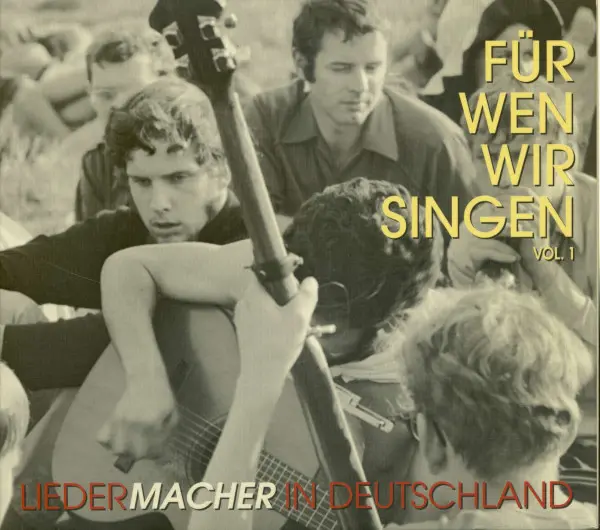
Various - Liedermacher in Deutschland Für wen wir singen - Liedermacher, Vol.1 (3-CD)

This article is deleted and can no longer be ordered!
Please inform me as soon as the product is available again.
Please enter the digits and letters in the following text field.

  • BCD16905
  • 0.27
  • Download
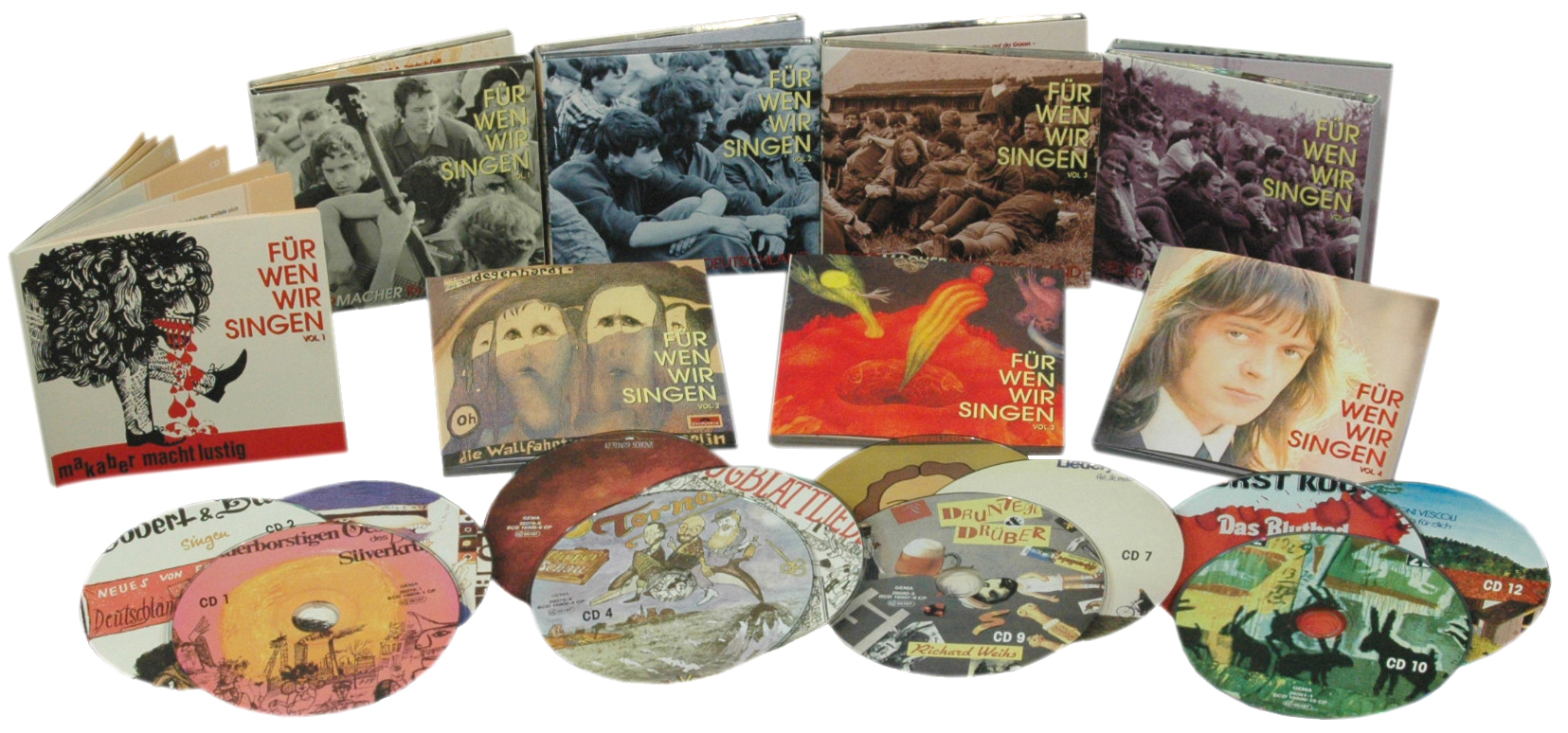
3-CD in luxurious 8-page Digipac with 128-page booklet, playing time: 3h 50min.  CD Who... more

Various - Liedermacher in Deutschland: Für wen wir singen - Liedermacher, Vol.1 (3-CD)

3-CD in luxurious 8-page Digipac with 128-page booklet, playing time: 3h 50min. 

CD Who we sing for

Songwriter in Germany 

Songwriters aren't a thing of the past. Even if the song, especially the political song, has often been declared dead in Germany. But just a glance at the monthly 'Liederbestenliste' shows how colourful and lively the scene of musicians in this country who sing 'German' is: Songs with critical, thought-provoking lyrics and music that does not necessarily follow established listening habits. This can be in many styles: classical chanson, folk, pop, blues, rock, jazz or rap. They are all part of a long tradition that could be traced back to the troubadours of the Middle Ages. 

The collection 'Für wen ich singe - Liedermacher in Deutschland' does not go back that far, of course. For the first time, the project, which consists of 12 CDs, offers an overview of the recent history of songwriters in western and eastern Germany from the early sixties to the eighties of the last century. 

Traditions, new songs and Deutschfolk 

First of all it is about the rediscovery of the German song traditions. It was Hein &, Oss Kröher and Peter Rohland who had been working on the democratic song long before the new folk song movement, among others in the Bündische Jugend. In the early sixties, inspired mainly by artists in France or the USA, the voices that sought their own forms of expression included many names known today such as Franz Josef Degenhardt, Reinhard Mey, Walter Mossmann, Christof Stählin, Dieter Süverkrüp and Hannes Wader. A first important forum for her and many other performers of a new German song were the festivals at Burg Waldeck between 1964 and 1969. A little later the German folk revival was heralded, among others with Fiedel Michel, Liederjan and Zupfgeigenhansel. They did not want to cultivate the folk song as a museum tradition, but to create a new type of democratic song. 

Red songs, dialect songs and new poets 

The seventies brought politically highly moved times. Singer-songwriters commented on emergency laws, bans on employment, unemployment, Vietnam war, nuclear arms and nuclear power plants. Alongside many artists from the Waldeck era, new names established themselves in the political arena in this way - including the song cabaret Floh de Cologne, Ekkes Frank or Lerryn alias Dieter Dehm. The Folkrevival also led to a broad preoccupation with dialects. Many songwriters rediscovered the dialects of their home regions as buried traditions. So in Bavaria the Biermösl Blosn. In Stuttgart, Wolle Kriwanek sang the Swabian blues. On the Lower Rhine Günter Gall made a name for himself in language and song care, in the Low German region it was Hannes Wader and Helmut Debus and in the 'Kohlenpott' Frank Baier. Not to forget the many other songwriters and poets who shaped the scene between the mid-seventies and the early eighties like Bernies Autobahn Band, Ina Deter, Joana or Konstantin Wecker. 

Song and Chanson in the GDR 

Then there's the song and chanson in the GDR - taken seriously and promoted, but as critical songs they are accustomed to bear and suppressed as oppositional ones. Artists like Hanns Eisler, Ernst Busch and Gisela May continued the tradition of political songs and chansons from the twenties and thirties. Wolf Biermann followed this up in the early sixties, became a critic of bureaucratic socialism and was banned from appearing and publishing. At the same time, so-called Hootenanny clubs were formed in which Perry Friedman, Hartmut König, Bettina Wegner and others performed. Under increased state influence, the FDJ singing movement developed, with at times 4,000 clubs, including the Oktoberklub and the TU Dresden song group. In the mid-seventies, song theatres such as Karl's grandson and Schicht and folklore groups such as Folkländer and Wacholder were created in contrast to singing clubs. In the 1980s Gerhard Gundermann, Stephan Krawczyk, Hans-Eckardt Wenzel and other songwriters articulated the difference between proclaimed ideology and reality and thus contributed to the critical discourse in the GDR. 

Liedszene Austria and Switzerland 

Not to forget the song scene of our German-speaking neighbours. Among them from Austria are Wolfgang Ambros, Arik Brauer, Georg Danzer, Ludwig Hirsch and the butterflies. From Switzerland it is Aernschd Born, Franz Hohler, Walther Lietha, Toni Vescoli and Tinu Heiniger, among others, who played an important role in those years.

The selection process

One or the other will surely ask, why is 'Soundso' not represented? Or why was the title 'X' and not the title 'Y' selected by this or that artist? This collection is a retrospective snapshot. It can't be all-encompassing. This also applies to the documented information, which makes no claim to biographical or discographical completeness. It is also true for them that they are excerpts that illuminate a certain moment in history. With the immense abundance of historical material, the choice was not easy. In the end, of course, there was a subjective decision. However, this was influenced by my understanding of singer-songwriters as artists who want to communicate something to their fellow human beings and make them think. Against this background, the political song cannot be separated from an allegedly apolitical song. "Unpolitical songs don't exist at all," Franz Josef Degenhardt said in 1967. 

Holger Böning writes in his book 'Der Traum von einer Sache - Aufstieg und Fall der Utopien im politischen Lied der Bundesrepublik und der DDR': "The song is a very unique art form. Its effect does not only depend on the text, yes, often the text is only half the story, because through setting to music and lecture the poem gains a new quality."  Böning speaks of the "power of sounds", which turn a song into a "means of finding political identity". And he continues: "Even where the text appeals primarily to the mind, the statement of warmth and emotionality often only gains through setting to music and can thus unfold a persuasiveness and effect peculiar only to the song form".  As far as the content of such songs is concerned, Böning says: "Songs serve to portray one's own life situation or social and societal criticism; they can be news carriers, information media and means of agitation, but they are often also used to differentiate and establish the identity of groups or to heat up aggressive emotions against outsiders.

When judging a song, I let myself be guided by the song philosophy of a man who is very close to me: Woody Guthrie. He put it like this in the mid-forties: "I hate songs that make you understand that you are worth nothing. I hate songs that make you understand you're born to lose. To lose for sure. Not worth anything to anyone. It's about singing songs that prove to you that this is your world, and even if it hit you damn hard and you got a dozen blows, no matter how much it pulled you down or rolled over you, no matter what skin color you have, how big you are, how built you are. I'm all about singing the songs that make you proud of yourself and your work."

I would like to thank all the musicians who have contributed with their information and memories to making this little piece of sounding German cultural history a reality. My special thanks go to Nikolaus Gatter and Stephan Rögner, who helped me with the selection of the songs.

Michael Kleff

Liedermacher in Deutschland - CD album series by Bear Family Records
Copyright © Bear Family Records

Article properties: Various - Liedermacher in Deutschland: Für wen wir singen - Liedermacher, Vol.1 (3-CD)

Various - Liedermacher in Deutschland - Für wen wir singen - Liedermacher, Vol.1 (3-CD) CD 1
01 Die alten Lieder DEGENHARDT, FRANZ JOSEF
02 Ich schaukle meine Müdigkeit ROHLAND, PETER
03 Frateg far nacht ROHLAND, PETER
04 Wir drei, wir gehn jetzt auf die Walze ROHLAND, PETER & SCHOBERT SCHULZ
05 Bürgerlied ROHLAND, PETER
06 Lied eines kosmopolitischen Nachtwächters ROHLAND, PETER
07 Die Räuberballade von Pierre, dem roten Coqui ROHLAND, PETER
08 O König von Preußen HEIN & OSS KRÖHER
09 Die große Hungersnot HEIN & OSS KRÖHER
10 Auf vielen Straßen dieser Welt HEIN & OSS KRÖHER
11 Mein Deutschland strecke die Glieder HEIN & OSS KRÖHER
12 Das Solidaritätslied HEIN & OSS KRÖHER
13 Wie schön blüht uns der Maien HEIN & OSS KRÖHER
14 Wol mich der stunde (Erste Begegnung) WOLFRAM, KARL
15 Die goldene Wiege WOLFRAM, KARL
16 Badisches Wiegenlied ULLI & FREDRIK
17 Wiegenlied BAUER-HORN, KRISTIN
18 68 Lebensjahre BAUER-HORN, KRISTIN
19 Zwei Knaben hatten eine Fidel HEDEMANN, WALTER
20 Wald-Mädel-Sang (für Männerchor) HEDEMANN, WALTER
21 Steter Trost oder Auch du kannst glücklich se HEDEMANN, WALTER
22 Mit Leichen leben SCHOBERT & BLACK
23 Des Heizers Traum SCHOBERT & BLACK
24 Auszug aus dem kleinen Großdeutschen National SCHOBERT & BLACK
25 Die Reifeprüfung SCHOBERT & BLACK
26 Bauer ich bitt euch MEY, REINHARD
27 Ballade der guten Lehre / Mädchen in den Schä MEY, REINHARD
28 Ich wollte wie Orpheus singen MEY, REINHARD
29 Diplomatenjagd MEY, REINHARD
Various - Liedermacher in Deutschland - Für wen wir singen - Liedermacher, Vol.1 (3-CD) CD 2
01 Zwischen zwei Straßenbahnen DEGENHARDT, FRANZ JOSEF
02 Spiel nicht mit den Schmuddelkindern DEGENHARDT, FRANZ JOSEF
03 Spaziergang DEGENHARDT, FRANZ JOSEF
04 Für wen ich singe DEGENHARDT, FRANZ JOSEF
05 Der Touristenflamenco SÜVERKRÜP, DIETER
06 Wie man in Düsseldorf eine Kunstausstellung e SÜVERKRÜP, DIETER
07 Kirschen auf Sahne SÜVERKRÜP, DIETER
08 Wünsche des Publikums an den Sänger SÜVERKRÜP, DIETER
09 Survivor's Song MOSSMANN, WALTER
10 Hafenrevue MOSSMANN, WALTER
11 Große Anfrage MOSSMANN, WALTER
12 Pik Sieben MOSSMANN, WALTER
13 Makaber macht lustig STÄHLIN, CHRISTOF
14 Sauregurkenzeit STÄHLIN, CHRISTOF
15 Verstopft STÄHLIN, CHRISTOF
16 Rückt der Mond mir auf die Pelle VARGAS, EVA
17 Viel zu schade für mich WADER, HANNES
18 Das Bier in dieser Kneipe WADER, HANNES
19 Ich hatte mir noch soviel vorgenommen WADER, HANNES
Various - Liedermacher in Deutschland - Für wen wir singen - Liedermacher, Vol.1 (3-CD) CD 3
01 De sun vet arunter gayn CITY PREACHERS
02 Spheres Of Universe (Wacka Wacka Boing) KANNMACHER, TOM
03 Die Geige KANNMACHER, TOM & JÜRGEN SCHÖNTGES
04 Das Blutgericht (Weberlied) MICHEL, FIEDEL
05 Es soll sich der Mensch nicht mit der Liebe a MICHEL, FIEDEL
06 Der Reiche und der Arme MICHEL, FIEDEL
07 Ougenweide OUGENWEIDE
08 Zittert, zittert, blöde Toren OUGENWEIDE
09 Junges Mächen saß am Strande ELSTER SILBERFLUG
10 Heute scheid' ich ELSTER SILBERFLUG
11 Trotz alledem WADER, HANNES
12 Es geht eine dunkle Wolke WADER, HANNES
13 Ich bin Soldat ZUPFGEIGENHANSEL
14 Ich bin ein freyer Bauern-Knecht ZUPFGEIGENHANSEL
15 Papst und Sultan ZUPFGEIGENHANSEL
16 Lustig, lustig ihr lieben Brüder LIEDERJAN
17 Wem hamse de Krone jeklaut LIEDERJAN
18 Der Lumpensammler LIEDERJAN
19 Herr von Ribbeck auf Ribbeck im Havelland REICHEL, ACHIM
20 Der Zauberlehrling REICHEL, ACHIM
21 Folklore HÜSCH, HANNS DIETER
Liedermacher in Deutschland Für wen wir singen The song, and the political song in... more
"Various - Liedermacher in Deutschland"

Liedermacher in Deutschland

Für wen wir singen

The song, and the political song in particular, has often been declared dead in Germany. Yet a single glance at the monthly Liederbestenliste – a hit parade of a very special kind – shows how colourful and lively the scene of musicians in this country who sing 'in German' is: songs with critical, thought-provoking lyrics and music that does not necessarily follow well-worn listening habits. This can go in many stylistic directions, be it classic chanson, folk, pop, blues, rock, jazz or rap. All of them stand in a long tradition that can be traced back to the troubadours of the Middle Ages.

The collection 'Für wen wir singen – Liedermacher in Deutschland' does not go back quite that far in time, however. Instead, this project, conceived as four 3-CD sets, offers for the first time in this form an overview of the recent history of the Liedermacher, the German singer-songwriters, in West and East Germany, from the early sixties into the eighties of the last century. The first 3-CD set deals with the rediscovery of tradition, with Bänkelsongs, everyday poetry and topical songs, and with German folk and new folk singers in the old Federal Republic. It was Hein & Oss Kröher and Peter Rohland who, long before the new folk song movement, had championed the democratic song, among other places in the Bündische Jugend. Among the voices that, in the early sixties, were searching for their own forms of expression against the background of their role models in France or the USA, were many names that are well known today, such as Franz Josef Degenhardt, Reinhard Mey, Walter Mossmann, Christof Stählin, Dieter Süverkrüp and Hannes Wader.

Between 1964 and 1969 the festivals at Burg Waldeck were an important forum for them and many other performers, including Kristin Bauer-Horn, Walter Hedemann, Schobert & Black and Eva Vargas.

The German folk revival was ushered in during the early to mid-seventies by, among others, Tom Kannmacher, Fiedel Michel, Elster Silberflug, Liederjan and Zupfgeigenhansel. They did not want to cultivate the folk song as a museum-piece tradition, but to create a new, democratic type of song. By mixing pop and rock instrumentation with old instruments such as the crumhorn and hurdy-gurdy, Ougenweide brought a new musical colour to the spectrum of the new German folk singers. Achim Reichel was one of the first rock musicians to set classic German poets to music.

The further sets focus on the songs of the politically turbulent seventies. They comment on the emergency laws, the occupational bans (Berufsverbote), unemployment, the Vietnam War, nuclear armament and nuclear power stations. Alongside many artists from the Waldeck era, new names established themselves in this way, right in the midst of day-to-day politics – among them Dietrich Kittner, the song-cabaret group Floh de Cologne, Ekkes Frank and Lerryn alias Dieter Dehm. The folk revival also brought with it a broad engagement with dialects. Many singer-songwriters rediscovered the dialects of their home regions as a buried tradition. In Bavaria, for example, the Biermösl Blosn. In Stuttgart Wolle Kriwanek struck up the Swabian blues. On the Lower Rhine Günter Gall, in various line-ups (Mulwerk, Fukkepott, Düvelskermes), did great service in preserving the local language and songs, as did Hannes Wader and Helmut Debus in the Low German region and Frank Baier in the 'Kohlenpott'. Not to forget the other names who shaped the scene between the mid-seventies and the early eighties, such as Bernies Autobahn Band, Ina Deter, Joana and Konstantin Wecker.

Then there is song and chanson in the GDR – taken seriously and promoted, to be sure, but viewed with suspicion when critical and suppressed when oppositional. Artists such as Hanns Eisler, Ernst Busch and Gisela May carried on the tradition of the political song and chanson from the twenties and thirties. Wolf Biermann took up this thread in the early sixties, became a critic of bureaucratic socialism and was banned from performing and publishing. At the same time so-called Hootenanny clubs sprang up, where Perry Friedman, Hartmut König, Bettina Wegner and others performed. Under increasing state influence these developed into the FDJ singing movement (Singebewegung), with at times 4,000 clubs, among them the Oktoberklub and the Songgruppe der TU Dresden. In the mid-seventies, setting themselves apart from the singing clubs, song theatres such as Karls Enkel and Schicht and folk groups such as Folkländer and Wacholder emerged. In the 80s Gerhard Gundermann, Stephan Krawczyk, Hans-Eckardt Wenzel and other singer-songwriters articulated the gap between proclaimed ideology and reality, thereby contributing to critical discourse in the GDR.

Finally, the collection also takes a look at the scene among our German-speaking neighbours. Many renowned performers from Switzerland and Austria played an important role not only in their home countries but also in Germany. From Austria these include Wolfgang Ambros, Arik Brauer, Georg Danzer, Ludwig Hirsch and the Schmetterlinge, among others. Switzerland is represented by Aernschd Born, Franz Hohler, Walther Lietha, Toni Vescoli and Tinu Heiniger, among others.

For this compilation Michael Kleff has 'listened around' in his record archive, putting many a vinyl disc back on the turntable after a long time, and has talked to some of the performers about their memories of the formative years of the German song scene. The journalist, who lives in Bonn and New York, has been involved with the subject of 'song' in several respects for many years – as host of the Liederladen programme on Deutschlandfunk, as chairman of the Verein deutschsprachige Musik, which is responsible for the Liederbestenliste, and also as managing editor of the music magazine 'Folker'!

Für wen wir singen, Vol. 1

CD 1 - Die Wiederentdeckung der Tradition und neue deutsche Lieder
Franz Josef Degenhardt - Peter Rohland - Peter Rohland & Schobert Schulz - Hein & Oss Kröher - Karl Wolfram - Ulli & Fredrik - Kristin Bauer-Horn - Walter Hedemann - Schobert & Black - Reinhard Mey

CD 2 - Bänkelsongs, Gebrauchspoesie und aktuelle Lieder
Franz Josef Degenhardt - Dieter Süverkrüp - Walter Mossmann - Christof Stählin - Eva Vargas - Hannes Wader

CD 3 - Deutsch-Folk und neue Volkssänger
City Preachers - Tom Kannmacher - Tom Kannmacher & Jürgen Schöntges - Fiedel Michel - Ougenweide - Elster Silberflug - Hannes Wader - Zupfgeigenhansel - Liederjan - Achim Reichel - Hanns Dieter Hüsch

Für wen wir singen, Vol. 2

CD 4 - Heißer Herbst – Protest und linke Lieder
Frank Baier - Franz Josef Degenhardt - Die Drei Tornados - Thomas Felder - Ekkes Frank - Hanns Dieter Hüsch - Fasia Jansen - Dietrich Kittner - Die Münchner Songgruppe - Hans Scheibner - Dieter Süverkrüp - Hannes Wader

CD 5 - Trau Dich! - Bewegte Lieder und Träume von einer besseren Welt
Baier & Westrupp - Dicke Lippe - Grips Theater - Fasia Jansen - Klaus der Fiedler - Klaus W. Hoffmann - Eckart Kahlhofer - Reinhard Mey - Walter Moßmann - Gerd Schinkel - Schneewittchen - Ton Steine Scherben - Dieter Süverkrüp - Fredrik Vahle - Lothar von Versen - Konstantin Wecker

CD 6 - Neue Töne in der DDR
Reinhold Andert - Circus Lila - Kurt Demmler - Perry Friedman - Görnandt & Rönnefarth - Hootenanny-/Oktoberklub Berlin - Lin Jaldati - Jahrgang 49 - Manfred Krug - Gisela May - Gerhard Schöne - Reiner Schöne - Team 4/Thomas Natschinski und seine Gruppe - Piatkowski & Rieck - Christel Schulze - Bettina Wegner - Gerry Wolff

Für wen wir singen, Vol. 3

CD 7 - Heimat – Dialekte und Regionen
Baier & Westrupp - Biermösl Blosn - Bläck Fööss - Rolly Brings - Helmut Debus - Dragseth Duo - Thomas Felder - Günter Gall - Godewind - Goissahannes - Fiede Kay - Knut Kiesewetter - Bodo Kolbe - Wolle Kriwanek - Liederjan - Linnenzworch - Lorbaß - Moin - Manfred Pohlmann - Hannes Wader

CD 8 - DDR-konkret: Zwischen Liebe und Zorn
Reinhold Andert - Norbert Bischoff - Brigade Feuerstein - Kurt Demmler - Folkländer - Karls Enkel - MTS - Maike Nowak - Gerulf Pannach - Wolfgang Protze - Claus Renft Combo - Schicht - Arno Schmidt - Gerhard Schöne - Songgruppe der TU Dresden - Barbara Thalheim - Bettina Wegner

CD 9 - Da singt heit ana auf da Gassn – Szene Österreich
Wolfgang Ambros - Franz Bilik - Arik Brauer - Georg Danzer - Erich Demmer - Drahdiwaberl - Ludwig Hirsch - Georg Kreisler - Reinhard Liebe - Sigi Maron - Milestones - Roland Neuwirth - Fritz Nußböck - Werner Pirchner - Erika Pluhar - Schmetterlinge - Peter Wagner - Richard Weihs - Stephanie Werger - Worried Men Skiffle Group

Für wen wir singen, Vol. 4

CD 10 - Genug ist nicht genug – Nicht nur private Lieder
Thommie Bayer - Bernie's Autobahn Band - Christian Czerny - Thomas Felder - Klaus Hoffmann - Burkhard Ihme - Inga & Wolf - Lerryn - Udo Lindenberg - Manfred Maurenbrecher - Helmut Meier - Christof Stählin - Konstantin Wecker

CD 11 - Neue Männer braucht das Land / Bayerische Noten / Blödelnder Protest und sonstiger Nonsense
Ina Deter - Fredl Fesl - Floh de Cologne - Insterburg & Co - Joana - Eckart Kahlhofer - Horst Koch - Mike Krüger - Liederjan - Ulla Meinecke - Willy Michl - Ulrik Remy - Ringsgwandl - Ulrich Roski - Schobert & Black - Dieter Süverkrüp - Torfrock

CD 12 - Letztes aus der Da Da eR
Duo Sonnenschirm - Gerhard Gundermann - Hammer=Rehwü - Stephan Krawczyk - Gerhard Schöne - Hans-Eckardt Wenzel - Wenzel & Mensching
Es si alli so näztt – Szene Schweiz
Berner Troubadours - Aernschd Born - Martin Hauzenberger - Martin Heiniger - Polo Hofer - Franz Hohler - Walter Lietha - Mani Matter - Toni Vescoli

Copyright © Bear Family Records

Review 1
Read, write and discuss reviews... more
Customer evaluation for "Für wen wir singen - Liedermacher, Vol.1 (3-CD)"
28 May 2022

Write an evaluation
Evaluations will be activated after verification.

The fields marked with * are required.

Für wen wir singen - Liedermacher, Vol.1 (3-CD)
Various - Liedermacher in Deutschland: Für wen wir singen - Liedermacher, Vol.1 (3-CD) Item no.: BCD16905

This article is deleted and can no longer be ordered!

$46.74
Für wen wir singen - Liedermacher, Vol.2 (3-CD)
Various - Liedermacher in Deutschland: Für wen wir singen - Liedermacher, Vol.2 (3-CD) Item no.: BCD16906

This article is deleted and can no longer be ordered!

$46.74
Für wen wir singen - Liedermacher, Vol.3 (3-CD)
Various - Liedermacher in Deutschland: Für wen wir singen - Liedermacher, Vol.3 (3-CD) Item no.: BCD16907

This article is deleted and can no longer be ordered!

$46.74
Für wen wir singen - Liedermacher, Vol.4 (3-CD)
Various - Liedermacher in Deutschland: Für wen wir singen - Liedermacher, Vol.4 (3-CD) Item no.: BCD16908

This article is deleted and can no longer be ordered!

$46.74
Für wen wir singen - Liedermacher, Vol.2 (3-CD)
Various - Liedermacher in Deutschland: Für wen wir singen - Liedermacher, Vol.2 (3-CD) Item no.: BCD16906

This article is deleted and can no longer be ordered!

$46.74
Für wen wir singen - Liedermacher, Vol.3 (3-CD)
Various - Liedermacher in Deutschland: Für wen wir singen - Liedermacher, Vol.3 (3-CD) Item no.: BCD16907

This article is deleted and can no longer be ordered!
$46.74
Für wen wir singen - Liedermacher, Vol.4 (3-CD)
Various - Liedermacher in Deutschland: Für wen wir singen - Liedermacher, Vol.4 (3-CD) Item no.: BCD16908

This article is deleted and can no longer be ordered!

$46.74
Burg Waldeck (10-CD Deluxe Box Set)
Various: Burg Waldeck (10-CD Deluxe Box Set) Item no.: BCD16017

This article is deleted and can no longer be ordered!

$99.39 $233.94
Teil 4,  Folk und die Wurzeln amerikanischer Musik (3-CD)
Various - Troubadours: Teil 4, Folk und die Wurzeln amerikanischer... Item no.: BCD17228

Ready to ship today, delivery time** appr. 1-3 workdays
$42.06 $46.74
Für wen wir singen - Liedermacher, Vol.2 (3-CD)
Various - Liedermacher in Deutschland: Für wen wir singen - Liedermacher, Vol.2 (3-CD) Item no.: BCD16906

This article is deleted and can no longer be ordered!

$46.74
Beat Beat Beat Episode 6 (DVD)
Eric Burdon & The New Animals: Beat Beat Beat Episode 6 (DVD) Item no.: DVDABCVP104

the very last 1 available
Ready to ship today, delivery time** appr. 1-3 workdays
$23.34
Beat Beat Beat - Best Of Vol.2 (DVD)
Various: Beat Beat Beat - Best Of Vol.2 (DVD) Item no.: DVDABVP105

only 1x still available
Ready to ship today, delivery time** appr. 1-3 workdays

$23.34
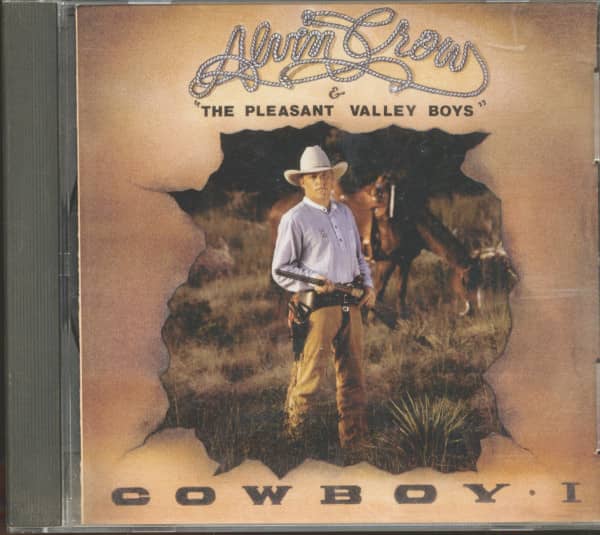
Cowboy 1
CROW, Alvin: Cowboy 1 Item no.: CDNR18895

This article is deleted and can no longer be ordered!

$17.49
The Hillmen (CD)
The Hillmen: The Hillmen (CD) Item no.: CDLIP2194

only 1x still available
Ready to ship today, delivery time** appr. 1-3 workdays

$18.66