Article successfully added.

Various - Die Neue Deutsche Welle (NDW) Aus grauer Städte Mauern - Die Neue Deutsche Welle (NDW) 1977-85, Teil 2

$25.68 * $29.19 * (12.02% Saved)

* incl. VAT / plus shipping costsDepending on the country of delivery, the VAT at checkout may vary.

Ready to ship today,
delivery time** appr. 1-3 workdays

  • BCD17372
  • 0.2
  • Download
2-CD Digipak (6 pages) with 152-page booklet, 53 single titles. Total playing time approx. 167:48... more

Various - Die Neue Deutsche Welle (NDW): Aus grauer Städte Mauern - Die Neue Deutsche Welle (NDW) 1977-85, Teil 2

2-CD Digipak (6 pages) with 152-page booklet, 53 single titles. Total playing time approx. 167:48 minutes.

Second part of the comprehensive overview of Neue Deutsche Welle - across styles and labels - from 1977 to 1985.
All NDW hits, all classics, all mayflies!
From Ace Cats and Die Ärzte via Nena and Spliff to Joachim Witt and Xmal Germany. ...
From hooray, hooray school burns to we like Berlin, from Carbonara to I want fun...

Despite stylistic diversity and creative output, the mass phenomenon "NDW" imploded relatively quickly - a short-lived scene between awakening, art music and industrial mass production. However, the Neue Deutsche Welle grew into an independent scene that can also hold its own well over 30 years later. What began in the mid-1980s as shallow pop had once begun as an uprising against an ossified musical world - and hardly any other musical genre has divided the musical nation (and above all the experts) as much as the "Neue Deutsche Welle". For some it's too weird or too weird, for others it's the departure to new musical shores, an invigorating aspect in the bumbling, and for others it's just too silly or the worst commerce.

In any case, the "Neue Deutsche Welle" was the "only pop event worth mentioning in Germany's popular music since the Second World War" (Thomas Schwebel/Fehlfarben). The Neue Deutsche Welle produced terrible songs that were meant extremely seriously, terribly irrelevant songs that were not meant so seriously, extremely good titles that were meant as such and songs that have outlived time and that are considered real classics today. The musical diversity of the years 1977 to 1985 is described as comprehensively as possible for the first time in the Bear Family series'From Grey Cities Walls' - a short-lived world between awakening, art music and industrial mass production. Four 2-CD sets present the now legendary hits of Nina Hagen, Fehlfarben, Trio, Nena and Joachim Witt as well as rarities of the experimental punk scene and curious finds from cellar studios and self-publishing labels.

Many facets in this panopticon of'new German dance music' prepared the ground for artists such as Herbert Grönemeyer'die Toten Hosen' or Die Ärzte and later influenced German-language hip hop, techno or music trends such as the'Hamburger Schule'. Each episode contains a 150-page booklet with detailed biographies, background information on each song and countless time documents: Advertisements, posters, fanzines, concert photos and record covers. "Listen, be amazed, be in a good mood!"

Article properties: Various - Die Neue Deutsche Welle (NDW): Aus grauer Städte Mauern - Die Neue Deutsche Welle (NDW) 1977-85, Teil 2

Various - Die Neue Deutsche Welle (NDW) - Aus grauer Städte Mauern - Die Neue Deutsche Welle (NDW) 1977-85, Teil 2 CD 1
01 Ein Jahr (Es geht voran) Fehlfarben
02 Detlev Ixi
03 Tri Tra Trullala (Herbergsvater) Witt, Joachim
04 BLNW Interzone
05 Wir flieh'n für einen Tag Caprifischer
06 Rohe Gewalt MdK (Mekanik Destrüktiw Komandöh)
07 Meine Kleine weine nicht Minus Delta-t
08 (Wômen shì haopéngyou) (Wir sind gute Freunde) Seen Links, Schlösser Rechts
09 FanFanFanatisch Rheingold
10 Ca va ! Morgenrot
11 Berlin bleibt doch Berlin Hongkong Syndikat
12 Wir steh'n auf Berlin Ideal
13 Sternenhimmel Kah, Hubert
14 Linda Ace Cats
15 Eine Königin mit Rädern untendran Foyer Des Arts
16 Teenagerliebe Ärzte, Die
17 Pogo in Togo United Balls
18 Knülle im Politbüro KFC, Der
19 Kein Mann für eine Nacht Suurbiers, Die
20 DNS 39 Clocks
21 Incubus Succubus Xmal Deutschland
22 Körperkontakt Bernward Büker Bande
23 Herz ist Trumpf (Dann rufst du an…) Trio
Various - Die Neue Deutsche Welle (NDW) - Aus grauer Städte Mauern - Die Neue Deutsche Welle (NDW) 1977-85, Teil 2 CD 2
01 Hurra, hurra, die Schule brennt Extrabreit
02 Hohe Berge Menke, Frl.
03 ? (Fragezeichen) Nena
04 Unbeschreiblich weiblich Nina Hagen Band
05 Angst vorm Tanzen Saal 2
06 Pingelig Aus Lauter Liebe
07 Ich will Spaß Markus
08 Die Wüste lebt Schilling, Peter
09 Taxi Jawoll
10 Carbonara Spliff
11 Koxhafen Cats TV
12 Am weißen Strand von Helgoland Niko
13 Daneben Flucht Nach Vorn
14 Ich törn lieber an Acapulco Gold
15 Berühren Profil
16 Goldfinger Krupps, Die
17 Computerliebe (Die Module spielen verrückt) Paso Doble
18 Bleib doch bei mir UKW
19 Anfgriff auf's Schlaraffenland Radierer, Die
20 Wenn die Welt zusammenbricht Neue Heimat
21 Zwei Schwestern Duo Enzian
22 Schizo-Kid City Scala 3
23 Paul ist tot O.R.A.V.s
Die Neue Deutsche Welle (NDW) Hardly any musical movement divided the nation's music lovers... more
"Various - Die Neue Deutsche Welle (NDW)"

Die Neue Deutsche Welle (NDW)

Hardly any musical movement divided the nation's music lovers as deeply in the late 70s and early 80s as the "Neue Deutsche Welle" (German New Wave). For some it was too weird or too far out; for others it was a departure for new musical shores, an invigorating element in a stagnant music landscape or a shot of energy for an entire industry; and for others still it was simply too silly or the worst kind of commercialism.

Until the early 80s, before it was discovered commercially by the major labels, the "Neue Deutsche Welle" was an authentic underground movement whose origins lay directly in the British punk and new wave movement.

A good many bands of the day could not, or would not, follow the move to the commercial side of the business and were later forgotten. By the end of the 70s it was high time for something to stir in the German music scene. For decades, English and American music had been copied almost exclusively. The only German or German-language stars were Udo Lindenberg, Peter Maffay and Marius Müller-Westernhagen.

The "Neue Deutsche Welle" was "the only significant pop event in German popular music since the Second World War" (Thomas Schwebel of Fehlfarben). It gave rise to an independent scene that still holds a market share of around 20% today and has held its own against the major labels for well over 30 years. But there was probably hardly another music scene whose beginnings the music industry slept through so completely, fought at first, then took over in a flash, marketed so brutally and ruthlessly and dropped again so quickly and so coldly. No style of music was safe from the "NDW" label – pop, rock, blues, punk, dilettantes, folk music, atonal music, Schlager, rockabilly – everything was swallowed up and stamped "Neue Deutsche Welle". What had turned into shallow Schlager pop by the mid-80s had once started as a revolt against an ossified music world, as resistance to ponderous international pop music.

Self-production and self-distribution

Suddenly musicians and bands were producing with the simplest of means and began to build their own structures, rebelling against the gigantism of the all-powerful major labels, refusing to let anyone tell them what to do and keeping control of their own "product" (the Rondo advertising slogan: "Höre Staune gute Laune"). Self-produced and self-distributed singles in small runs, small independent "DIY" (do it yourself) and self-publishing labels such as Schallmauer, Rondo, No Fun, Pure Freude, Rip Off, Atatak, Zick Zack and Konneckschen, together with alternative record shops, created the conditions for this.

The use of German lyrics

The use of German lyrics, which created a new and hitherto unknown sense of belonging, had already been successfully introduced by the German punk scene. Young and seasoned musicians alike, who had little to lose at the time, caught the punks' philosophy and experience. As in the mid-70s, suddenly everything was feasible and possible ("Das Kannst Du Auch"). Intricately worked-out arrangements, overloaded productions and "messages weighing a ton" (ICHWILLSPASS) were simply thrown overboard to make room for sparse instrumentation and simple chord progressions.

Everyone played as well as they could, composed as they pleased and produced in the kitchen, in a corner of the bedroom or – almost professionally – in the garage. The bands recorded records or music cassettes on their own initiative, which they at first took to the shops themselves and later distributed through their own channels, and they had to market themselves and their music on their own (Es Geht Voran).

Small labels and growing distribution structures

In any case, the "NDW" was the spark that set off the small labels with their growing distribution structures and new sales channels – with the most basic and simple productions, some of which have lasted to this day, even though quite a few innovations fell by the wayside. The big music industry was well and truly outmanoeuvred at the time and at first could only marvel at the phenomenon. Not least to blame were the so-called talent scouts, the music-industry types in pinstripes and hipster beards who had not seen the inside of a music club for decades.

The big record companies only ever bet on the industry's top earners without making sure that new acts could grow, and they backed trends that were guaranteed to be on the wane already. At any rate, the "NDW" shaped a short and decisive period of German rock music. The "Neue Deutsche Welle" produced dreadful songs that were meant in deadly earnest, dreadfully trivial numbers that were not meant all that seriously, extremely good tracks that were meant to be just that, and songs that have stood the test of time and are now regarded as true classics.

Punk rock and "new wave"

The term "Neue Deutsche Welle" denoted the (almost exclusively) German-language variant of punk rock and "new wave", which turned the international rock scene upside down from the second half of the 70s onwards. In 1977/78 a number of new local bands emerged in Germany too, who, following the example of English punk rock, set an independent rock development in motion and, for the first time, used the German language for their songs in a completely uninhibited way. Until then only Udo Lindenberg, Reinhard Mey, Ihre Kinder, Marius Müller-Westernhagen and Peter Maffay had made their mark with German lyrics. Otherwise West German bands of the 70s sang in English. It is thanks to the "NDW" that the German language was able to make its way into German rock and pop music on a broad front.

Behind this also lay the sharpening social tensions and conflicts caused by rapidly rising youth unemployment in the 70s and a spreading sense of having no prospects in life, which sought direct expression in this music, instead of rock music being conceived from the outset with English lyrics for the international market, as had been the case until then. The "NDW" was primarily a West German affair, since in the GDR people had always sung in German. This was not, however, due to a "greater self-confidence or a creative head start" (MUNZINGER) on the part of East German rockers: the German language was prescribed for GDR rock music by the state. But the fact that the first "NDW" megastar, Nina Hagen with her first "Western" band, of all people came from the GDR fitted the spirit of new beginnings, in which everything seemed possible.

The magazine "Die 80er"

The term "Neue Welle" (new wave) was first used in 1977 by Jürgen Kramer, a student of Joseph Beuys. In the 80s Kramer engaged intensively with "punk" and "new wave" and published the magazine "Die 80er". On a poster he designed for a concert in Gelsenkirchen he used the term "Deutsche Welle". The term "Neue Deutsche Welle" first appeared in August 1979 in the music magazine "Sounds". There the West Berlin label owner and record dealer "Zensor" (Burkhardt Seiler) had placed an advertisement for the debut album by Deutsch Amerikanische Freundschaft and, together with "Sounds" journalist Hans Keller, coined the term "Neue Deutsche Welle".

Alfred Hilsberg

In October 1979 the "Sounds" editorial team saddled the music journalist Alfred Hilsberg – later head of the Zick Zack label and "godfather of the German 'new wave'" (MUNZINGER) – with the term against his will, in a groundbreaking three-part series of articles: "Neue Deutsche Welle – Aus Grauer Städte Mauern". "A new music is happening in West Germany and West Berlin. It is being made and it is being listened to. Some still call it 'punk' and want to be punk. Others no longer know what to make of the term.

Dozens of groups are working in living rooms, rehearsal rooms and studios. Some play to have fun and give their fans a good time. Others have more serious ambitions, develop concepts, new sounds. And work with German lyrics. They play in a handful of clubs and are already organising their first tours. They perform on trucks. No one makes a living from the new music; they go to work, to school, to university, take out loans, live at home or in a commune. Some are only 15, others nearly 30. The 'new wave' has long ceased to be an appendage of the Anglo-American 'rock/punk' tradition. Coming to terms with themselves, with life here and now, is creating new content and new forms" (Alfred Hilsberg in SOUNDS).

The big record labels

At first the big record labels ignored the groups of the "Neue Deutsche Welle". They found them too crude and too unruly; they were considered uncommercial and unmarketable. On the other hand, the bands and their audiences also had the gravest reservations about working with big business. Many young bands rejected the major record companies, since they saw themselves more as a subculture and often did not want to make common cause with the "capitalists".

So independent labels were founded in order to distribute new bands themselves, just as in England. This changed visibly, however, as the media giants took an ever-growing interest. The first marketing campaigns with groups such as Fehlfarben, the Nina Hagen Band and D.A.F. met with a strong response all round, and suddenly the major labels were signing pretty much anything that sang in German and sounded reasonably new or merely "funny" – even if it had nothing to do with the "NDW" label – and if need be, manufactured bands were created from scratch.

Excerpt from: Various - Die Neue Deutsche Welle (NDW) Vol. 1, Aus grauer Städte Mauern - NDW 1977-85

Copyright © Bear Family Records

Review 5
Read, write and discuss reviews... more
Customer evaluation for "Aus grauer Städte Mauern - Die Neue Deutsche Welle (NDW) 1977-85, Teil 2"
8 Sep 2015

Praller Mix

Oldiemarkt 9/15 "Wie üblich bei der Firma aus Norddeutschland gibt es einen prallen Mix ausStars, Vergessenen und den unvermeidlichen Bands, die sich am Rande des Stils bewegten."

25 Aug 2015

Meisterleistung

DPA 4.08.15 "Die erste Doppel-CD der auf vier Parts angelegten Serie "NDW - Aus grauer Städte Mauern" ist bereits erschienen, jetzt kommt Teil 2, wiederum ein kurzweiliges Vergnügen, das zwischen Grausen, Staunen, Spaß, Verwunderung und Enthusiasmus pendelt. Das 150 Seiten starke Booklet ist an sich schon ein Genuss und eine Meisterleistung."

31 Jul 2015

Es gibt viel zu entdecken

Galore 8/2015 "Es gibt viel zu entdecken...es ist der Verdienst dieses Samplers, dass er neben den großen Erfolgen auch die übersehenen Perlen versammelt."

21 Jul 2015

Ausnahmestellung

Good Times 4/2015 "Auch mit dem zweiten Teil der auf vier Ausgaben ausgelegten Rückschau auf die Neue Deutsche Welle zeigt Bear Family seine Ausnahmestellung in Sachen Aufarbeitung musikalischer Geschichte."

7 Jul 2015

Fleissarbeit

Spiegel Online 6.7.2015 "Verantwortlich für die detektivische Fleissarbeit sind die Musikarchäologen der Firma Bear Family."

Write an evaluation
Evaluations will be activated after verification.

The fields marked with * are required.

Weitere Artikel von Various - Die Neue Deutsche Welle (NDW)
Vol.1 - 4, Aus grauer Städte Mauern - NDW 1977-85 (8-CD)
Various - Die Neue Deutsche Welle (NDW): Vol.1 - 4, Aus grauer Städte Mauern - NDW... Art-Nr.: BCD17374-BU

Ready to ship today, delivery time** appr. 1-3 workdays

$116.77 * $91.20 *
Aus grauer Städte Mauern - Die Neue Deutsche Welle (NDW) 1977-85 - Vol.1
Various - Die Neue Deutsche Welle (NDW): Aus grauer Städte Mauern - Die Neue Deutsche... Art-Nr.: BCD17371

Ready to ship today, delivery time** appr. 1-3 workdays

$29.19 * $25.68 *
Aus grauer Städte Mauern - Die Neue Deutsche Welle (NDW) 1977-85, Teil 4
Various - Die Neue Deutsche Welle (NDW): Aus grauer Städte Mauern - Die Neue Deutsche... Art-Nr.: BCD17374

Ready to ship today, delivery time** appr. 1-3 workdays

$29.19 * $25.68 *
Aus grauer Städte Mauern - Die Neue Deutsche Welle (NDW) 1977-85, Teil 3
Various - Die Neue Deutsche Welle (NDW): Aus grauer Städte Mauern - Die Neue Deutsche... Art-Nr.: BCD17373

Ready to ship today, delivery time** appr. 1-3 workdays

$29.19 * $25.68 *
American Originals
James Talley: American Originals Art-Nr.: BCD15244

Ready to ship today, delivery time** appr. 1-3 workdays

$16.32 $18.66
Up Through The Years 1954-1957 (CD)
Carl Perkins: Up Through The Years 1954-1957 (CD) Art-Nr.: BCD15246

Ready to ship today, delivery time** appr. 1-3 workdays

$16.32 $18.66
1956-1965 (CD)
Freddy Quinn: 1956-1965 (CD) Art-Nr.: BCD15403

Ready to ship today, delivery time** appr. 1-3 workdays

$16.32 $18.66
Die Singles 1958-60
Ted Herold: Die Singles 1958-60 Art-Nr.: BCD15404

This article is deleted and can no longer be ordered!

$23.34
Aus grauer Städte Mauern - Die Neue Deutsche Welle (NDW) 1977-85 - Vol.1
Various - Die Neue Deutsche Welle (NDW): Aus grauer Städte Mauern - Die Neue Deutsche... Art-Nr.: BCD17371

Ready to ship today, delivery time** appr. 1-3 workdays

$25.68 $29.19
Aus grauer Städte Mauern - Die Neue Deutsche Welle (NDW) 1977-85, Teil 3
Various - Die Neue Deutsche Welle (NDW): Aus grauer Städte Mauern - Die Neue Deutsche... Art-Nr.: BCD17373

Ready to ship today, delivery time** appr. 1-3 workdays

$25.68 $29.19
Aus grauer Städte Mauern - Die Neue Deutsche Welle (NDW) 1977-85, Teil 4
Various - Die Neue Deutsche Welle (NDW): Aus grauer Städte Mauern - Die Neue Deutsche... Art-Nr.: BCD17374

Ready to ship today, delivery time** appr. 1-3 workdays
$25.68 $29.19
Hint!
40 Years Bear Family Records (3-CD - 1-DVD Deluxe Box Set)
Various - Bear Family Records: 40 Years Bear Family Records (3-CD - 1-DVD... Art-Nr.: BCD17050

Ready to ship today, delivery time** appr. 1-3 workdays

$58.44
Und dann kam Bill Haley (CD)
Various - Schlager: Und dann kam Bill Haley (CD) Art-Nr.: BCD17408

Ready to ship today, delivery time** appr. 1-3 workdays

$16.32 $18.66
Aus grauer Städte Mauern - Die Neue Deutsche Welle (NDW) 1977-85 - Vol.1
Various - Die Neue Deutsche Welle (NDW): Aus grauer Städte Mauern - Die Neue Deutsche... Art-Nr.: BCD17371

Ready to ship today, delivery time** appr. 1-3 workdays

$25.68 $29.19
Vol.1 - 4, Aus grauer Städte Mauern - NDW 1977-85 (8-CD)
Various - Die Neue Deutsche Welle (NDW): Vol.1 - 4, Aus grauer Städte Mauern - NDW... Art-Nr.: BCD17374-BU

Ready to ship today, delivery time** appr. 1-3 workdays

$91.20 $116.77
Aus grauer Städte Mauern - Die Neue Deutsche Welle (NDW) 1977-85, Teil 4
Various - Die Neue Deutsche Welle (NDW): Aus grauer Städte Mauern - Die Neue Deutsche... Art-Nr.: BCD17374

Ready to ship today, delivery time** appr. 1-3 workdays

$25.68 $29.19
Aus grauer Städte Mauern - Die Neue Deutsche Welle (NDW) 1977-85, Teil 3
Various - Die Neue Deutsche Welle (NDW): Aus grauer Städte Mauern - Die Neue Deutsche... Art-Nr.: BCD17373

Ready to ship today, delivery time** appr. 1-3 workdays

$25.68 $29.19
NEW
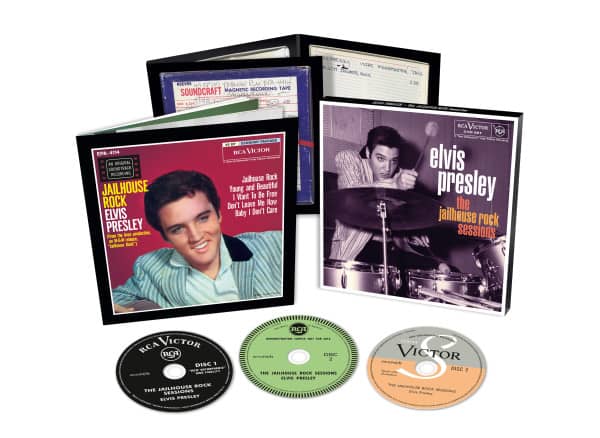
The Jailhouse Rock (3-CD)
Elvis Presley: The Jailhouse Rock (3-CD) Art-Nr.: CD975211

This product will be released at 30 November 2026

$58.44