
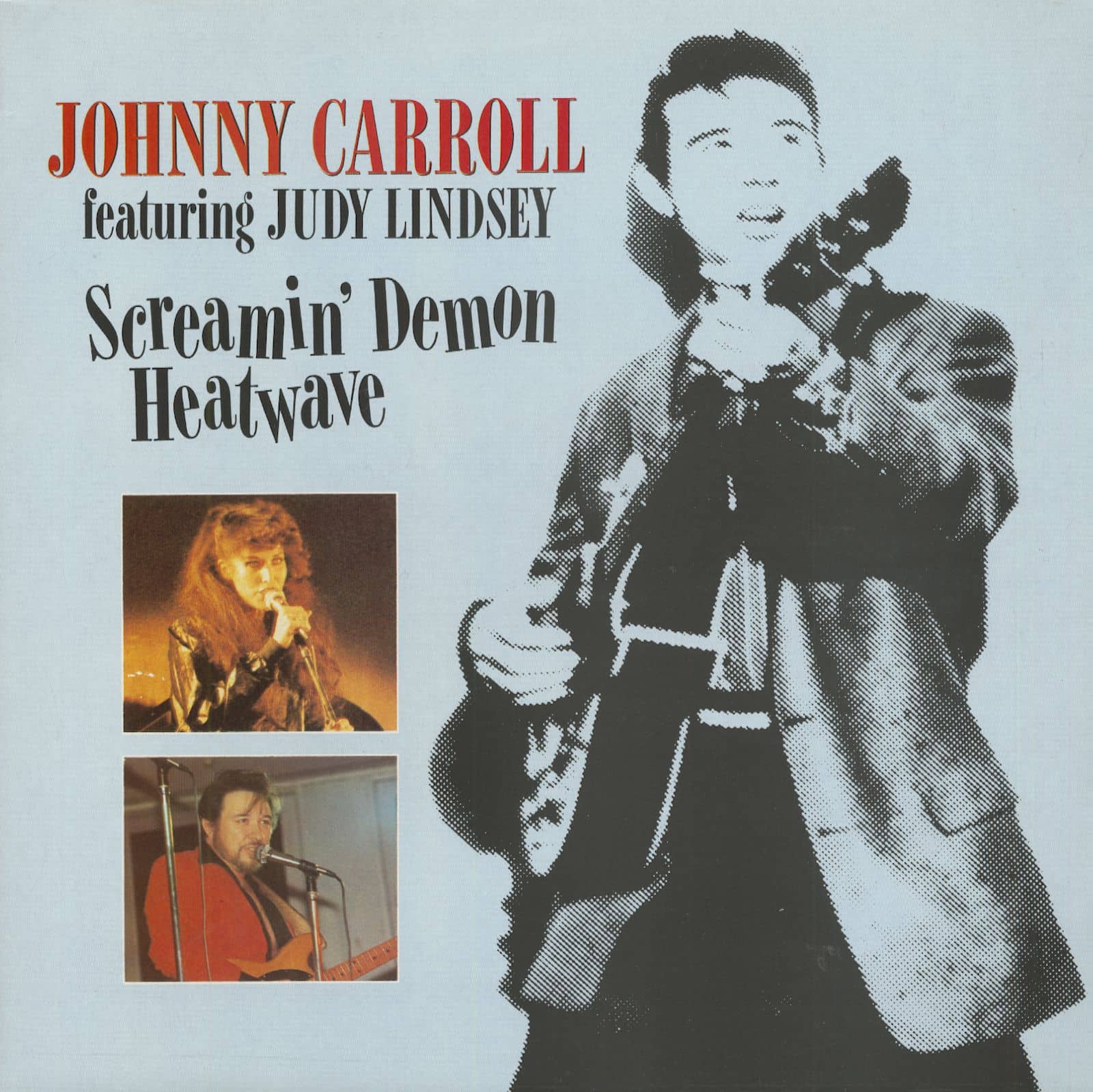
Johnny Carroll Screamin Demon Heatwave (LP)

* incl. VAT / plus shipping costsDepending on the country of delivery, the VAT at checkout may vary.
Ready to ship today,
delivery time** appr. 1-3 workdays
- catalog number: LPSEL7
- weight in Kg 0.2
Johnny Carroll: Screamin Demon Heatwave (LP)
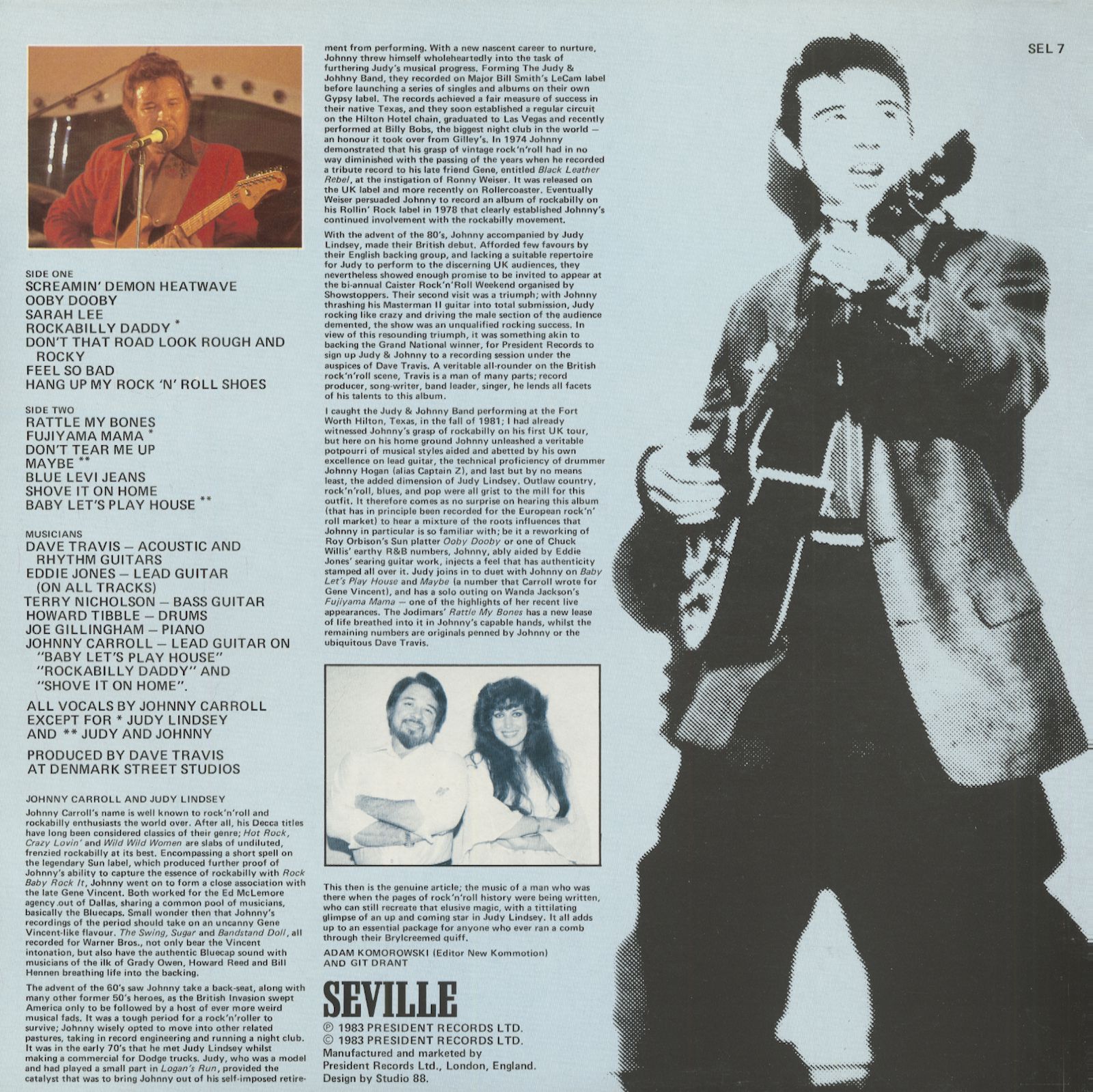
Johnny Carroll's name is well known to rock'n'roll and rockabilly enthusiasts the world over. After all, his Decca titles have long been considered classics of their genre, Hot Rock, Crazy Lovin' and Wild Wild Women are slabs of undiluted, frenzied rockabilly at its best. Encompassing a short spell on the legendary Sun label, which produced further proof of Johnny's ability to capture the essence of rockabilly with Rock Baby Rock It,
Johnny went on to form a close association with the late Gene Vincent. Both worked for the Ed McLemore agency.out of Dallas, sharing a common pool of musicians, basically the Bluecaps. Small wonder then that Johnny's recordings of the period should take on an uncanny Gene Vincent-like flavour. The Swing, Sugar and Bandstand Doll, all recorded for Warner Bros., not only bear the Vincent intonation, but also have the authentic Bluecap sound with musicians of the ilk of Grady Owen, Howard Reed and Bill Hennen breathing life into the backing.
The advent of the 60's saw Johnny take a back-seat, along with many other former 50's heroes, as the British Invasion swept America only to be followed by a host of ever more weird musical fads. It was a tough period for a rock'n'roller to survive, Johnny wisely opted to move into other related pastures, taking in record engineering and running a night club. It was in the early 70's that he met Judy Lindsey whilst making a commercial for Dodge trucks. Judy, who was a model and had played a small part in Logan's Run, provided the catalyst that was to bring Johnny out of his self-imposed retire-ment from performing.
With a new nascent career to nurture, John, threw himself wholeheartedly into the task of furthering Judy's musical progress. Forming The Judy & Johhny Band, they recorded on Major Bill Smith's LeCam label before launching a series of singles and albums on their own Gypsy label. The records achieved a fair measure of success in their native Texas, and they soon established a regular circuit on the Hilton Hotel chain, graduated to Las Vegas and recently performed at Billy Bobs, the biggest night club in the world —an honour it took over from Gilley's. In 1974 Johnny demonstrated that his grasp of vintage rock'n'roll had in no way diminished with the passing of the years when he recorded a tribute record to his late friend Gene, entitled Black Leather Rebel, at the instigation of Ronny Weiser. It was released on the UK label and more recently on Rollercoaster. Eventually Weiser persuaded Johnny to record an album of rockabilly on his Rollin' Rock label in 1978 that clearly established Johnny's continued involvement with the rockabilly movement.
With the advent of the 80's, Johnny accompanied by Judy Lindsey, made their British debut. Afforded few favours by their English backing group, and lacking a suitable repertoire for Judy to perform to the discerning UK audiences, they nevertheless showed enough promise to be invited to appear at the biannual Caister Rock'n'Roll Weekend organised by Showstoppers. Their second visit was a triumph, with John, thrashing his Masterrnan II guitar into total submission, Judy rocking like crazy and driving the male section of the audience demented, the show was an unqualified rocking success. In view of this resounding triumph, it was something akin to backing the Grand National winner, for President Records to sign up Judy & Johnny to a recording session under the auspices of Dave Travis. A veritable all-rounder on the British rock'n'roll scene, Travis is a man of many parts, record producer, song-writer, band leader, singer, he lends all facets of his talents to this album.
I caught the Judy &Johnny Band performing at the Fort Worth Hilton, Texas, in the fall of 1981, I had already witnessed Johnny's grasp of rockabilly on his first UK tour, but here on his home ground Johnny unleashed a veritable potpourri of musical styles aided and abetted by his own excellence on lead guitar, the technical proficiency of drummer Johnny Hogan (alias Captain Z), and last but by no means least, the added dimension of Judy Lindsey. Outlaw country, rock'n'roll, blues, and pop were all grist to the mill for this outfit. It therefore comes as no surprise on hearing this album (that has in principle been recorded for the European rock's' roll market) to hear a mixture of the roots influences that Johnny in particular is so familiar with, be it a reworking of Roy Orbison's Sun platter Ooby Dooby or one of Chuck Willis' earthy R&B numbers, Johnny, ably aided by Eddie Jones' searing guitar work, injects a feel that has authenticity stamped all over it.
Judy joins in to duet with Johnny on Baby Let's Play House and Maybe (a number that Carroll wrote for Gene Vincent), and has a solo outing on Wanda Jackson's Fujiyama Mama — one of the highlights of her recent live appearances. The Jodimars' Rattle My Bones has a new lease of life breathed into it in Johnny's capable hands, whilst the remaining numbers are originals penned by Johnny or the ubiquitous Dave Travis.
This then is the genuine article, the music of a man who was there when the pages of rock'n'roll history were being written, who can still recreate that elusive magic, with a tittilating glimpse of an up and coming star in Judy LindseY• It all adds up to an essential package for anyone who ever ran a comb through their Brylcreemed quiff.
Adam Komorowski (Editor New Kommotion) and Git Drant
Article properties: Johnny Carroll: Screamin Demon Heatwave (LP)
-
Interpret: Johnny Carroll
-
Album titlle: Screamin Demon Heatwave (LP)
-
Genre Rock
-
Label SEVILLE
- Geschwindigkeit 33 U/min
- Vinyl record size LP (12 Inch)
- Record Grading Mint (M)
- Sleeve Grading Mint (M)
-
Artikelart LP
-
EAN: 4000127716644
- weight in Kg 0.2
| Carroll, Johnny - Screamin Demon Heatwave (LP) LP 1 | ||||
|---|---|---|---|---|
| 01 | Screamin' Demon Heatwave | Johnny Carroll | ||
| 02 | Ooby Dooby | Johnny Carroll | ||
| 03 | Sarah Lee | Johnny Carroll | ||
| 04 | Rockabilly Daddy (vocals by JUDY LINDSEY) | Johnny Carroll | ||
| 05 | Don't That Road Look Rough And Rocky | Johnny Carroll | ||
| 06 | Feel So Bad | Johnny Carroll | ||
| 07 | Hang Up My Rock 'N' Roll Shoes | Johnny Carroll | ||
| 08 | Rattle My Bones | Johnny Carroll | ||
| 09 | Fujiyama Mama (vocals by JUDY LINDSEY) | Johnny Carroll | ||
| 10 | Don't Tear Me Up | Johnny Carroll | ||
| 11 | Maybe (& JUDY LINDSEY) | Johnny Carroll | ||
| 12 | Blue Levi Jeans | Johnny Carroll | ||
| 13 | Shove It On Home | Johnny Carroll | ||
| 14 | Baby Let's Play House (& JUDY LINDSEY) | Johnny Carroll | ||
JOHNNY CARROLL
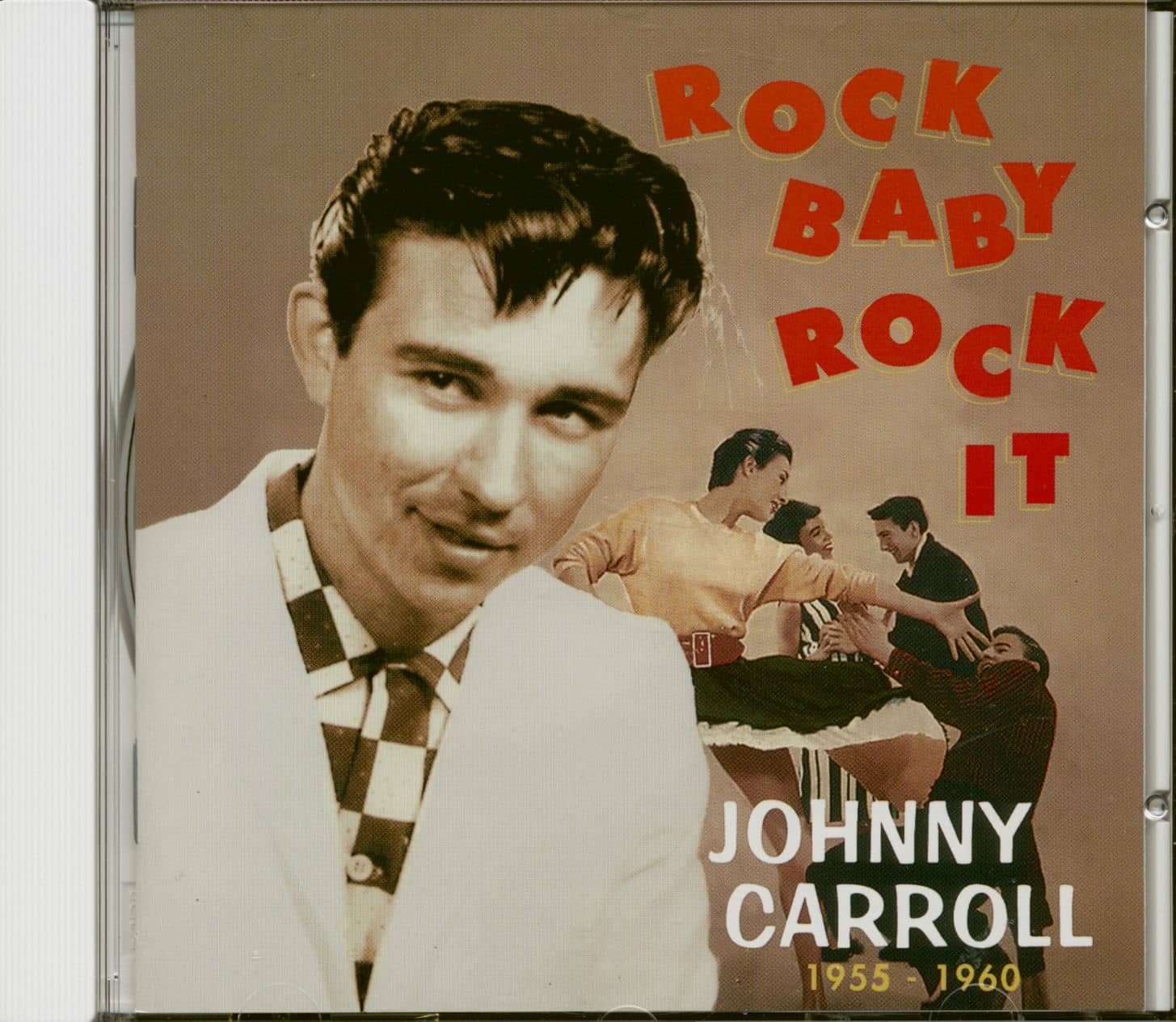
JOHNNY CARROLL
Johnny Carrolls Vollgas-Marke des knurrigen Rockabilly galt schon immer als etwas wilder als der Rest, selbst nach den Hardcore-Standards, mit denen die Musik am besten beurteilt wird. Carroll konnte zitternde blaue Kameen von Gene Vincents Balladen abliefern, aber er war von seiner besten Seite, als er das stärkste Image des Rockabillys verkörpert hat; der sexy, halb verrückte Narr, der auf einer Gitarre herumschleudert und seine Eingeweide brüllt. Paul Menard trat mit ihm in dem Film'Rock, Baby, Rock It' auf: "Ich habe noch nie jemanden mit so viel Leidenschaft auftreten sehen. Von allen Rockabilly-Typen gab es Elvis und dann Johnny. Niemand sonst kam auch nur annähernd an ihn heran. Er hat nie nachgelassen, ob es ausverkauft war oder niemand im Haus."
John Lewis Carrell war sein richtiger Name, und nicht Johnny oder gar Carroll, was ein Decca-Fehler war, den er nicht korrigieren konnte. Er wurde am 23. Oktober 1937 in Cleburne, Texas geboren und wuchs im nahe gelegenen Godley auf. Sein Vater war Lehrer, Viehzüchter und Milchbauer. Es tat nicht weh, dass Johnnys Mutter, Ina Mae, aus einer langen Reihe von Musikern stammte, hauptsächlich Pannengeiger und Akkordeonisten. Radio war eine frühe Faszination in Carrolls Leben; er kämpfte, um Roy Acuff, Tex Ritter oder Ernest Tubb zu fangen, bevor die Batterie ganz verblasste. Bewaffnet mit seiner ersten Akustikgitarre im Alter von neun oder zehn Jahren sang Carroll und spielte am Samstagmorgen auf Cleburne's KCLE. Der Strom kam 1947 zu Godley: "Von da an hatten wir große, große Radios, die wie eine Jukebox aussahen.... Blues hatte eine solche Wirkung. Wir haben es aus New Orleans und auf WLAC in Nashville geholt.... Während ich in der High School war, waren wir alle in den Clovers und The Charms. Wir waren im Grunde genommen Landbewohner und hatten immer noch eine Hillbilly-Band. Aber es gab keine musikalische Trennung." Carrolls High School Band, gegründet 1952, wurde die Texas Moonlighters genannt, weil er und seine Freunde viele Nächte damit verbracht haben, Kühe zu melken oder Heu zu ballen. Nach Abschluss des Studiums 1955 gehörten Bill Hennen am Klavier und Billy Bustin am Bass zur Band. Leadgitarrist Jay Salem aus Burleson, Texas, wurde als Zweiter in einem Talentwettbewerb, bei dem die Moonlighters den ersten Preis gewannen, aufgenommen.
Die Moonlighters verdienten nie mehr als einen Cent mehr als ihren Lebensunterhalt, obwohl wir nach Carrolls Worten "überall dort spielten, wo wir konnten, und nur versuchten, auf die Bühne zu kommen, wo wir konnten". Im Northside Coliseum in Fort Worth traf Carroll Ferlin Husky. "Ferlin hörte uns und sagte: "Ich sage dir, was ich tun werde." Es gibt viele wichtige Leute da draußen. Du gehst raus und machst die ersten 15 Minuten meiner Show." Und das taten wir, und dann kam dieser J. G. Tiger...." J. G. stand für Jack Goldman, der einen extravaganten, aber fiktiven Nachnamen hinzufügte, um sein Ansehen zu erhöhen. Johnny dachte, er sei aufdringlich, aber positiv. Tiger nahm die Band, die jetzt in Hot Rocks umbenannt wurde, mit nach Dallas, wo er sich für das Top Ten Recording Studio interessierte. Tiger benutzte die Bänder, die sie machten, um Paul Cohen, Deccas A&R-Chef in Nashville, anzusprechen. "Tiger rief mich an und sagte: "Ich habe einen Deal, aber die normalen Jungs in der Band können nicht zur Session kommen." Wir gingen hinunter und machten drei Melodien und am nächsten Tag drei weitere. Sie wurden im Keller eines Hauses geschnitten, das Owen Bradley gehörte. Die Session-Jungs hörten sich unsere Demos an und kopierten sie fast genau."
Die Decca-Singles wurden im Süden und Nordosten gespielt. Die meisten von Carrolls Fanpost - genug, um zwei Koffer zu füllen - kamen aus New York oder New Jersey, aber auf nationaler Ebene schenkten Kinder mehr Aufmerksamkeit der Werbung für Pickelcreme. Der Unternehmer Goldman entschied, dass ein Film seinen neunzehnjährigen Schützling am besten fördern würde. Seine Familie finanzierte'Rock, Baby, Rock It', der hauptsächlich in Dallas gedreht wurde, ein Film über eine Gruppe von Jugendlichen, die Gangstern drohen, sie aus dem Gebäude zu vertreiben, in dem sie ihren Hot Rock Club betreiben. Gefilmt im Oktober 1956 und im Sommer 1957 veröffentlicht, konzentrierte sich das musikalische Interesse auf den R&B der Five Stars und Rosco Gordon. Johnny Carroll und die Hot Rocks injizierten ihren eigenen Blues - eine wilde, leidenschaftliche, durch und durch abrasive Musik - aufgenommen für den Film in Pappy Sellers' Studio in Dallas. Der Film spielte an einigen Orten und wurde dann zurückgezogen. Carroll fuhr auf der Bühne fort, aber er und Goldman trennten sich unter erbitterten Umständen, als Carroll entdeckte, dass ein Veranstaltungsort in Dallas tausend Dollar pro Nacht an Goldman gezahlt hatte, aber Johnny hatte hundert bekommen.
Dann spielte Carroll eine Louisiana Hayride Show mit Scotty Moore und Bill Black und sie schlugen ihm vor, sich an den Plattenvertrieb Bill Emerson über einen Plattenvertrag mit Sun zu wenden. Emerson rief Sam Phillips an, der vier Songs aufgenommen hatte, die Carroll und seine Band im Juni 1957 im Studio von Cliff Herring's Fort Worth aufgenommen hatten. Der Haupttrack war Rock, Baby, Rock It, den Phillips vermutlich in der Hoffnung gekauft hat, dass er sich auf der Rückseite des Films verkaufen würde. Die Zeit verging, und Phillips gab stattdessen That's The Way I Love heraus. Carroll sagte: "Ich flog nach Memphis beca.
Johnny Carroll died on February 18, 1995 after a liver transplant.
(Bill Millar)
Johnny Carroll Rock Baby, Rock It (1955-1960)
Read more at: https://www.bear-family.de/carroll-johnny-rock-baby-rock-it-1955-1960.html
Copyright © Bear Family Records

Ready to ship today, delivery time** appr. 1-3 workdays

Ready to ship today, delivery time** appr. 1-3 workdays
only 1x still available
Ready to ship today, delivery time** appr. 1-3 workdays

only 1x still available
Ready to ship today, delivery time** appr. 1-3 workdays

only 1x still available
Ready to ship today, delivery time** appr. 1-3 workdays

Ready to ship today, delivery time** appr. 1-3 workdays

Ready to ship today, delivery time** appr. 1-3 workdays

Ready to ship today, delivery time** appr. 1-3 workdays

Ready to ship today, delivery time** appr. 1-3 workdays
Ready to ship today, delivery time** appr. 1-3 workdays

only 1x still available
Ready to ship today, delivery time** appr. 1-3 workdays

Item has to be restocked
Ready to ship today, delivery time** appr. 1-3 workdays

