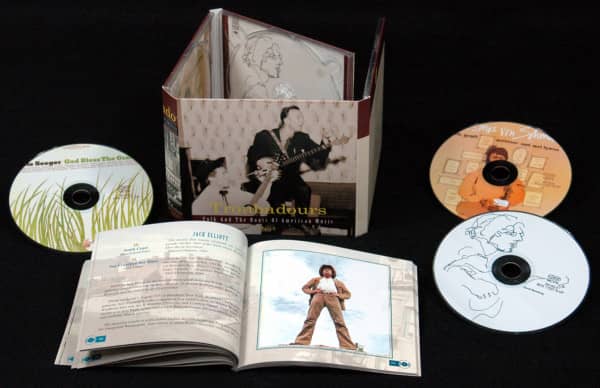
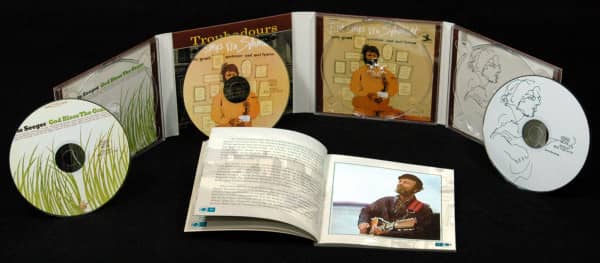
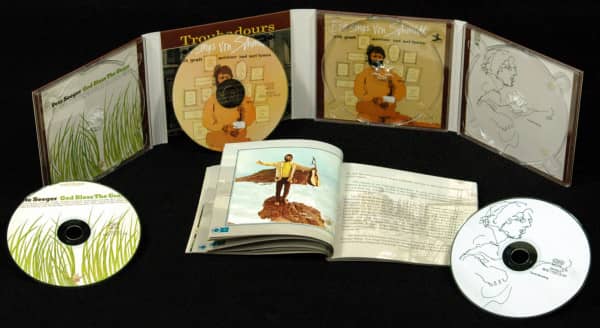
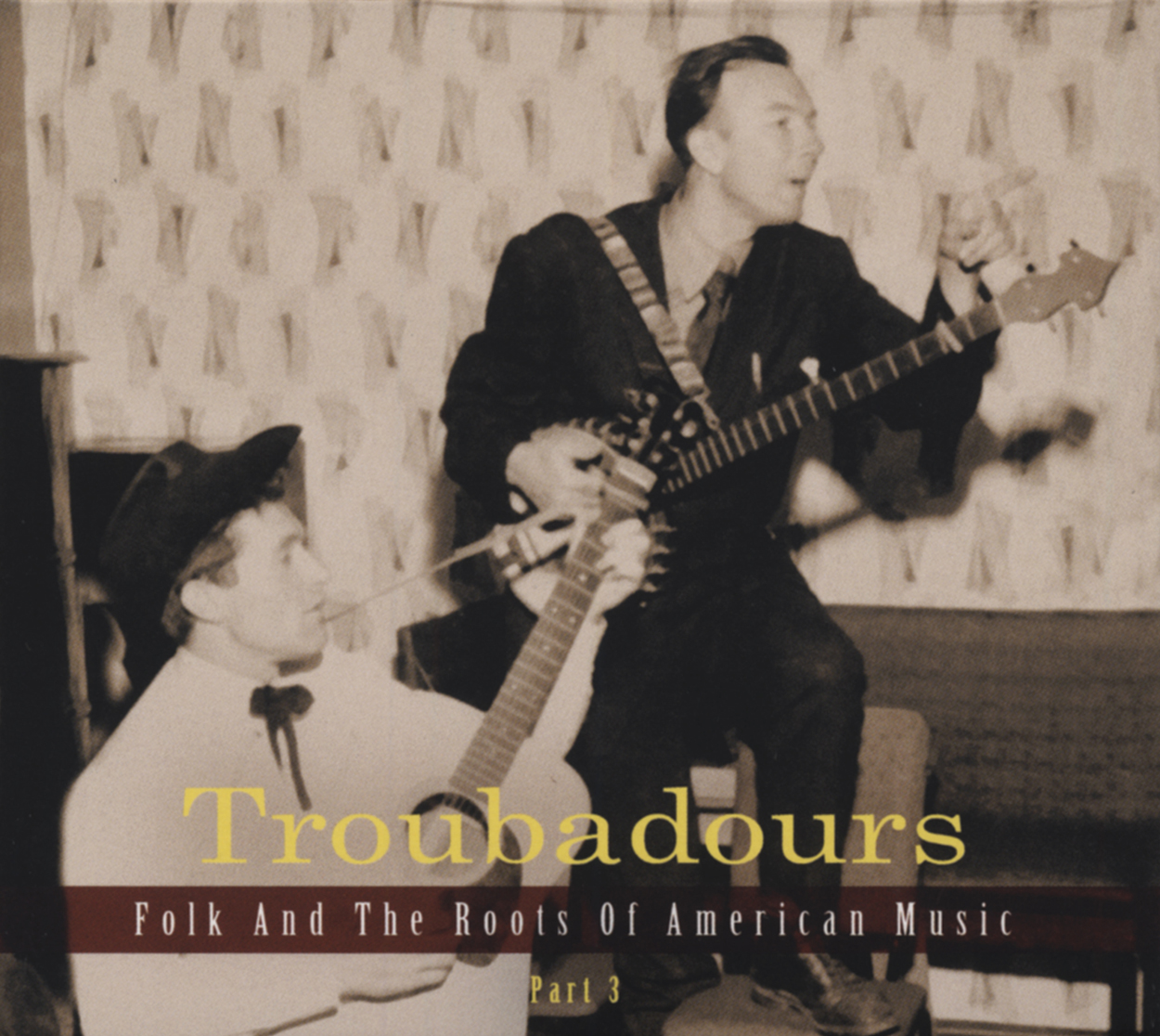
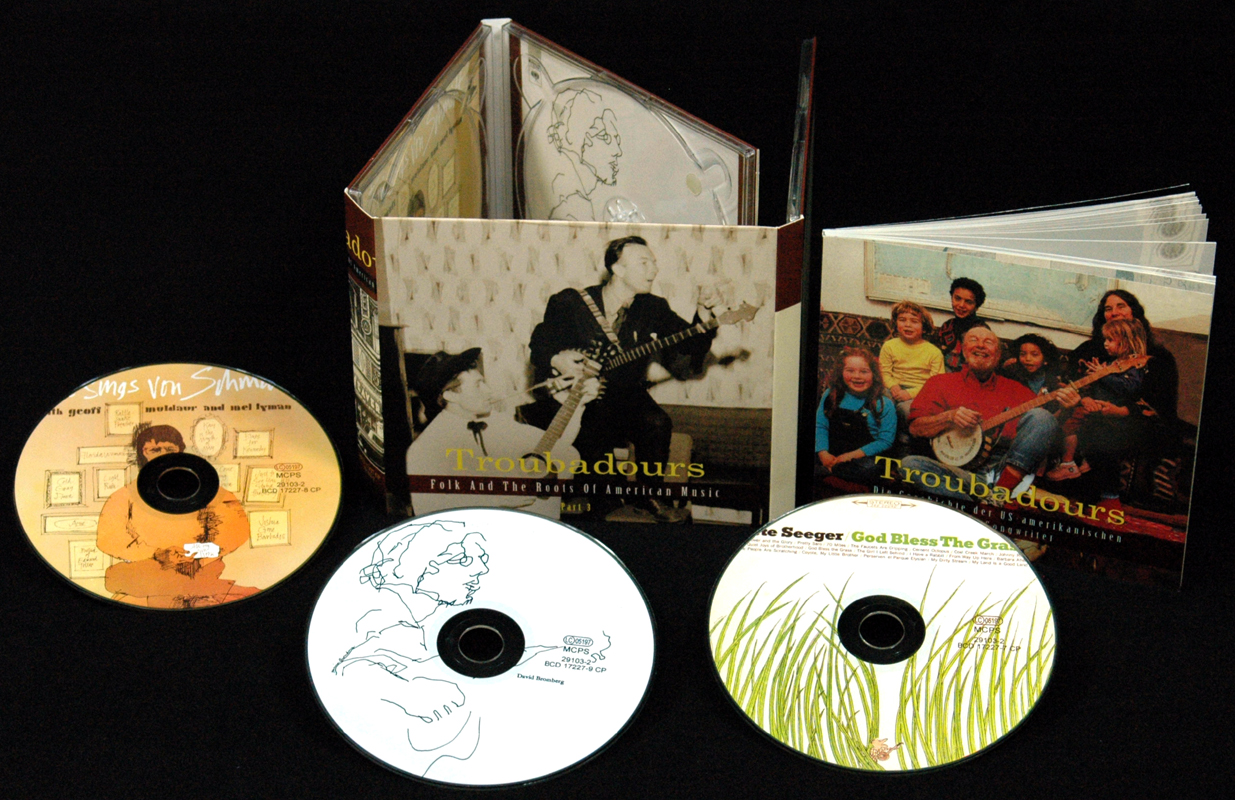
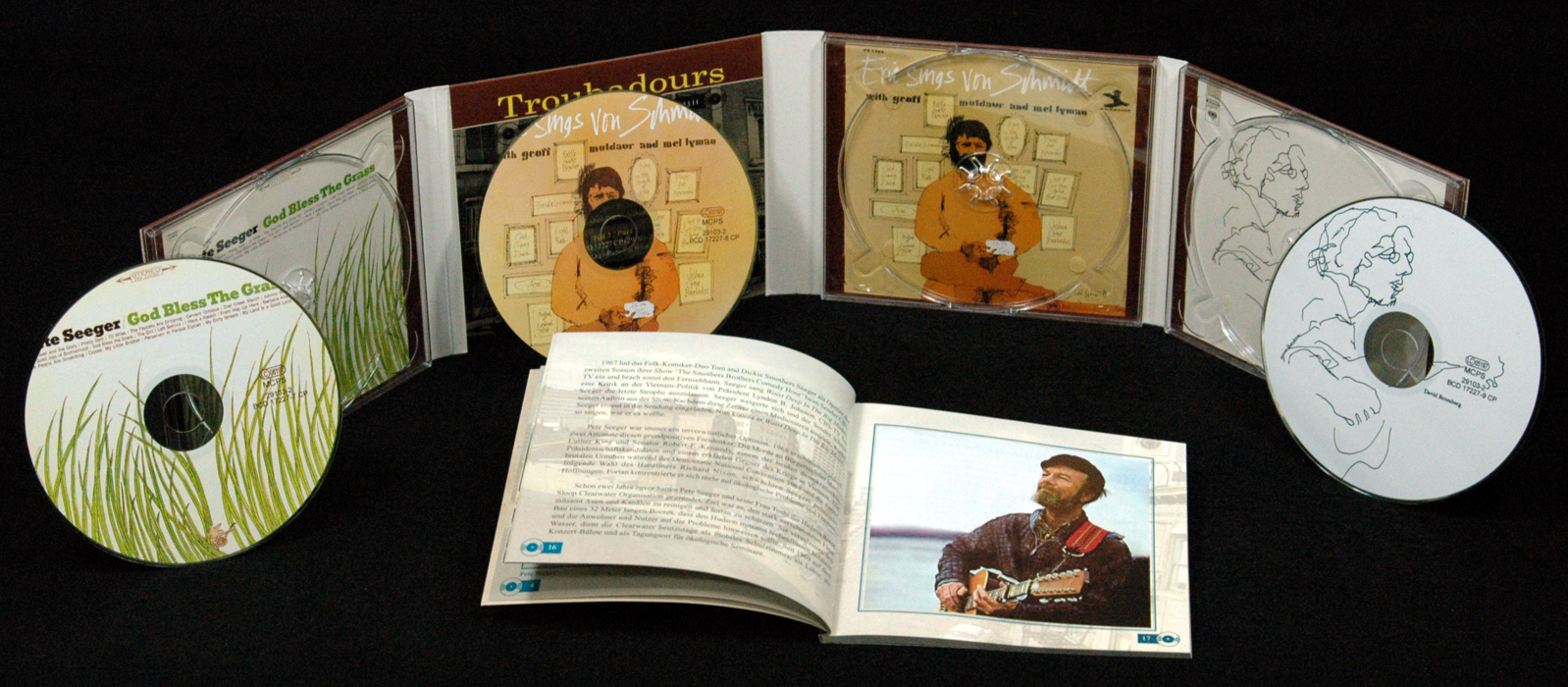
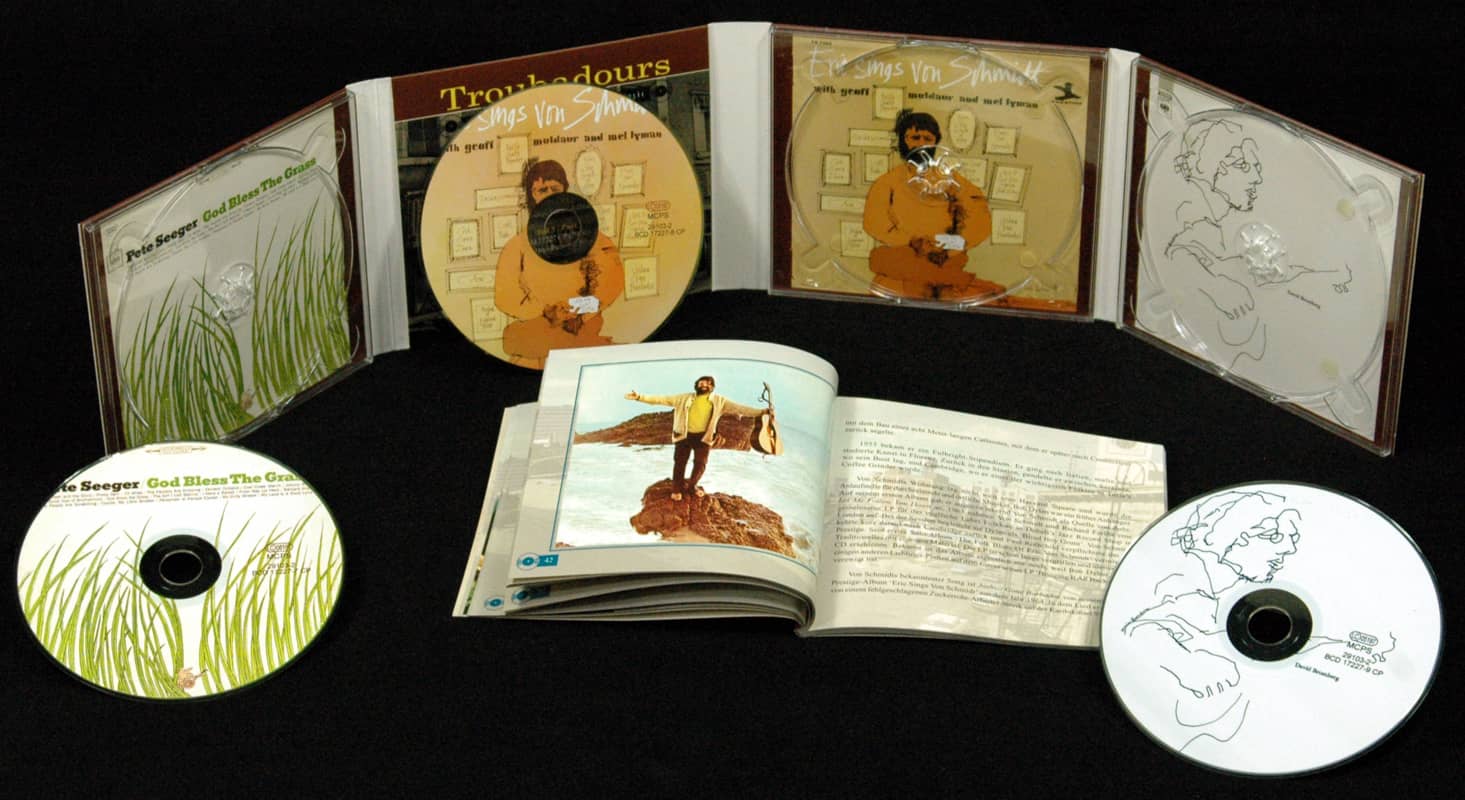
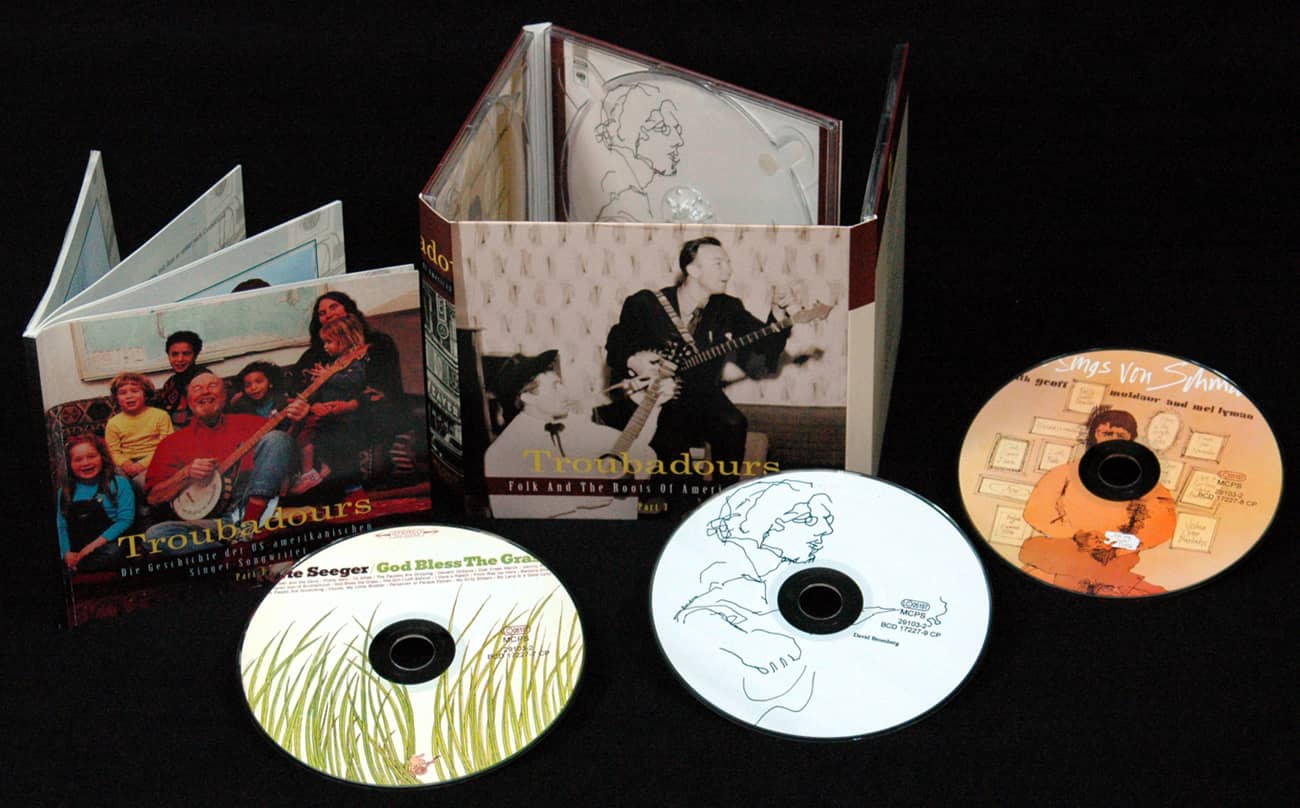
Various - Troubadours Vol.3, Folk And The Roots Of American Music (3-CD)
* incl. VAT / plus shipping costsDepending on the country of delivery, the VAT at checkout may vary.
Ready to ship today,
delivery time** appr. 1-3 workdays
Various - Troubadours: Vol.3, Folk And The Roots Of American Music (3-CD)
Along with folklorist Alan Lomax, Pete Seeger was a primary figure in seeding and shaping the American folk music revival. He never viewed himself as an entertainer, nor was he particularly comfortable as a solo performer. Yet his evangelical zeal for folk music and progressive social change inspired and nurtured three generations of singer-songwriters.
Born May 3, 1919 in New York City, Pete Seeger was the third and youngest son of Charles and Constance Seeger, instructors at the New York Institute of Musical Art. The couple divorced when Peter was eight years old. In 1932 Charles married his student, Ruth Crawford, now hailed as a major 20th century composer. The couple had four children; of them, Mike and Peggy Seeger also became significant figures in American folk music.
In summer 1936, Charles and Ruth took the 17-year-old Peter to the 'Mountain Dance And Folk Festival' near Asheville, North Carolina. The youth was fascinated by the square dances and especially Bascom Lamar Lunsford's and Samantha Bumgarner's driving five-string banjo styles. Seeger spent the next five years perfecting his own banjo technique.
After dropping out of Harvard University, Seeger became involved with folk music, labor organizing and politics. Alan Lomax encouraged the youth, hiring him to catalog race and old-time music recordings held by the Archive of American Folk Song in the Library of Congress. As Seeger's confidence and musical skills grew, Lomax invited him to participate on his CBS radio show. In March 1940 Seeger met balladeer Woody Guthrie at a New York fundraiser for displaced migrant workers.
In January 1941 Seeger, Lee Hays and Millard Lampell formed the Almanac Singers, performing folk songs and incisive topical songs at meetings, private functions, and labor rallies. Singing in natural, unaffected voices and driven by Seeger's clawhammer banjo, the Almanacs fused the essence and excitement of rural Southern string bands with the passion of labor songs and the dry, clever wit of New York's cabaret entertainers. This appealing music hybrid defined the sound and style of the American folk revival, and their records inspired a generation of young musicians. During the group's brief existence, the Almanac Singers' revolving roster included Woody Guthrie, Brownie McGhee, Sonny Terry, Josh White, Bess Lomax Hawes and Agnes 'Sis' Cunningham.
While serving in the army during World War II, Seeger envisioned a national movement unifying songwriters, performers, choral leaders and labor unions into a force for political and social change. After returning to New York in fall 1945, Seeger formed People's Songs. Initially drawing upon members of New York's leftist folk, theatrical and literary scenes, the organization soon opened offices in Los Angeles, Chicago and Cleveland. Two years after its founding, 2,000 folk music enthusiasts attended People's Songs' first national convention in New York.
However, People's Songs emerged as anti-Communist fervor grasped America. Many activists within the movement were or had been members of the American Communist Party. In 1948, People's Songs embraced the third-party Presidential bid of former Vice-President Henry Wallace, who advocated co-operation with the Soviet Union. Members who mistrusted the Communists broke away from the movement, while those who remained – particularly Seeger – became easy targets for right-wing zealots.
The Wallace campaign bankrupted People's Songs. To pay off its debts, the remaining activists held a fund-raising hootenanny at a New York theater in late November 1948. To accompany a folk dance ensemble, Seeger recruited guitarist Fred Hellerman, his old Almanac Singers vocalist and song leader Lee Hays, and contralto Ronnie Gilbert. The quartet clicked musically and further rehearsals refined their sound. Although they had no long-range professional aspirations, the group performed at labor functions, political rallies and on Oscar Brand's WNYC radio show, eventually adopting the name The Weavers. In December 1949 the group reluctantly accepted a week-long engagement at the Village Vanguard, a popular lower Manhattan cabaret. The response led owner Max Gordon to extend the booking through June. , Orchestra leader Gordon Jenkins caught the Weavers at the Vanguard and brokered a Decca recording contract. Their first record with Jenkins, Goodnight, Irene backed with Tzena, Tzena, Tzena, unexpectedly became 1950's biggest hit.
As their visibility rose, so did the ire of the watchdogs on the right. Harvey Matuso, a former People's Songs volunteer who fancied himself as a master of espionage, warned the FBI about the Weavers' Communist affiliations. 'Red Channels' cited Seeger for 13 Communist affiliations. Television appearances were cancelled when callers threatened sponsors with boycotts. The Knights of Columbus forced the Ohio State Fair to pull the Weavers' booking; the incident received national publicity. American Legion posts in various cities harassed nightclub owners that booked the Weavers. With each new Decca release, airplay dwindled. By 1952 the group formally disbanded, although it reunited sporadically for concerts after 1955.
Seeger resumed his solo performances, primarily in front of appreciative college audiences. He remained a target of right-wing super patriots. On August 18, 1955, Seeger was subpoenaed to testify before the House Un-American Activities Committee. A polite but hostile witness, he refused to answer questions about his personal and political associations. His stance led to a March 26, 1957, indictment for contempt of Congress. For the next five years Seeger was obligated to notify the federal government whenever he left the Southern District of New York. In March 1961 a jury found Seeger guilty and he was sentenced to 10 years in prison. The first four tracks in this collection were recorded during this period of uncertainty.
Oh, Had I A Golden Thread appeared on Seeger's 1960 Folkways collection 'Rainbow Quest.' Seeger later used it as the theme for his mid-'60s public television series. That album also yielded one of Seeger's best-loved songs, Where Have All The Flowers Gone. He wrote it in October 1955, basing it on three lines from a Ukrainian folksong Mikhail Sholokhov quoted in his 1934 novel 'And Quiet Flows The Don.' He introduced his three-verse version at an Oberlin College concert, sang it for about a year, then set it aside until he recorded it in 1959.
Joe Hickerson, later director of the Archive of Folk Song at the American Folklife Center of the Library of Congress, attended that Oberlin concert. Hickerson was an Indiana University folklore student in early 1960 when Folkways released Seeger's 'Rainbow Quest' album. He began singing Where Have All The Flowers Gone around Bloomington coffeehouses and hootenannies. Feeling the song was too short for audience participation, Hickerson wrote two additional verses followed by a repeat of the first verse. He introduced his expanded circular version the following summer at Camp Woodland, a progressive youth camp in New York's Catskill Mountains. At the end of the season, the staff and campers brought the song to New York City, where Peter Yarrow, Noel Stookey and Mary Travers learned it for their first album as Peter, Paul and Mary. The Kingston Trio learned it from them, beating them in the marketplace with a quickly recorded single.
Video von Various - Troubadours - Vol.3, Folk And The Roots Of American Music (3-CD)
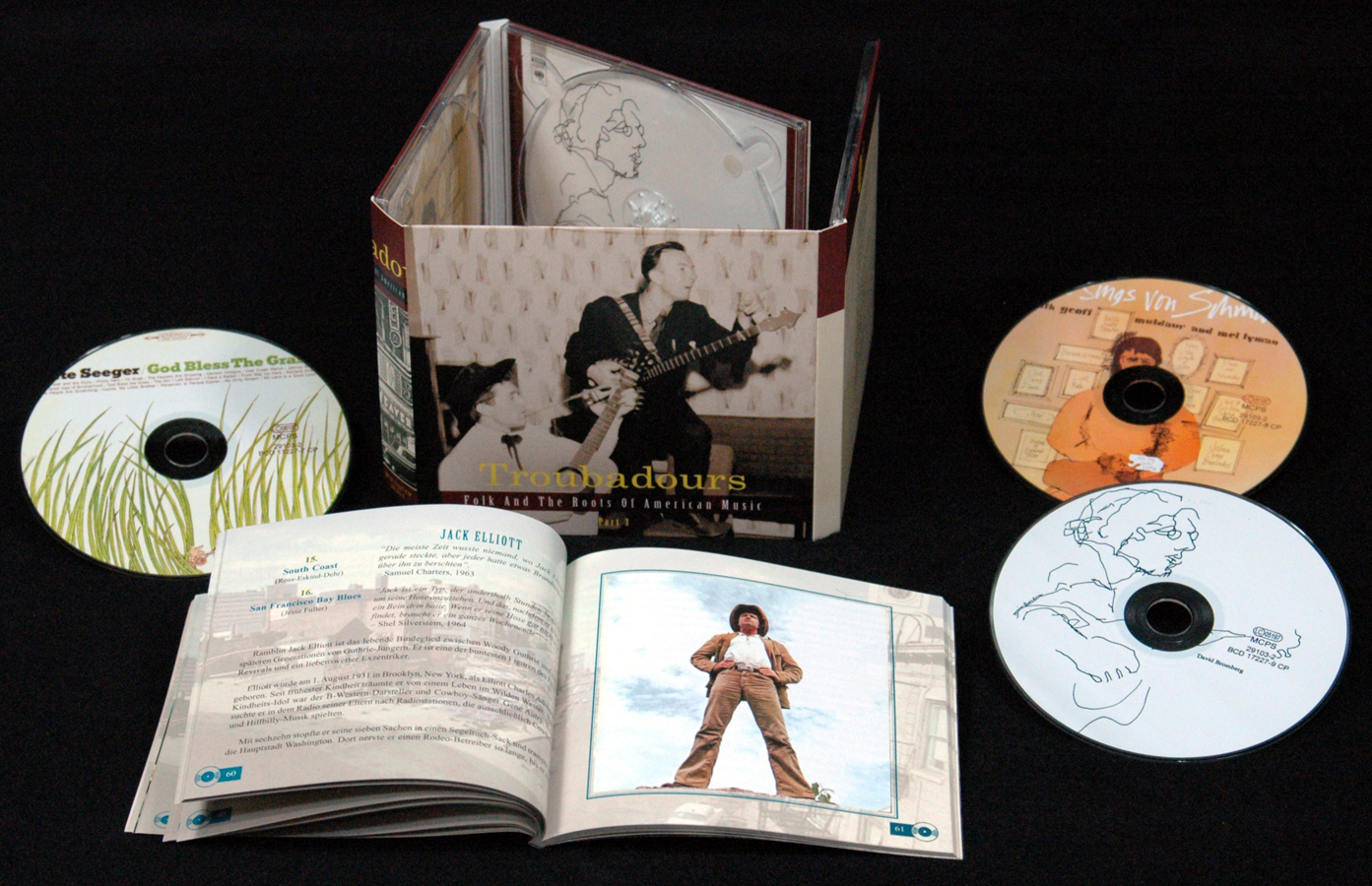
Article properties:Various - Troubadours: Vol.3, Folk And The Roots Of American Music (3-CD)
Interpret: Various - Troubadours
Album titlle: Vol.3, Folk And The Roots Of American Music (3-CD)
Label Bear Family Records
Genre Folk
- Preiscode CP
- Edition 2 Deluxe Edition
Artikelart CD
EAN: 5397102174032
- weight in Kg 0.25
| Various - Troubadours - Vol.3, Folk And The Roots Of American Music (3-CD) CD 1 | ||||
|---|---|---|---|---|
| 01 | Oh, Had I A Golden Thread | Pete Seeger | ||
| 02 | Where Have All The Flowers Gone? | Pete Seeger | ||
| 03 | Last Night I Had The Strangest Dream | Pete Seeger | ||
| 04 | The Bells Of Rhymney | Pete Seeger | ||
| 05 | Turn! Turn! Turn! | Pete Seeger | ||
| 06 | Song Of The Punch Press Operator | Pete Seeger | ||
| 07 | Waist Deep In The Big Muddy | Pete Seeger | ||
| 08 | From Way Up Here | Pete Seeger | ||
| 09 | The Clearwater | Pete Seeger | ||
| 10 | Last Train To Nuremberg | Pete Seeger | ||
| 11 | Hobo's Lullaby | Pete Seeger | ||
| 12 | What Have They Done To The Rain? | Joan Baez | ||
| 13 | We Shall Overcome | Joan Baez | ||
| 14 | Farewell, Angelina | Joan Baez | ||
| 15 | Daddy, You've Been On My Mind | Joan Baez | ||
| 16 | Legend Of A Girl Child Linda | Baez, Joan & Fariña, M & Collins, J | ||
| 17 | The Night They Drove Old Dixie Down | Joan Baez | ||
| 18 | Diamonds And Rust | Joan Baez | ||
| 19 | Now That The Buffalo's Gone | Various - Troubadours | ||
| 20 | Cod'ine | Various - Troubadours | ||
| 21 | The Universal Soldier | Various - Troubadours | ||
| 22 | Until It's Time For You To Go | Various - Troubadours | ||
| 23 | The Piney Wood Hills | Various - Troubadours | ||
| 24 | My Country 'tis Of Thy People You're Dying | Various - Troubadours | ||
| Various - Troubadours - Vol.3, Folk And The Roots Of American Music (3-CD) CD 2 | ||||
|---|---|---|---|---|
| 01 | On The Road Again | Tom Rush | ||
| 02 | No Regrets | Tom Rush | ||
| 03 | Merrimack County | Tom Rush | ||
| 04 | Joshua Gone Barbados | Eric Von Schmidt | ||
| 05 | Light Rain | Eric Von Schmidt | ||
| 06 | Won't You Tell Me | Mitch Greenhill | ||
| 07 | Highway 301 Blues | Mitch Greenhill | ||
| 08 | One Morning In May | Keith, Bill & Rooney, Jim | ||
| 09 | Kentucky Moonshiner | Keith, Bill & Rooney, Jim | ||
| 10 | Three Songs / A Look At The Ragtime Era (Sister Kate's Night Out) | Jim Kweskin & The Jug Band | ||
| 11 | Ginger Man | Geoff Muldaur | ||
| 12 | Minglewood | The Jim Kweskin Jug Band | ||
| 13 | Garden Of Joy | The Jim Kweskin Jug Band | ||
| 14 | Midnight At The Oasis | Maria Muldaur | ||
| 15 | South Coast | Jack Elliott | ||
| 16 | San Francisco Bay Blues | Jack Elliott | ||
| 17 | Coming In To Los Angeles | Arlo Guthrie | ||
| 18 | Percy's Song | Arlo Guthrie | ||
| 19 | Alice's Restaurant | Arlo Guthrie | ||
| Various - Troubadours - Vol.3, Folk And The Roots Of American Music (3-CD) CD 3 | ||||
|---|---|---|---|---|
| 01 | Daydream | The Lovin' Spoonful | ||
| 02 | Younger Girl | The Lovin' Spoonful | ||
| 03 | Darlin' Companion | The Lovin' Spoonful | ||
| 04 | Hey Joe (You Shot Your Woman Down) | Tim Rose | ||
| 05 | Louise | Paul Siebel | ||
| 06 | Any Day Woman | Paul Siebel | ||
| 07 | Sunshine | Jonathan Edwards | ||
| 08 | Shanty | Jonathan Edwards | ||
| 09 | You Don't Mess Around With Jim | Jim Croce | ||
| 10 | Time In A Bottle | Jim Croce | ||
| 11 | Bad, Bad Leroy Brown | Jim Croce | ||
| 12 | Operator (That's Not The Way It Feels) | Jim Croce | ||
| 13 | I Got A Name | Jim Croce | ||
| 14 | The Holdup | David Bromberg | ||
| 15 | Danger Man | David Bromberg | ||
| 16 | Lay Down (Candles In The Rain) | Melanie | ||
| 17 | What Have They Done To My Song, Ma | Melanie | ||
| 18 | A Brand New Key | Melanie | ||
| 19 | Taxi | Harry Chapin | ||
| 20 | Cat's In The Cradle | Harry Chapin | ||
Troubadours
Die Geschichte der US-amerikanischen Singer-Songwriter
Jackson Browne, Bob Dylan, Carole King, Joni Mitchell und James Taylor werden meist als Begründer der zeitgenössischen Singer-Songwriter-Bewegung in Amerika angeführt. Die amerikanische Tradition der Liedermacher reicht jedoch bis in die Mitte des 19. Jahrhunderts zurück. Sie ist tief verwurzelt in anglo-keltischen Balladen, protestantischen Erweckungsliedern, in afroamerikanischen Spirituals und Work Songs, sowie den Minstrel- und Medicine-Shows. Weiterhin lieferten die englischen und amerikanischen Romantiker des 18. und 19. Jahrhunderts Ideen und Rollenmodelle für viele Songwriter der Gegenwart.
Die Erfahrungen und die Energie einer jungen zusammengewürfelten Nation auf der Suche nach Identität, lieferten den kulturellen Hintergrund für eine reichhaltige Folklore. Bis zum Ende des Ersten Weltkriegs waren die USA eigentlich eine Agrarnation mit streckenweise sehr dünner Besiedelung. Folksongs waren allgegenwärtiger Bestandteil des täglichen Lebens. Sie erleichterten nicht nur Einsamkeit, monotone Arbeit und boten Entspannung bei einem eher kurzen Feierabend, sondern vermittelten auch Nachrichten, sowie soziale und religiöse Normen in entlegene Gegenden. Weiterhin half die starke Verknüpfung von Folklore und Alltag bei der Bildung einer eigenen amerikanischen Stimme, als neuer Variante der englischen Sprache. Im späteren 19. Jahrhundert begannen einzelne Vorreiter, den Folk-Pool für kommerzielle und politische Zwecke zu nutzen. Wahre Pionierarbeit lieferte zum Beispiel die Hutchison Family aus Milford, New Hampshire. Sie ging mit kirchlichen und weltlichen Liedern auf Tournee durch die Vereinigten Staaten und lieferte oft musikalische Rahmenprogramme für populistische Versammlungen. In den Jahren vor dem Ersten Weltkrieg gestalteten die linken Aktivisten Joe Hill und Ralph Chaplin aus traditionellem Liedgut und Kirchenliedern sarkastische Hymnen für die Industrial Workers of the World.
Der aus Virginia stammende Bentley Ball veranstaltete während der frühen Zwanzigerjahre Liederabende mit Balladen aus den Appalachen, Cowboyliedern und sogar Musikbeispielen einiger Stämme der Ureinwohner Amerikas vor einem faszinierten städtischen Publikum. Von 1918 bis 1920 machte er als erster Aufnahmen von Folk-Standards wie Jesse James und The Dying Cowboy. Marion Try Slaughter, ein in Texas geborener Operetten Sänger, der unter dem Namen Vernon Dalhart auftrat, nahm vier Jahr später Fassungen von The Wreck Of The Southern 97 und The Prisoner's Song auf, die einen neuen Umgang mit altem Material einläuteten. Obwohl keineswegs authentisch, erreichten sie das Ohr der Öffentlichkeit und verkauften sich mehrere hunderttausend Mal.
Die Minstrel-Tradition entstand in den amerikanischen Südstaaten der 30er Jahre des 19. Jahrhunderts und beeinflusste verschiedene Roots-Musikstile nachhaltig. In den Minstrel-Shows imitierten und karikierten weiße Musiker schwarze Musik, Kultur und Sprache. Um den zeitgenössischen rassistischen Normen zu entsprechen, mussten sie sich die Gesichter schwarz anmalen. Ironischer Weise war die imitierte Musik selbst eine Imitation der gängigen irisch-schottischen Fiddle-Tanz-Musik. Mit der Zeit vermischten sich die keltischen Melodien und Rhythmen mit afrikanischen Rhythmen und Interpretationsweisen und eine immer eigenständigere amerikanische Musik entstand. Nach dem Bürgerkrieg traten auch Afroamerikaner in den Shows auf. Wegen der vorherrschenden Rassentrennung mussten sie ihr Gesicht jedoch ebenfalls schwarz anmalen!
Diese Art von Musik fand auch in den sogenannten Medicine-Shows Verwendung: Reisende Verkaufs- und Unterhaltungsevents mit Musik, Akrobatik und Rummel jeder Art. Als Höhepunkt kam der Auftritt eines vermeintlichen Doktors, der ein Wunderheilmittel anpries. Diese Elixiere, meist hochprozentiger, selbstgebrannter Alkohol mit einigen einheimischen Kräutern abgerundet, konnten alles: Warzen, Impotenz, Grippe, Galle und vor allen Dingen Kopfschmerzen! Hier kamen jedoch Musiker verschiedener Kulturen und Rassen zusammen und tauschten sich unweigerlich aus. Die Musik traf auf den amerikanischen Frontier-Humor und entwickelte Weisheiten, Texte und Entertainment-Muster, die bis zum heutigen Tag Geltung haben. Der heutige Folk-Kanon und seine Verbreitung, sowie Generationen von Musikern und Sängern wären ohne diese fahrenden Shows nicht möglich gewesen. Das Ideal bzw. Klischee des nach Wahrheit suchenden, oft leidenden Künstlers, der seine Erkenntnisse mit der Welt teilen will, geht auf jeden Fall zurück auf die englische Romantik. Von den amerikanischen Kollegen wie Thoreau und Emerson, kommen die nüchternen und pragmatischen Tugenden, die helfen sollen, Fehler der alten Welt in der Neuen nicht zu wiederholen. Die Parallelen im politischen wie philosophisch-ethischen Bewusstsein zwischen den romantischen Dichtern und ihren ebenso romantischen Kollegen des 20. und 21. Jahrhunderts, sind nicht von der Hand zu weisen.
Der Übersicht halber verweisen wir hier nur auf Interpreten, die auch mit Programmen unterwegs waren und somit die Tradition der mündlichen Überlieferung auf diesem Wege bereicherten. Es gab seit Mitte des 19. Jahrhunderts auch einige wenige professionelle Liedermacher, wie den weltbekannten Stephen Foster (1826-1864). Sein ‘Oh! Susanna’ ist der vielleicht bekannteste ‘Folk-Song’ Amerikas.
Bei den Folk-Traditionen jener Zeit von Singer-Songwritern zu sprechen, ist jedoch kritisch. Von Carson Robison und anderen Ausnahmen abgesehen, bezeichnete man die meisten Sänger als Songster: Der Begriff betitelt Musiker, die aus dem großen Pool der Minstrel-, Medicine-, Folk- und Pop-Songs schöpften und sie auf allen möglichen öffentlichen und privaten Veranstaltungen aufführten. Ihre kreative Leistung war es, die Lieder den jeweiligen kulturellen Bedingungen und ihren eigenen künstlerischen Vorstellungen anzupassen. Aktuelles Tagesgeschehen und weltbewegende Ereignisse, wie zum Beispiel der Untergang der Titanic, wurden gekonnt in altes Material eingearbeitet. Diese Eigenschaft macht die Songster somit zu den direkten Vorläufern der heutigen Singer-Songwriter. ‘Lead Belly’ zum Beispiel, wäre bei der Betrachtung seines Repertoires und seiner Arbeitsweise, streng genommen eher Songster.
Auch I.W.W. oder ‘Wobblies’, eine international organisierte Gewerkschaft, deren Ziel unter anderem die Abschaffung von Löhnen war und eine einhergehende Gleichschaltung aller Arbeiter zur Folge haben sollte.

Ready to ship today, delivery time** appr. 1-3 workdays

Ready to ship today, delivery time** appr. 1-3 workdays
Ready to ship today, delivery time** appr. 1-3 workdays

Ready to ship today, delivery time** appr. 1-3 workdays
Ready to ship today, delivery time** appr. 1-3 workdays

the very last 2 available
Ready to ship today, delivery time** appr. 1-3 workdays

Ready to ship today, delivery time** appr. 1-3 workdays
Ready to ship today, delivery time** appr. 1-3 workdays

Ready to ship today, delivery time** appr. 1-3 workdays

This article is deleted and can no longer be ordered!

Ready to ship today, delivery time** appr. 1-3 workdays

Ready to ship today, delivery time** appr. 1-3 workdays

Ready to ship today, delivery time** appr. 1-3 workdays

Ready to ship today, delivery time** appr. 1-3 workdays

Ready to ship today, delivery time** appr. 1-3 workdays