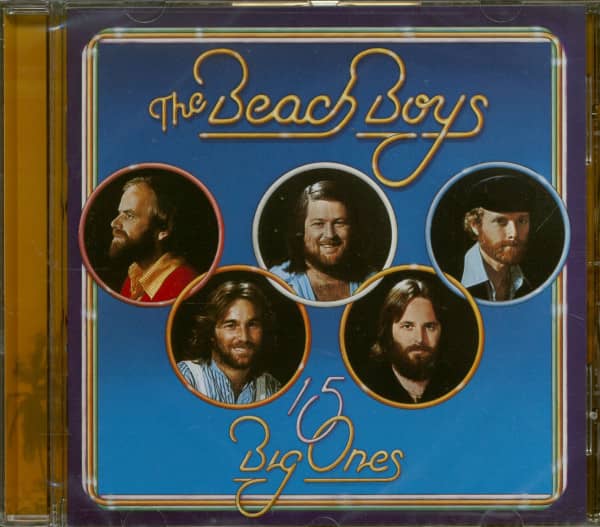
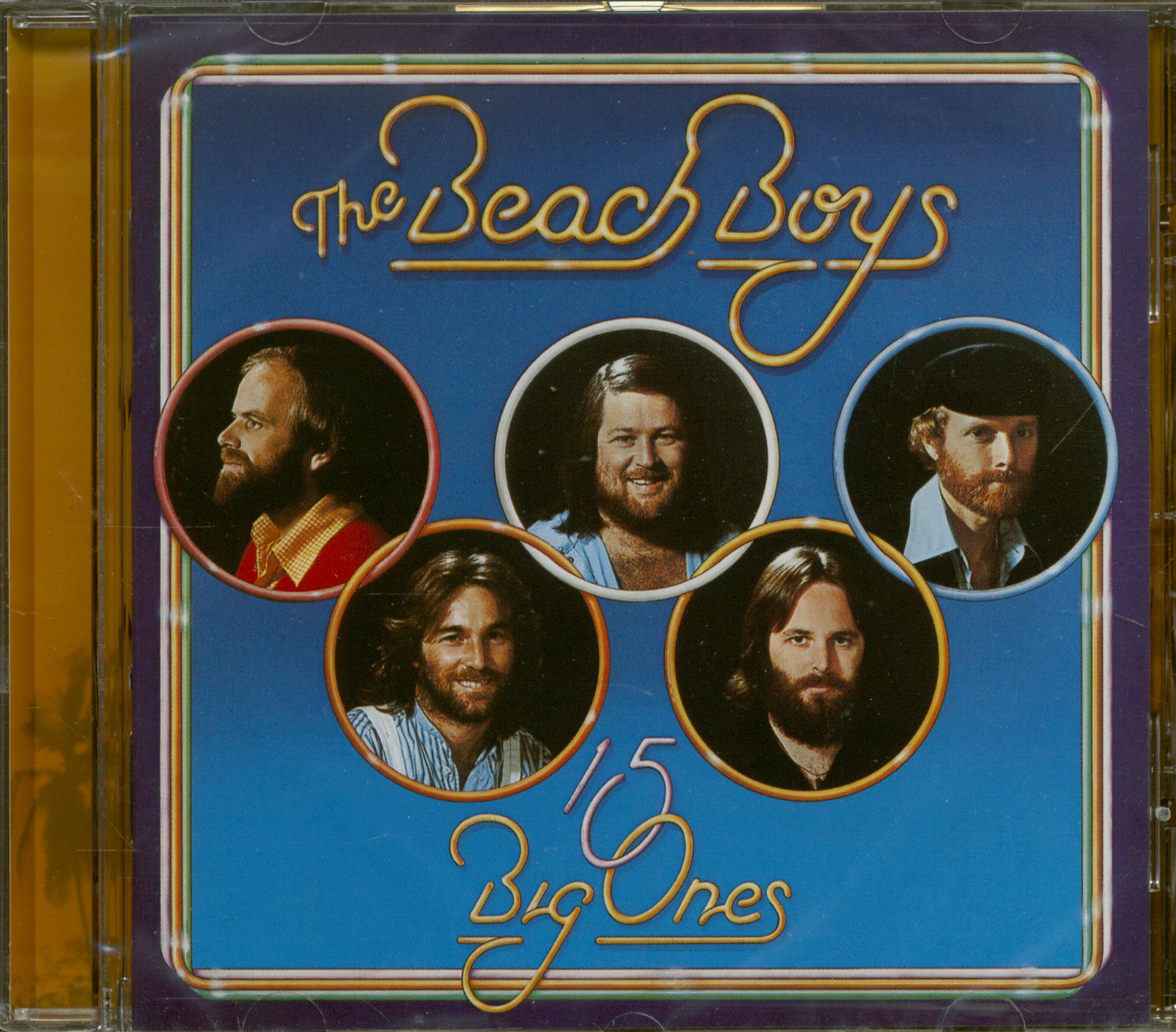
The Beach Boys 15 Big Ones - Love You (CD)
* incl. VAT / plus shipping costsDepending on the country of delivery, the VAT at checkout may vary.
the very last 1 available
Ready to ship today,
delivery time** appr. 1-3 workdays
- catalog number:CDCAP27945
- weight in Kg 0.1
The Beach Boys: 15 Big Ones - Love You (CD)
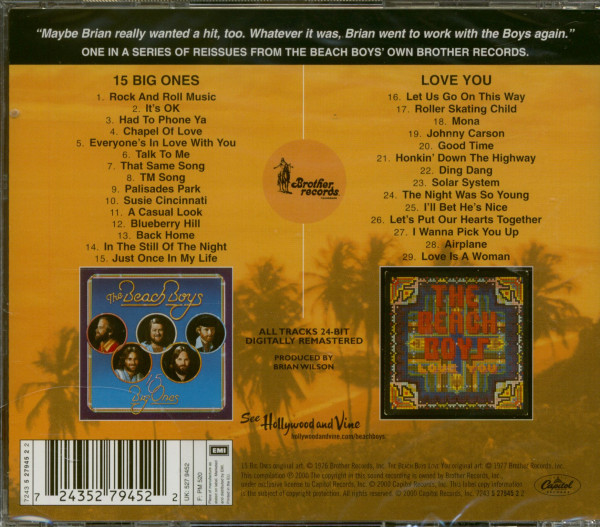
Two classic Beach Boys albums from the mid- to late-1970s brought together on one CD:15 Big Ones(1976) andThe Beach Boys Love You(1977). This 2000 Capitol edition combines all 29 tracks from the two original albums, offering around 74 minutes of music and a fascinating snapshot of the group during a distinctive period in its history. The material was digitally remastered for this reissue.
15 Big Onesmarked an important return to the studio for Brian Wilson, who played a central role in the production. Alongside original Beach Boys material, the album features a number of carefully chosen covers, including Chuck Berry's“Rock And Roll Music”,“Chapel Of Love”,“Palisades Park”,“Blueberry Hill”and“In The Still Of The Night”. The album also includes fan favourites such as“It's OK”,“Had To Phone Ya”,“That Same Song”and“Back Home”.
Love Youtakes a different direction, presenting a more personal and unconventional side of the Beach Boys. Most of its 14 songs were written by Brian Wilson, including“Let Us Go On This Way”,“Roller Skating Child”,“Mona”,“Johnny Carson”,“Good Time”,“Honkin' Down The Highway”,“Solar System”,“The Night Was So Young”,“Airplane”and“Love Is A Woman”.
A worthwhile 2-in-1 edition for Beach Boys collectors and fans who want to explore the band's less familiar 1970s catalogue – from classic rock'n'roll and pop influences to Brian Wilson's increasingly individual songwriting and production style.
Article properties:The Beach Boys: 15 Big Ones - Love You (CD)
Artist: The Beach Boys
Album titlle: 15 Big Ones - Love You (CD)
Genre Surf
Label Capitol Records
Artikelart CD
EAN: 2500001251398
- weight in Kg 0.1
| Beach Boys, The - 15 Big Ones - Love You (CD) CD 1 | ||||
|---|---|---|---|---|
| 01 | Rock And Roll Music | The Beach Boys | ||
| 02 | It's Ok | The Beach Boys | ||
| 03 | Had To Phone Ya | The Beach Boys | ||
| 04 | Chapel Of Love | The Beach Boys | ||
| 05 | Everyone's In Love With You | The Beach Boys | ||
| 06 | Talk To Me | The Beach Boys | ||
| 07 | That Same Song | The Beach Boys | ||
| 08 | TM Song | The Beach Boys | ||
| 09 | Palisades Park | The Beach Boys | ||
| 10 | Susie Cincinnati | The Beach Boys | ||
| 11 | A Casual Look | The Beach Boys | ||
| 12 | Blueberry Hill | The Beach Boys | ||
| 13 | Back Home | The Beach Boys | ||
| 14 | In The Still Of The Night | The Beach Boys | ||
| 15 | Just Once In My Life | The Beach Boys | ||
| 16 | Let Us Go On This Way | The Beach Boys | ||
| 17 | Roller Skating Child | The Beach Boys | ||
| 18 | Mona | The Beach Boys | ||
| 19 | Johnny Carson | The Beach Boys | ||
| 20 | Good Time | The Beach Boys | ||
| 21 | Honkin' Down The Highway | The Beach Boys | ||
| 22 | Ding Dang | The Beach Boys | ||
| 23 | Solar System | The Beach Boys | ||
| 24 | The Night Was So Young | The Beach Boys | ||
| 25 | I'll Bet He's Nice | The Beach Boys | ||
| 26 | Let's Put Our Hearts Together | The Beach Boys | ||
| 27 | I Wanna Pick You Up | The Beach Boys | ||
| 28 | Airplane | The Beach Boys | ||
| 29 | Love Is A Woman | The Beach Boys | ||
Beach Boys
Brian Wilson (vocals, piano – b. 20 June 1942),
Dennis Wilson (drums – b. 4 December 1944, d. 28 December 1983),
Carl Wilson (vocals, guitar – b. 21 December 1946, d. 6 February 1998),
Al Jardine (vocals, guitar – b. 3 September 1942) and
Mike Love (vocals – b. 15 March 1941)
Formed in 1961 and still in existence in 1975 with no prospect of breaking up, the Beach Boys were America's only real challenge to the Beatles and certainly the most prominent white American group of the pre-psychedelic era.
The group came together in the middle-class Los Angeles suburb of Hawthorne and centred on the teenage Wilson brothers – Brian (b. 20 June 1942), Dennis (b. 4 December 1944) and Carl (21 December 1946) – their cousin Mike Love (15 March 1941) and their friend Alan Jardine (3 September 1942). Harmony singing had always been an important part of their family life, and when the Wilson parents took a holiday in Mexico in September 1961, it was the perfect opportunity for the kids to hire instruments and form a group in their living room. It was Dennis's passion for the Californian sport of surfing that gave the group its original identity, one that survives indelibly in the minds of today's audiences. He suggested that the group sing about the pastime, and a song called 'Surfin'' (written by Brian and Mike) was the immediate result.
Their father, Murray Wilson, himself a songwriter, took the boys to his music publisher, and the song was recorded under somewhat makeshift conditions, with Carl on guitar, Alan on double bass and Brian providing percussion on a dustbin. The publisher secured a release for the record on the local X label and then on the slightly larger Candix label, and against all the odds it hung on at the lower end of the American Hot Hundred for six weeks – no doubt mainly thanks to sales to Californian surfer boys and girls. They also began to perform in public, first as the Pendletones (after a brand of heavy check shirt worn by surfers, which became their early uniform), briefly as Carl and the Passions, and finally as the Beach Boys, the last name being a suggestion from Candix's promotion man. Their concert debut under that name took place on 31 December 1961 at the Ritchie Valens Memorial Concert in the Long Beach Municipal Auditorium. Around this time Jardine left to continue his dentistry studies and was replaced by neighbour David Marks, who played rhythm guitar, allowing Brian to switch to bass guitar.
Dennis played drums, while Mike Love shared the lead vocals with Brian. When Candix, a small label, folded in early 1962, Murray Wilson took the boys to Capitol Records and played producer Nik Venet acetates of 'Surfin' Safari' and '409' – the latter a hymn of praise to the singer's car. Venet seized the opportunity and signed the group, and 'Surfin' Safari' became a national Top Twenty hit. 'Ten Little Indians', the follow-up, was a comparative flop, but the next one was big indeed: 'Surfin' USA' reached number 3 in the early summer of 1963. It also laid bare the influences behind the growing talent of Brian Wilson, who was emerging as the group's true creative force. For 'Surfin' USA' Brian had taken over the melody and treatment of Chuck Berry's 'Sweet Little Sixteen' and added new words and a lead vocal, surrounded by the beginnings of a cool, fluid harmony style strongly reminiscent of the Four Freshmen (and thus of the American glee-club tradition).
The next single, 'Surfer Girl', a wistful, yearning ballad, put even greater emphasis on the harmonies, as the voices began to swirl in creamy, close-knit, harmonically sophisticated chorales, topped off by a gimmick borrowed from the records of East Coast vocal groups – Brian's cool, soaring falsetto, which became a major trademark. 'Surfin' USA' and 'Surfer Girl' marked the complementary modes that Brian and the group would explore over the next three years. The uptempo style led to 'Fun, Fun, Fun', 'I Get Around' (a number 1), 'When I Grow Up (To Be A Man)', 'Dance, Dance, Dance' and 'Help Me Rhonda' (another number 1) – all Top Ten hits in 1964 and 1965 – while the possibilities of the ballad form were explored, to ever more trance-like effect, in classics from the same period such as 'In My Room', 'The Lonely Sea', 'Girls On The Beach', 'Don't Worry Baby', 'The Warmth Of The Sun', 'She Knows Me Too Well', 'Kiss Me Baby' and 'Please Let Me Wonder'.
By this time, too, Jardine had returned to the fold, displacing Marks. On a broader level, the group's own influence was widespread. Their early surf records sparked off an entire genre and opened the way for artists such as Jan and Dean ('Surf City'), Bruce (Johnston) and Terry (Melcher) with 'Summer Means Fun', Ronnie and the Daytonas ('Teach Boy'), Jack Nitzsche ('The Lonely Surfer'), Dick Dale and the Del-Tones ('Surf Beat') and hundreds of aspiring Californian garage bands. When the surfing craze died down, the Beach Boys released an album of car songs called Little Deuce Coupe, on which '409' could be heard alongside other beauties such as 'Our Car Club', 'Cherry, Cherry Coupe', 'No-Go Showboat' and 'Custom Machine'. Sure enough, others responded: Jan and Dean with 'Dead Man's Curve' and 'Drag City', Bruce and Terry with 'Custom Machine' and 'Hot Rod USA', Ronnie and the Daytonas with 'GTO', the Rip-Chords with 'Hey Little Cobra' and 'Three Window Coupe'.
In all this Brian Wilson was acting as a reporter: he absorbed and reflected the emerging lifestyle of teenage California, a lifestyle that – fortunately for him – kids from New York to London to Paris also wanted to emulate. He wrote many of the early lyrics himself. In cold print they lack grace and wit, but sung by the group they are perfect expressions of teenage angst in all its forms.
Copyright © Bear Family Records

Item has to be restocked

only 2x still available
Ready to ship today, delivery time** appr. 1-3 workdays

Ready to ship today, delivery time** appr. 1-3 workdays

Item has to be restocked

only 1x still available
Ready to ship today, delivery time** appr. 1-3 workdays

Ready to ship today, delivery time** appr. 1-3 workdays

Ready to ship today, delivery time** appr. 1-3 workdays

Ready to ship today, delivery time** appr. 1-3 workdays

Ready to ship today, delivery time** appr. 1-3 workdays

This article is deleted and can no longer be ordered!
the very last 2 available
Ready to ship today, delivery time** appr. 1-3 workdays
This article is deleted and can no longer be ordered!
Ready to ship today, delivery time** appr. 1-3 workdays
deliverable within 1-2 weeks (as far as available at the supplier)
deliverable within 1-2 weeks (as far as available at the supplier)