
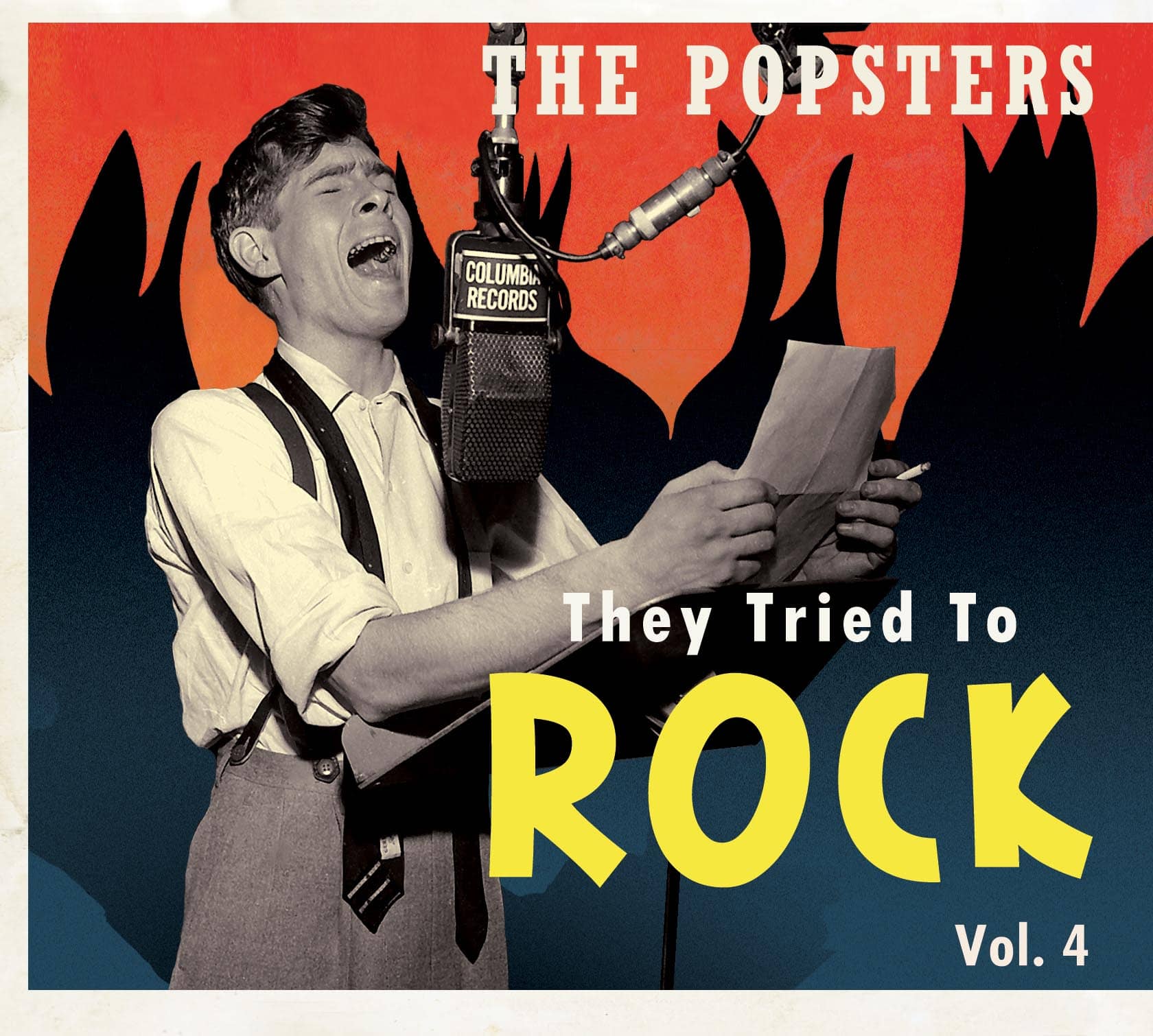
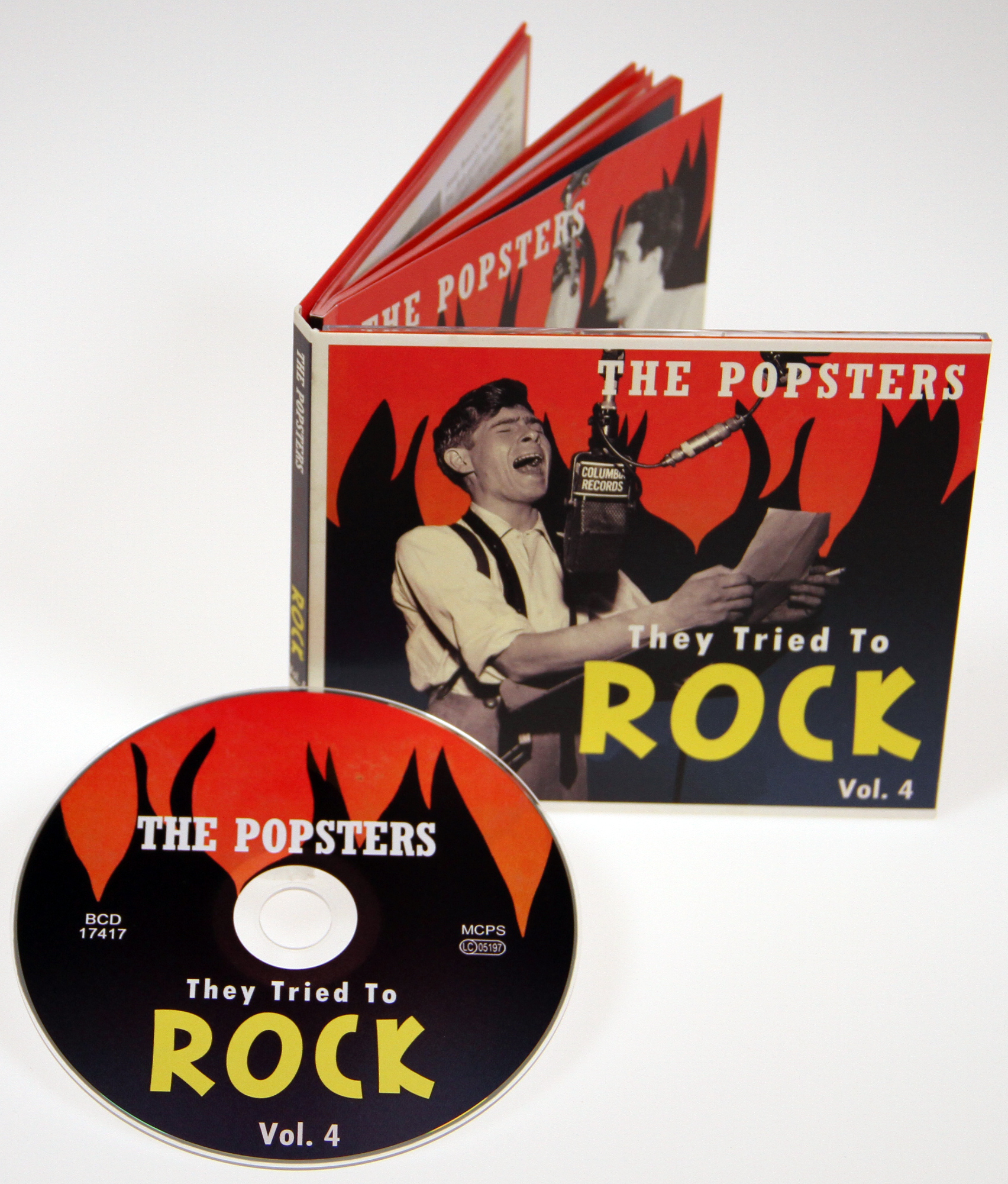
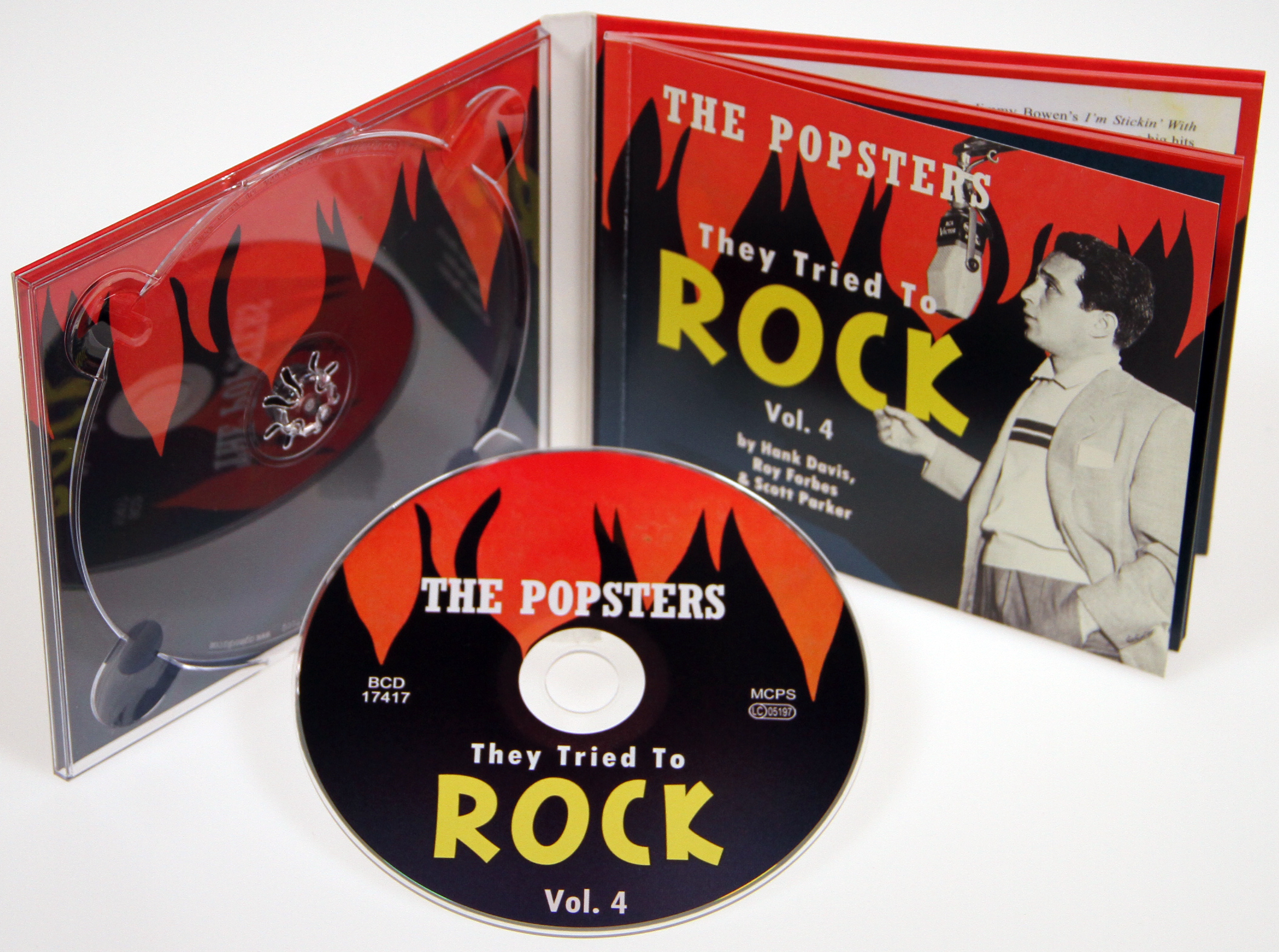
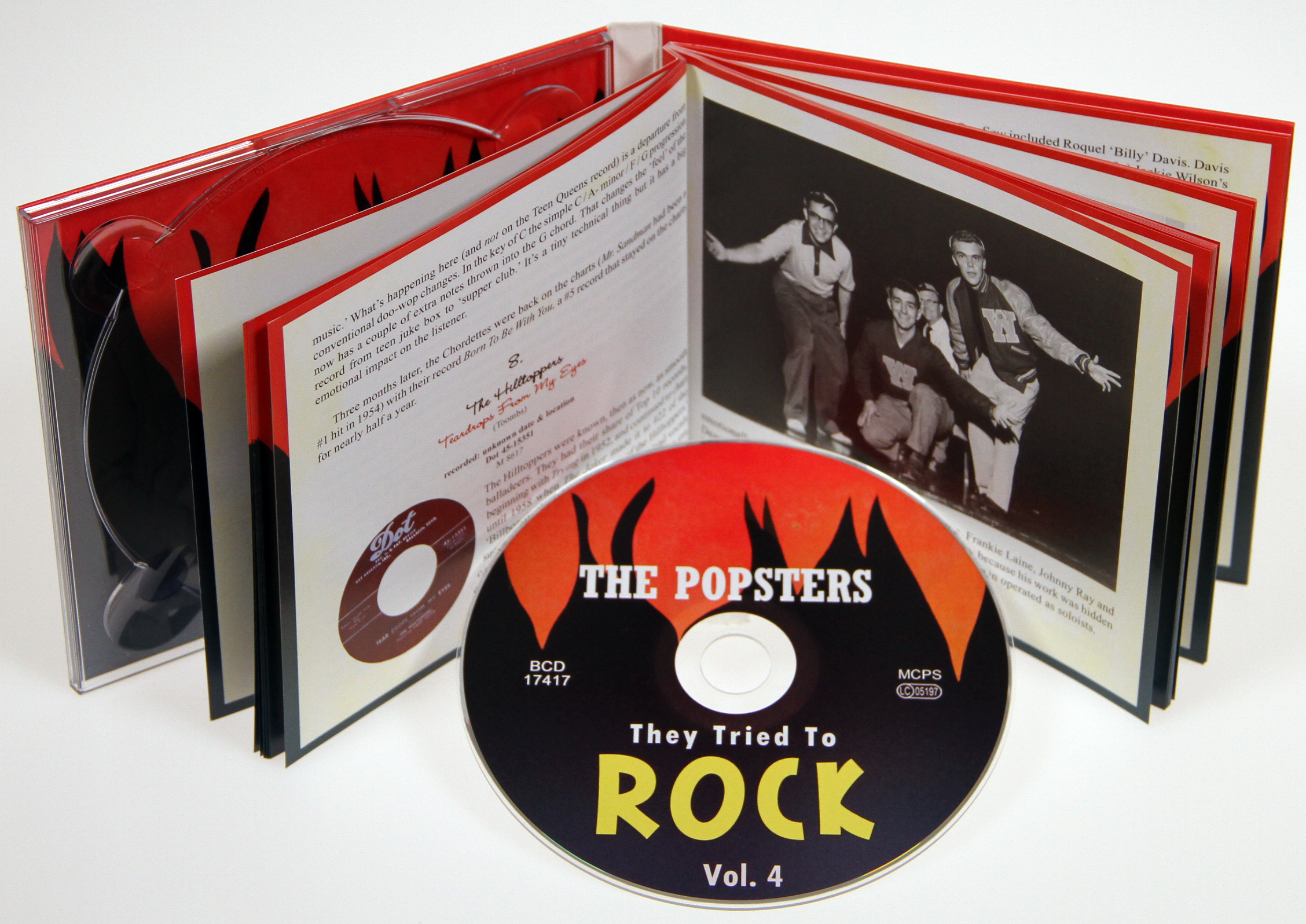
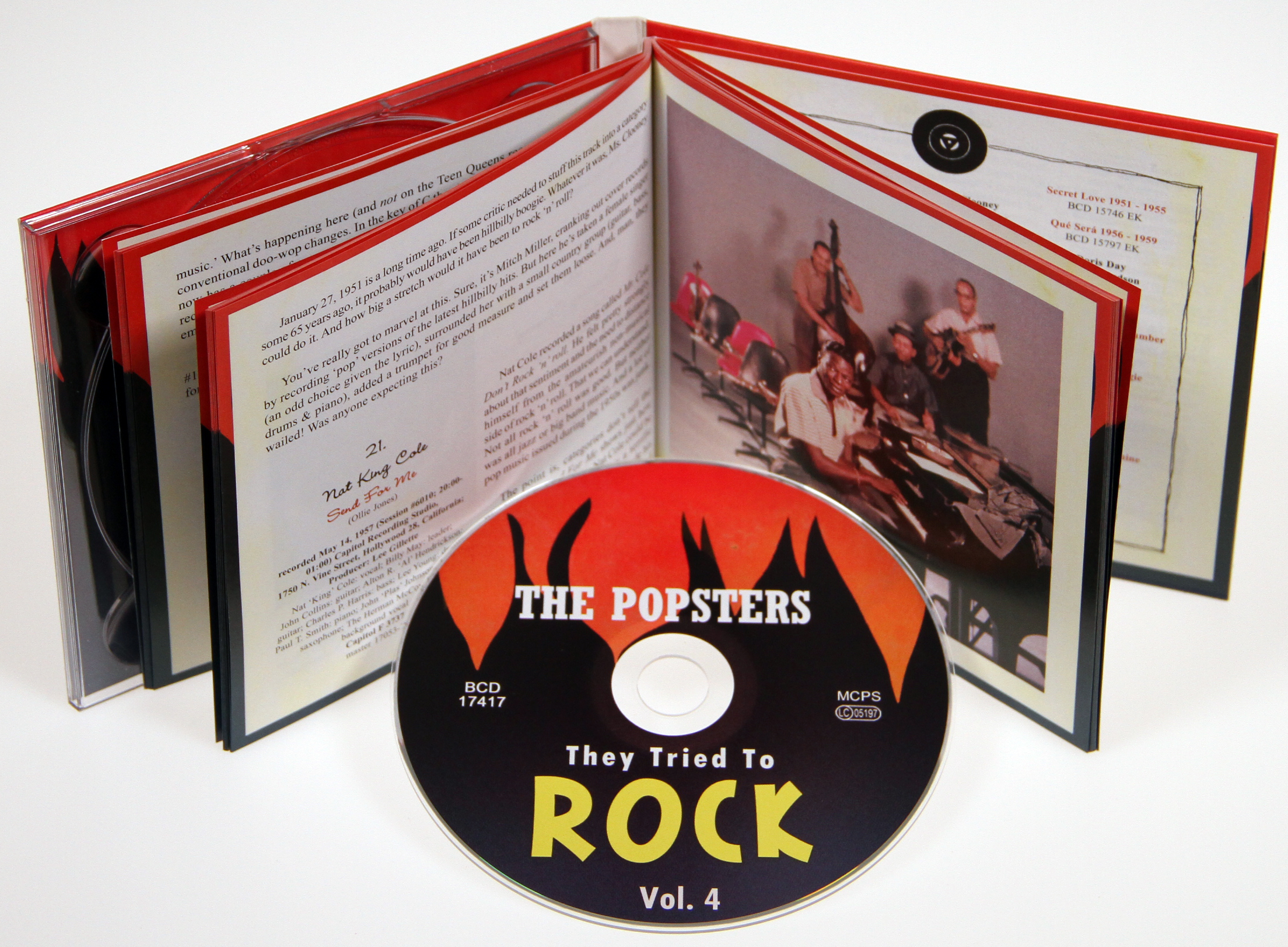
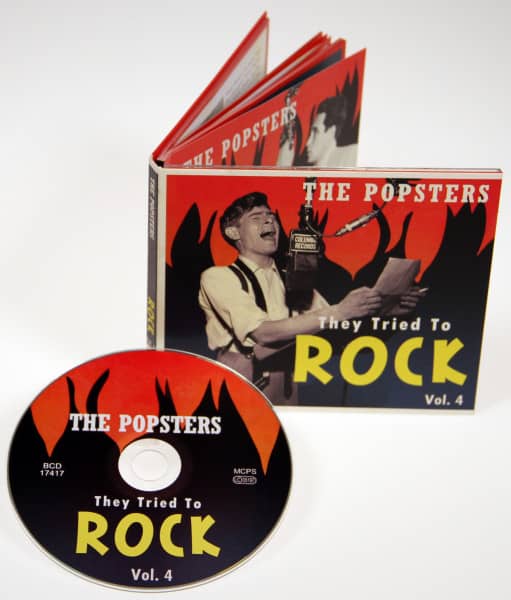
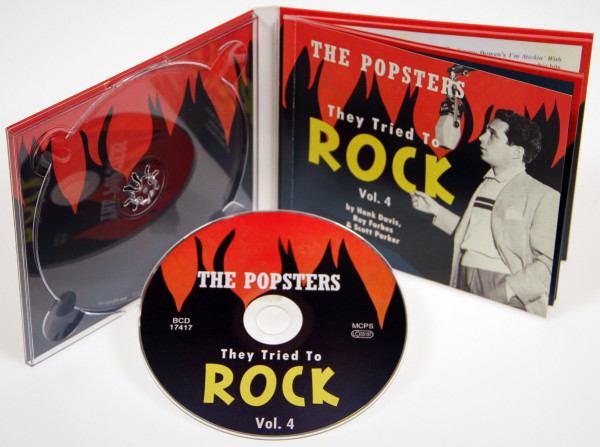
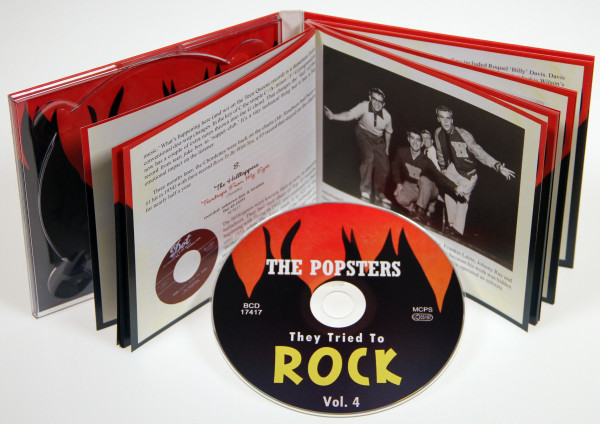
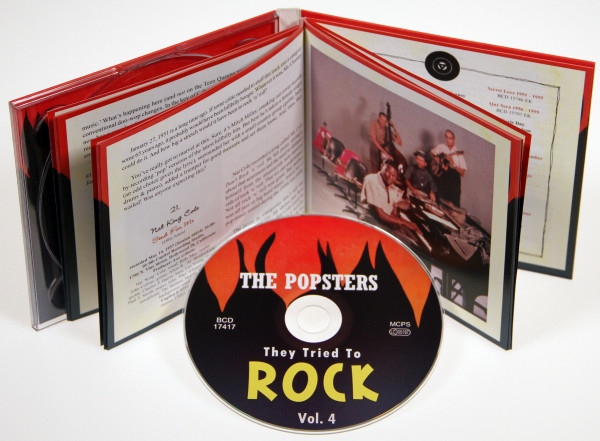
Various - The Popsters Vol.4, The Popsters - They Tried To Rock (CD)

* incl. VAT / plus shipping costsDepending on the country of delivery, the VAT at checkout may vary.
Ready to ship today,
delivery time** appr. 1-3 workdays
Various - The Popsters: Vol.4, The Popsters - They Tried To Rock (CD)
- Contains rarities that will surprise both pop fans and collectors.
- Includes tracks by established stars like Sinatra, Dean Martin, Peggy Lee and Doris Day, who you'd never think would 'stoop so low.'
- Reveals the importance of 'cover records' in the era just before the emergence of 'singer/songwriters' all but ended that industry-wide practice.
- Contains tracks that give new meaning to the word 'clueless.'
- Reveals the efforts (some of them desperate) of singers, songwriters, musicians and arrangers to come to terms with what 'rock 'n' roll' really meant.
- Shows some surprising successes at coming to terms with rock 'n' roll by singers you'd never expect to 'get it.'
By mid-1956, it was official: Rock 'n' roll was not a fad. It was threatening to take over American popular music. You could ignore it at your own peril, and that choice might cost you your career.
The warning signs had been there for a few years. There was a new style of music that the teenage kids were drawn to. Some of it seemed primitive, but not all of it was simple. Some was categorized as 'Rhythm & Blues.' Much of it was uptempo dance music but some of it was classified as ballads. One thing for sure: The records sounded different from the top songs of just two or three years earlier. The singers had a different approach, the bands behind them sounded different, even the songwriting was different. Whatever this new stuff was, it plainly couldn't be dismissed. Hard as it was to admit, this new music was the future. Nobody in the music business wanted to be left behind. The hell with ego. It was time to capitulate. Do it or be left in the dust, watching while the world moved on.
The question for the 'major' record companies was, "What should we do about it?" And the answer depended on who 'we' was. For record company bosses and A&R men there was one obvious thing to do, something they'd been doing for years. If a song is getting popular, let's record it with one of our artists and hope that ours is the most popular version. This tradition of making 'cover records' was standard practice for decades before the rock 'n' roll era. Close to the dawn of rock 'n' roll, Les Paul recalled rushing into the studio with Mary Ford to make a better version of Patti Page's 1950 record of Tennessee Waltz, weeks before a Capitol Records vice president suggested covering it. (Patti's record was itself a cover of Pee Wee King's country original.) In 1954 five different versions of Stranger In Paradise were Top 20 hits. Everyone knew how to make cover records, at least within the styles of music that were popular and familiar to them.
But this was a little trickier. Cover records now had to cross into unfamiliar territory. Could you ask big band musicians and arrangers to write and play stripped down charts? Brassy horn arrangements, a staple of pop music for over a decade, were no longer what the kids wanted to hear. What to do?
A major label's music directors could wonder: "We've got successful popular singers recording for us. Can they do this new music successfully too? Or is rock 'n' roll so different that we need totally new personnel to make covers?" And those same questions arose for performers as well. "Can I sing rock 'n' roll and still sound like myself, or do I need to change my style?" Worse yet, can I change my style and be successful? Will I seem like a square old guy trying to sound like one of the kids or their new musical heroes? It was a scary and sobering thought.
For songwriters, there was a similar but obvious choice: If this kind of music is becoming popular, then it's what we'll learn to write. We're adaptable. We'll create songs targeted at this new teenage market. This choice contained more than a germ of arrogance. It assumed a Tin Pan Alley writer who had created successful tunes for an adult generation could suddenly shift gears and still turn out hits. Just because rock 'n' roll was 'simpler' music didn't mean it was simpler to write.
We'll hear a lot of singers, musicians, arrangers and writers struggle with exactly those questions here. As you'll see, some of those struggles were a lot more successful than others. In this collection we will hear how the industry evolved (sometimes smoothly, sometimes awkwardly) and how rock 'n' roll came to be a central part of popular music of the mid-1950s and after. It's a story with heroes but, really, no villains. There are wise and unwise people in the story, as is true in most stories. But we shouldn't feel smug just because our hindsight is 20/20. Things were changing fast and it was hard to know what to do.
We should be impressed by the huge amount of musical talent that got involved in this fascinating story. Both good and bad records emerged from wise and unwise decisions. Some of them featured really strong performances by good musicians, singers, writers and arrangers. Let's give them all a listen.
Article properties: Various - The Popsters: Vol.4, The Popsters - They Tried To Rock (CD)
-
Interpret: Various - The Popsters
-
Album titlle: Vol.4, The Popsters - They Tried To Rock (CD)
-
Genre Rock'n'Roll
-
Label Bear Family Records
- Preiscode AH
-
Artikelart CD
-
EAN: 5397102174179
- weight in Kg 0.1
| Various - They Tried To Rock - Vol.4, The Popsters - They Tried To Rock (CD) CD 1 | ||||
|---|---|---|---|---|
| 01 | The Fat Man | Pat Boone | ||
| 02 | Ko Ko Mo (I Love You So) | Perry Como | ||
| 03 | Rock Love | The Fontane Sisters | ||
| 04 | Tutti Frutti | Art Mooney & His Orchestra | ||
| 05 | I Got A Sweetie | Jo Stafford | ||
| 06 | Fujiyama Mama | Eileen Barton | ||
| 07 | Eddie My Love | The Chordettes | ||
| 08 | Ka Ding Dong | The Hilltoppers Feat Chuck Schrouder | ||
| 09 | Little White Lies | Betty Johnson | ||
| 10 | (I'm) All Shook Up | Vicki Young With Big Dave & His Orchestra | ||
| 11 | Lovey Dovey | Ella Mae Morse | ||
| 12 | Close Your Eyes | Tony Bennett | ||
| 13 | Blue Suede Shoes | Jim Lowe | ||
| 14 | How High The Moon | Les Paul & Mary Ford | ||
| 15 | Drinkin' Pop-Sodee Odee (Pop Pop) | Donny Baker | ||
| 16 | Susie Q | The Crew Cuts | ||
| 17 | Bo Diddley | Jean Dinning | ||
| 18 | Can't Rock And Roll To Save My Soul | Pearl Bailey | ||
| 19 | Bo Weevil | Teresa Brewer | ||
| 20 | Shot Gun Boogie | Rosemary Clooney | ||
| 21 | Send For Me | Nat King Cole | ||
| 22 | Two Hearts, Two Kisses (Make One Love) | Doris Day | ||
| 23 | Rockabilly Party | Hugo & Luigi | ||
| 24 | Rock A Billy | Guy Mitchell | ||
| 25 | Flip Flop And Fly | Johnny Ray | ||
| 26 | Rock And Roll Ruby | Lawrence Welk And His Champagne Music | ||
| 27 | Why Do Fools Fall In Love | The Diamonds | ||
| 28 | My Boy Flat-Top | Dorothy Collins | ||
| 29 | Let's Go Steady | Cindy (Lord) & Lindy (Doherty) | ||
| 30 | Teenage Prayer | Gloria Mann | ||
| 31 | Rock Right | Georgia Gibbs | ||
| 32 | See Saw | Don Cornell | ||
| 33 | Band Of Gold | Don Cherry | ||
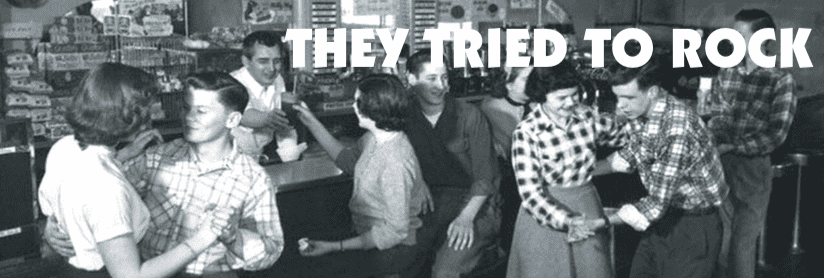
They Tried To Rock
Teil 1 & 2 - The Hillbillies
Stellen Sie sich folgendes vor: Sie sind ein angesehener Countrymusiker. Sie haben Karriere gemacht. Sie schreiben Songs, machen Aufnahmen, verkaufen Schallplatten. Alles läuft prima, und dann plötzlich – gibt es da diese völlig neuartige Musik. Sie mögen sie nicht besonders. Aber bei Ihren Auftritten fängt das Publikum an, danach zu fragen. Ihre Schallplattenverkäufe gehen zurück.
Was tun Sie? Sie hören sich die Musik an. Ihre Schallplattenfirma setzt Sie unter Druck – vielleicht sollten Sie es zum Spaß einfach mal ausprobieren. Sie sind ein bißchen älter als die meisten Kids, die dieses Zeug spielen, aber was soll’s? Im Radio sieht’s doch eh kein Mensch, wenn Ihnen langsam die Haare ausgehen. Diese verrückten Rock 'n' Roll-Schallplatten verkaufen sich millionenfach. Das bedeutet ‘ne Menge Geld und ein völlig neues Zielpublikum. Das möchten Sie sich nicht entgehen lassen. Sie wollen nicht, daß dieser Zug ohne Sie abfährt – Sie können ja jederzeit wieder aussteigen, wenn es Ihnen nicht gefällt. Oder stellen Sie sich folgendes vor: Sie sind ein junger Countrymusiker, und eines Tages hören Sie eine völlig neuartige Musik, vielleicht im Radio, die Sie aufhorchen läßt. Sie klingt aufregend – vielleicht finden Sie ja irgendwo ein paar gleichgesinnte Musiker, mit denen zusammen Sie aus diesen neuen Klängen Ihren eigenen Stil entwickeln können.
Auf vier Folgen von 'They Tried To Rock' präsentieren wir Ihnen Musik mit diesen und anderen Hintergrundgeschichten. Hier finden Sie eine ganze Reihe von Countrymusikern, die zum Rock 'n' Roll übergewechselt waren – einige von ihnen sehr erfolgreich, andere weniger. Das Ergebnis ist in jedem Fall faszinierend: die Geschichte eines Genres, das darum kämpft, sich gegen die gewaltigen Veränderungen in den 50ern zu behaupten. Der Kampf traditioneller amerikanischer Musik gegen einen neuen Musikstil und den wirtschaftlichen Druck, der ihr Genre zu verschlingen drohte. Countrymusiker fragten sich: "Sollen wir dagegen ankämpfen oder mitmachen?" Sie taten beides, als die neue Musik sich auszubreiten begann. Hier sind einige Beispiele dafür, wie sich das angehört hat
Teil 3 & 4 - The Popsters
Der dritte und vierte Teil verfolgen jeweils die ersten Versuche von Popsters wie Frank Sinatra, Doris Day, den Mills Brothers, Perry Como und Lawrence Welk, mit den Herausforderungen des Rock 'n' Rolls und seiner Wirkung auf herkömmliche Popmusik klarzukommen. All das passierte in der ersten Hälfte der Fünfzigerjahre. Niemand wußte zu diesem Zeitpunkt, ob es sich um eine schnell vergängliche Modeerscheinung oder um eine die populäre Musik revolutionierende Bedrohung handelte. Viele Popsters haßten diese Entwicklung und machten sich in privater Runde darüber lustig. Gleichzeitig mußten sie feststellen, daß ihre Plattenverkäufe abstürzten, ihre Musik nicht mehr so häufig im Radio gespielt wurde und die Auftrittsmöglichkeiten seltener wurden.
Popsters wurden mit derselben Frage nach der Zukunft der Karriere konfrontiert, die zuvor die Hillbillies auf den beiden ersten Ausgaben dieser Serie beschäftigt hatte: bekämpfen oder zu Freunden machen? Einige Popsters besaßen das Zeug zur erfolgreichen Anpassung; andere schafften es nicht. BEAR FAMILY hat erstmals einige typische Versuche der Mutation vom Popster zum Rocker zusammengetragen. Viele dieser Aufnahmen von berühmten und weniger berühmten Künstlern sind mittlerweile recht selten. Sie werden sich wundern, wie gut manche waren. Andere werden kaum mehr als ein müdes Lächeln entlocken. Doch ob gut oder schlecht, sie alle erinnern uns daran, welch mächtige Kraft der Rock 'n' Roll in den Anfangstagen war und wie selbst gut verdienende Popsters glaubten, sie müßten sich verändern, um nicht unterzugehen.
They Tried To Rock
Read more at: https://www.bear-family.de/bear-family/rock-n-roll-serien/they-tried-to-rock/
Copyright © Bear Family Records

Ready to ship today, delivery time** appr. 1-3 workdays

Ready to ship today, delivery time** appr. 1-3 workdays

Ready to ship today, delivery time** appr. 1-3 workdays

Ready to ship today, delivery time** appr. 1-3 workdays

Ready to ship today, delivery time** appr. 1-3 workdays
Ready to ship today, delivery time** appr. 1-3 workdays
 Max Greger's Dance Orchester: Strict Tempo Dancing- Slow Foxtrot (7inch,...
Art-Nr.: 21621HIFI
Max Greger's Dance Orchester: Strict Tempo Dancing- Slow Foxtrot (7inch,...
Art-Nr.: 21621HIFIReady to ship today, delivery time** appr. 1-3 workdays
Ready to ship today, delivery time** appr. 1-3 workdays
Ready to ship today, delivery time** appr. 1-3 workdays

This article is deleted and can no longer be ordered!

Ready to ship today, delivery time** appr. 1-3 workdays

Ready to ship today, delivery time** appr. 1-3 workdays
Ready to ship today, delivery time** appr. 1-3 workdays
Ready to ship today, delivery time** appr. 1-3 workdays

Ready to ship today, delivery time** appr. 1-3 workdays

Ready to ship today, delivery time** appr. 1-3 workdays
This article is deleted and can no longer be ordered!


