
Who was/is Pete Seeger ? - CDs, Vinyl LPs, DVD and more
Pete Seeger
Pete Seeger never gave up the original vision of the Almanac Singers. Now that the war was over and he was living a civilian life again, he dreamed of expanding the Almanacs' ideals into a national movement that would unite singers, actors, choir leaders and labour unions into a force for political and social change. Seeger's model was Great Britain's Workers' Music Association, which had been founded in 1939 by members of the Communist Party of Great Britain.
He put out feelers towards New York's left-leaning folk, theatre and literary scene and invited potential members to attend the organising meeting of People's Songs on 31 December 1945. Committees were set up to find office space, develop an organisational structure, publish a regular newsletter, secure funding and recruit new members.
Within a year the People's Songs concept had reached other major cities in North America. In October 1947 the first national convention took place in Chicago. The organisation set up a booking agency for its members and encouraged aspiring singer-songwriters and established composers to submit sheet music or demo recordings of new, topical songs for possible publication in the monthly bulletin.
A number of professional composers were among the earliest supporters of People's Songs. Some of the most enduring songs, however, were written by amateurs such as the Los Angeles journalist and union activist Vern Partlow.
Verneil Partlow was born on 25 May 1910 in Bloomington, Illinois. He worked for daily newspapers and radio stations in Wisconsin and Chicago until he moved to California, where he was hired by the Los Angeles Daily News. He was an early supporter of the American Newspaper Guild [i], founded in 1933. In the mid-Forties he hosted a programme on a Los Angeles radio station that reported on workers' issues.
When Earl Robinson opened the first West Coast office of People's Songs, Partlow signed up as one of the first members. After interviewing scientists about the consequences of a nuclear war, he wrote Old Man Atom, a talking blues [ii]. The song was full of irony and, after its publication as Atomic Talking Blues in the January 1947 issue of the bulletin, circulated among other singer-songwriters. Pete Seeger recorded it in 1948 for the Encore label, run by Irwin Silber and Brownie McGhee.
Outside the active circle of People's Songs, few people bought Seeger's record. One of those who did was Sam Hinton, curator of the Thomas Wayland Vaughan Aquarium Museum of the Scripps Institution of Oceanography at the University of California in San Diego.
[i] The Newspaper Guild is a union founded by daily newspaper journalists whose aims include improving its members' pay and working conditions and fighting for honesty in journalism and in the practices of the news industry.
[ii] Woody Guthrie is usually regarded as the inventor of the talking blues. That is probably because Bob Dylan took the form over from Guthrie and developed it further. In fact, though, Guthrie merely developed a fixed form that was used from then on (although the biting socio-political commentary was his own). The minstrel musician Chris Bouchillon was the first to record early forms of the talking blues in the Twenties, and did so almost exclusively. In pure minstrel tradition, his songs imitate African-American dialect and convey racist stereotypes. From today's perspective they are therefore no longer acceptable.
Copyright © Bear Family Records
Copyright © Bear Family Records®. Copying, also of extracts, or any other form of reproduction, including the adaptation into electronic data bases and copying onto any data mediums, in English or in any other language is permissible only and exclusively with the written consent of Bear Family Records® GmbH.

Ready to ship today, delivery time** appr. 1-3 workdays
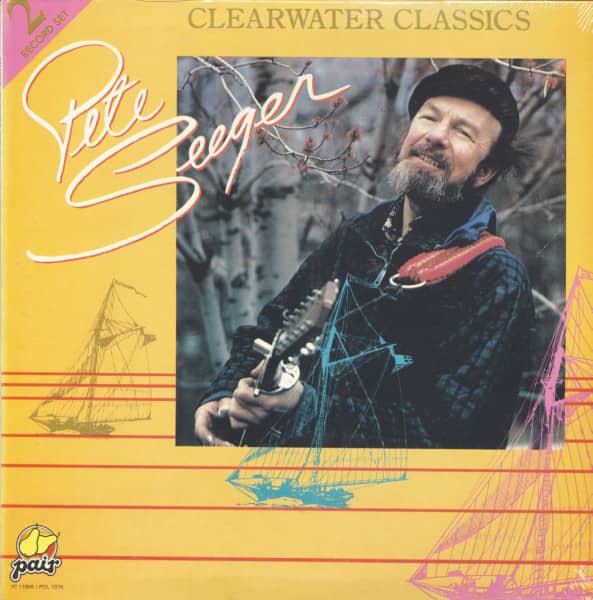
the very last 2 available
Ready to ship today, delivery time** appr. 1-3 workdays

the very last 1 available
Ready to ship today, delivery time** appr. 1-3 workdays

the very last 1 available
Ready to ship today, delivery time** appr. 1-3 workdays

Item has to be restocked

Item has to be restocked

Item has to be restocked

Item has to be restocked

Item has to be restocked

Item has to be restocked

Item has to be restocked

Item has to be restocked

Item has to be restocked

Item has to be restocked

Item has to be restocked

Item has to be restocked

Item has to be restocked

Item has to be restocked

Item has to be restocked

Item has to be restocked