
Who was/is Bröselmaschine ? - CDs, Vinyl LPs, DVD and more
Bröselmaschine
During the Easter Marches of 1968, the American folk singer, civil rights activist and pacifist Joan Baez came to West Germany to take an active part in them. Marching and making music with her and alongside her were Peter Bursch, Lutz Ringer and two singers who performed as the folk duo Les Autres ("The Others"). At the end of 1968 Bursch, Ringer, the folk duo Jenni Schücker and Willi Kissmer, and Angie Theus formed the first line-up of Bröselmaschine, which specialised in Irish folk music and US West Coast songs. When a drummer was needed, Mike Hellbach joined as the sixth member. The band name Bröselmaschine went back to a cannabis grinder – and also to the sound of a motorcycle belonging to a friend of Jenni Schücker.
The group bought the second-hand PA system of the English art-prog band Procol Harum and performed live a mixture of international folk songs, which they extended with free improvisation. At first the members of Bröselmaschine lived in a kind of commune in Duisburg, ran a public tea room on the side for a while and worked as journalists for the underground paper 'Der Metzger'.
Through regular festival appearances at the 'Burg Waldeck Festival' and other major events, "we came into contact with the German rock scene" (BURSCH). This is how they also met the successful Swiss producer, writer and "enfant terrible of the early German rock landscape" (ROCK IN DEUTSCHLAND), Rolf Ulrich Kaiser. In the summer of 1971 he booked the Dierks studio in Stommeln, North Rhine-Westphalia, to produce Bröselmaschine's self-titled debut. The record sounded "totally timeless and was carried by a deep, mystical 'nature mood'. Feeling without end. Peter Bursch presented himself as a highly accomplished guitarist with a great deal of taste. Some of it recalled British highlights, other parts had more of an Indian touch. As a quintet with Schücker, Kissmer, Ringer, Hellbach and Bursch, they created what was probably the most beautiful and transparent folk album of German origin up to that time" (ROCK IN DEUTSCHLAND) and the "best German folk-rock album that had been recorded up to then" (COSMIC DREAMS) – which, however, sold only moderately.
Because of this relative failure, the tensions of living in close quarters in the shared house, and the departure of drummer Hellbach and singer Schücker for Asia, all of the band's plans were put on ice for the time being at the beginning of 1973. Peter Bursch completed his degree as a surveying engineer, took a job teaching mathematics and music at a comprehensive school and spent some time in the USA to develop further in the blues and folk scene there. There he also worked with the multi-instrumentalist and singer David Bromberg. Back in Germany he studied Indian music in Cologne and launched a successful series with his "Gitarrenbuch" – "without sheet music"!
In the spring of 1975 Bursch opened a new chapter of Bröselmaschine. He invited musician friends to record six original compositions and three traditional folk songs for the album 'Peter Bursch und die Bröselmaschine'. At Conny Plank's legendary studio near Cologne, the line-up, besides Bursch and Kissmer, consisted of Klaus Dapper (sax, fl) (ex-Kollektiv), Mahendra Kapadia (tbls), Jan Fride (dr, perc) (ex-Kraan), Roland Schaeffer (b) and Mani Neumeier (perc) (both Guru Guru). The rock-oriented record was "not comparable to the 1971 debut, but thanks to Bursch's excellent guitar work it gave a sense of well-being throughout" (ROCK IN DEUTSCHLAND).
In the summer of the following year the band was revived, with Detlef Wiederhöft (b), Mike Gosen (dr) and Gundi Jökker (voc) (ex-Gesangsorchester Peter Janssens) joining Bursch, Kissmer and Dapper. During the recordings Gosen left again and was replaced by Waldo Karpenkiel (dr) (ex-Kollektiv). With its sitar, tuba and zither parts, electric guitars and saxophone arrangements, the 1978 album 'I Feel Fine' was "a thoroughly solid pleasure" (SOUNDS).
In the meantime Peter Bursch also gave solo concerts, completed two tours of the USA and played with musicians there – including David Bromberg once again. On a trip to China in 1980 he performed for workers and young people, and a year later he released his self-titled solo debut, on which he was accompanied by Georg Mahr (org), Georg Funke (ex-Gruppe Impulse), Helge Schneider (acc), Michael Thaut (vi) and his former colleagues Dapper and Czychski (now Zyski). "Naturally very guitar-oriented, he drew his inspiration from Renaissance dances as well as from Lennon/McCartney or Jim Croce, and enriched this material not only with accurate technique but also with wide-ranging arrangements and sound ideas" (SOUNDS). Peter Bursch wrote 'Das Folk-Buch' and is regarded in Germany as the "guitar teacher of the nation". His guitar books and guitar tutors offer an easy way into playing the guitar. Co-founder Willie Kissmer had turned to painting in 1980. His paintings, etchings and art prints were exhibited internationally and were also successful internationally.
Burghard Rausch
Copyright © Bear Family Records
Copyright © Bear Family Records®. Copying, also of extracts, or any other form of reproduction, including the adaptation into electronic data bases and copying onto any data mediums, in English or in any other language is permissible only and exclusively with the written consent of Bear Family Records® GmbH.
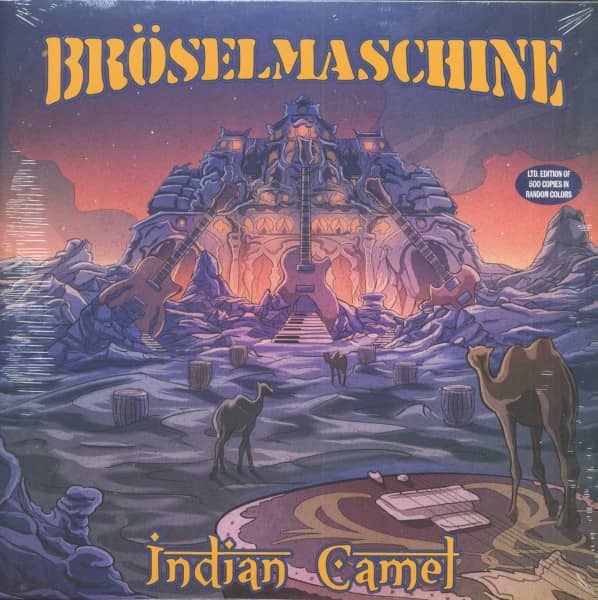
Ready to ship today, delivery time** appr. 1-3 workdays
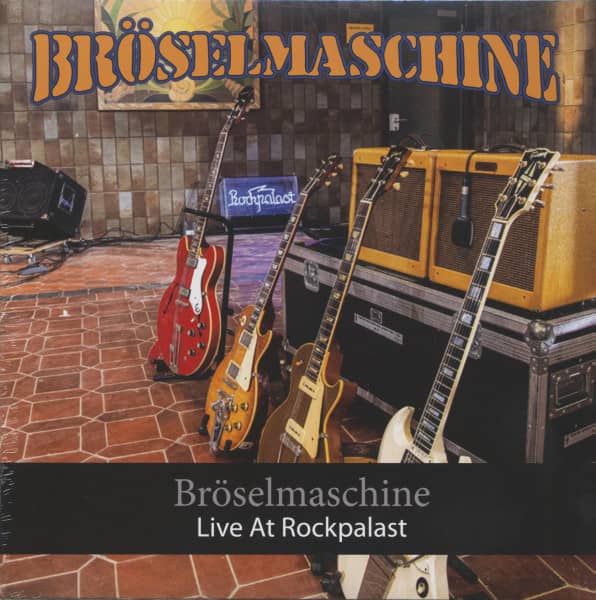
only 2x still available
Ready to ship today, delivery time** appr. 1-3 workdays
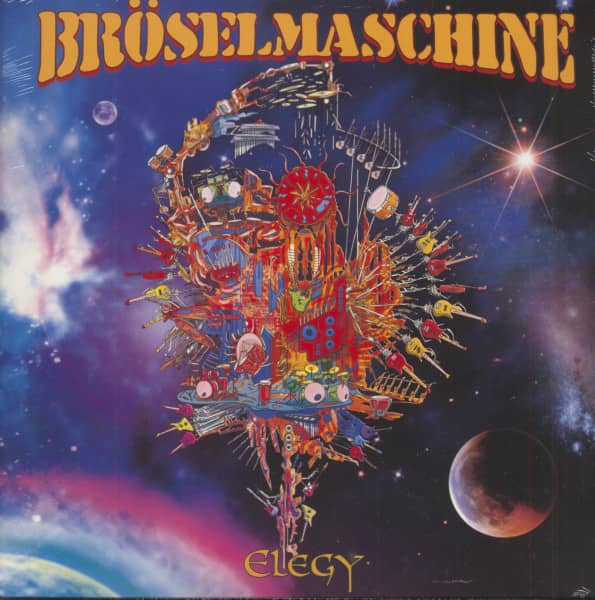
Item has to be restocked