
Who was/is Link Wray ? - CDs, Vinyl LPs, DVD and more
Link Wray
Link Wray was perhaps the loudest rock guitarist I have ever heard in a concert setting. Considering that over the decades I have also revelled in the teeth-rattling fretwork of Roy Buchanan and Dick Dale, that is saying something (admittedly, I'm no heavy metal devotee). This extraordinary boost in volume was a necessity for Wray; a childhood bout of measles had robbed him of much of his hearing (and, incidentally, some of his eyesight as well). Dedicated Wray fans didn't mind in the least a temporary brush with deafness after one of Link's trademark shredfests; his pulverising power chords and screaming staccato lead licks were the very definition of what rock guitar always was and always should be, making it a small price to pay. What's more, Link never stopped embodying the concept of cool. He proudly wore a leather jacket and shades on stage well into the 70s, long after his demographic peers outside the music business had slipped into cardigan sweaters and settled into easy chairs.
Stardom did not come easily to Wray; he and his brothers had to work long and hard to escape the impoverished circumstances of their youth and gain a foothold in the music industry. Fred Lincoln Wray, Jr. was the middle musical sibling, born on 2 May 1929 in Dunn, North Carolina. Vernon was five years older than Link, born on 7 January 1924 in Fort Bragg, N.C., and Doug five years younger (4 July 1934). The Wray boys sang a few times at the same church services at which their mother, a full-blooded Shawnee Indian, preached the gospel. At the age of eight Link took some early guitar lessons from an African-American slide specialist named Hambone, who taught him the basics of blues playing. The Wray family moved to Portsmouth, Virginia, in the mid-40s, but Link was in no particular hurry to launch his musical career – he didn't buy his first electric axe until 1949. Link was drafted in '51 and stationed first in Germany and then in Korea, where he contracted tuberculosis. After returning to the USA in 1953 he bought a Les Paul guitar and a Premier amplifier and got serious about his playing. But he was never quite able to emulate the elegant, complex technique of his hero Chet Atkins, so he developed his own mind-melting attack. Jazz guitarists Tal Farlow, Les Paul and Barney Kessel, as well as country picker Grady Martin, also caught his ear, although in the end he wouldn't play like any of them either.
The Wrays formed a country band in 1954 to play the rough gin joints of Portsmouth and nearby Norfolk. They recruited their cousin Brentley "Shorty" Horton as bassist and comic relief, with Doug on drums, Vernon on rhythm guitar and piano, and Dixie Neal, brother of Gene Vincent's bassist Jack Neal, on steel guitar. For a while they were billed as The Lazy Pine Wranglers, then as Lucky Wray (Vernon's temporary alias, a name owed to his gaming skills) and The Palomino Ranch Gang. A connection with pioneering country broadcaster Connie B. Gay in Tidewater, Virginia, led the group – minus Neal – to move to Washington, D.C., where Gay had set up a popular TV show, "Town and Country Time", hosted by a young accordion player named Jimmy Dean. For all its political sophistication, D.C. was full of hillbilly talent and plenty of watering holes to showcase it. Besides the likeable Dean, Marvin Rainwater and the extraordinary guitarist Roy Clark were part of the bustling scene. All three recorded for producer Ben Adelman, owner of the local Empire Studios (West Virginia-born Patsy Cline cut her first, long-lost demos under Adelman's supervision, backed by Dean's Texas Wildcats). Although his legend rests firmly on a legacy of blazing instrumentals, Link's debut release in January 1956, on Adelman's Kay label, paired two of his raw rockabilly vocals, I Sez Baby and the almost unintelligible Johnny Bom Bonny, as one half of an EP that Link shared with the obscure duo Bob Dean and Cindy.
Adelman tirelessly shopped his finished masters to various labels; at H.W. 'Pappy' Daily and Don Pierce's Starday Records in 1956-57, with Link and Doug receiving sub-billing on the label, he found a home for three country-oriented singles by the considerably smoother-voiced Lucky Wray (It's Music She Says, Got Another Baby and Teenage Cutie). Starday issued the masters through its custom service rather than on its main label, intending them only for regional release, with the artists themselves footing the manufacturing costs. In the midst of all this, the TB that Link had contracted in Korea put him in hospital from the summer of 1956 until March of the following year. A gruelling operation to remove his left lung largely put an end to any serious ambitions as a singer; from then on Wray concentrated on his blazing guitar technique and left the vocal duties mostly to others, especially his brother Vernon, whose prospects looked rosy when Bernie Lowe and Kal Mann's Philly-based Cameo Records brought him aboard in mid-1957. The songwriting duo was on a real hot streak, having written Elvis's pop chart-topper (Let Me Be Your) Teddy Bear. Their label also scored its own number one that same year with Charlie Gracie's Butterfly.
With Lowe conducting the choir-padded orchestra, Vernon cut the Mann/Lowe copyright Remember You're Mine, issued in June '57 after the label had flipped the singer's name around so that he was billed as Ray Vernon. Cameo even sprang for a full-page ad for the single in "The Billboard". But all hopes of a hit were dashed when Pat Boone covered the tune for Dot, took it into the Top Ten and left Ray's original in the dust (its bouncy flip, Evil Angel, would have suited Gracie nicely). Cameo responded to Boone's cover by replacing Remember You're Mine with I'll Take To-morrow (To-day) as Evil Angel's platter-mate; Link's biting axe was prominent on the new ballad, in contrast to its tranquil predecessor. Cameo tried again with Ray that autumn with the rocking I'm Counting On You, penned by Atlanta-born blues shouter Chuck Willis (1957 was a big year for Chuck; his revival of the old blues C.C. Rider for Atlantic, perfectly suited to the dance called The Stroll, sailed to the top of the R&B charts). This time Link made his presence felt with a blazing solo, and although the arrangement was a little rough around the edges, Ray's offering was a genuine hit contender – yet it never quite caught on.
Copyright © Bear Family Records
Copyright © Bear Family Records®. Copying, also of extracts, or any other form of reproduction, including the adaptation into electronic data bases and copying onto any data mediums, in English or in any other language is permissible only and exclusively with the written consent of Bear Family Records® GmbH.
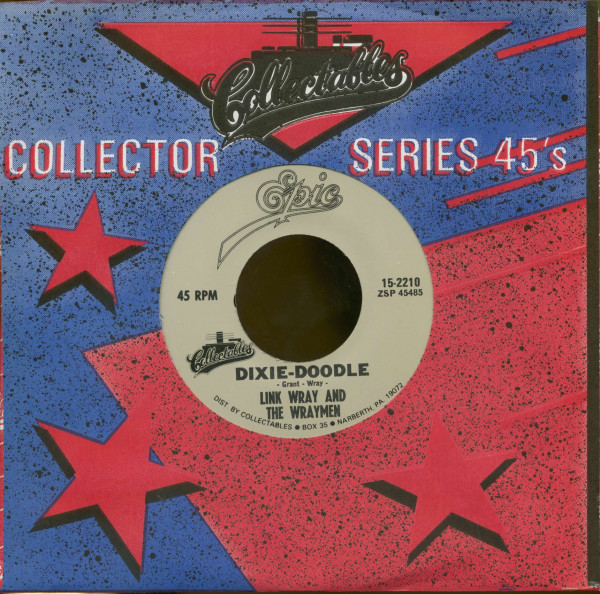
the very last 2 available
Ready to ship today, delivery time** appr. 1-3 workdays
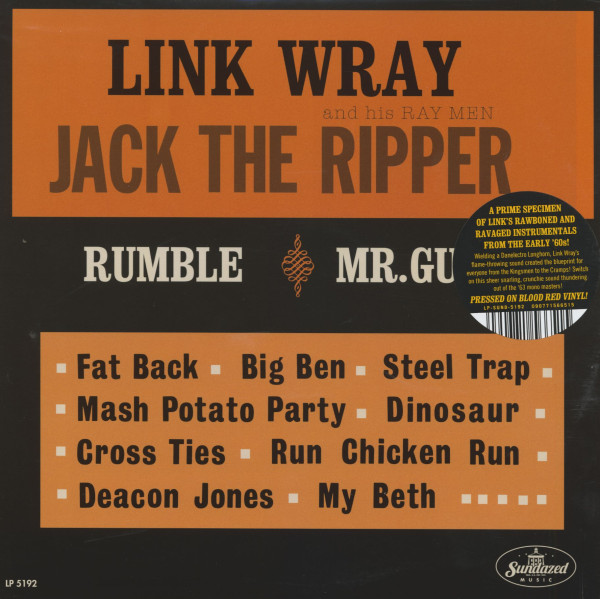
only 1x still available
Ready to ship today, delivery time** appr. 1-3 workdays

only 1x still available
Ready to ship today, delivery time** appr. 1-3 workdays

Item has to be restocked

Item has to be restocked
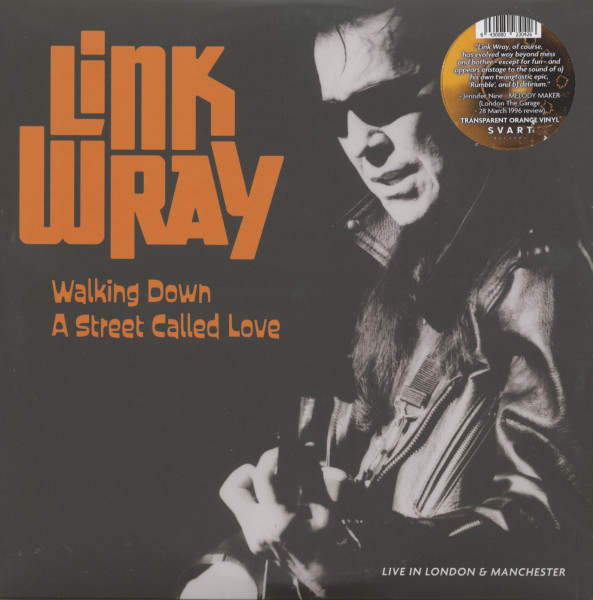
Item has to be restocked

Item has to be restocked

Item has to be restocked
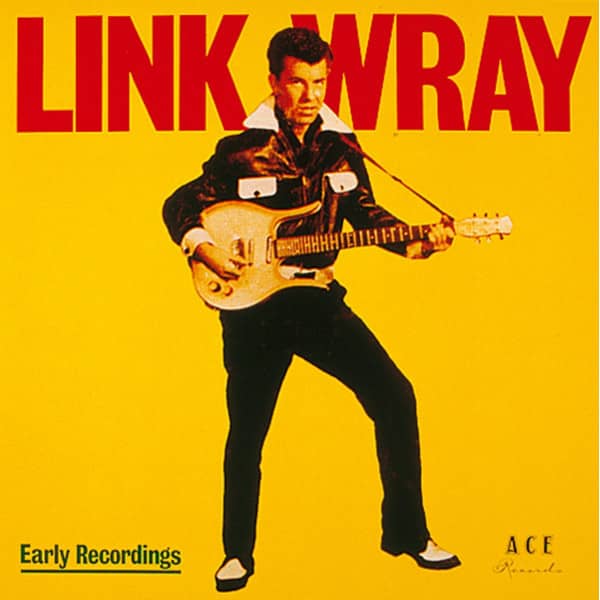
Item has to be restocked