
Who was/is Del Shannon ? - CDs, Vinyl LPs, DVD and more
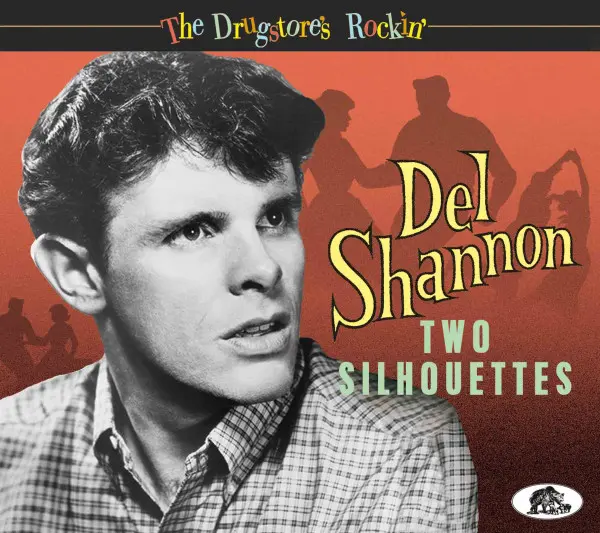
Del Shannon
Del Shannon, whose real name is Charles Westover, first let out a falsetto cry on December 30th 1939 in Grand Rapids, Michigan, USA, where he spent all his younger years, taking up guitar and singing in his early teens, learning from his favourite country and western singers of the day, Hank Williams and Lefty Frizzell. After graduation from high school he entered the U.S. Seventh Army and was stationed in Germany for a short spell, where he gained plenty of experience on the army network's 'Get Up And Go' programme. On his discharge in 1959, Shannon returned to Michigan, and aside from working in a carpet store during the day, he began singing and playing guitar in local clubs. One of those was the Hi-Lo in Battle Creek, Michigan, where he was noticed by a black D.J., Ollie McLaughlin, who was working at radio station WHRV in Ann Arbor. The young Charles Westover was introduced to Harry Balk and Irving Micahnik via some tapes McLaughlin had played them. The meeting resulted in a contract with Balk and Micahnik's Embee Productions and Talent Artists Management company in Detroit.
Del had cut some tapes in his keyboard player's house, that of Max Crook, who eventually co-wrote 'Runaway'. Songs like 'The Face Of An Angel', 'Little Oscar' and 'I'm Blue, I'm Blue, Without You' were recorded in Max's living room but were never released. Shannon retains the tapes to this day.
The first professional session yielded two songs that later appeared on the 'Runaway With Del Shannon' album in 1961: 'The Search' and 'I'll Always Love You', both Shannon compositions.
Then came 'Runaway'. This song was accidentally constructed one night at the Hi-Lo Club in Battle Creek when Crook hit upon a sequence of chords on his own invention, the Musitron (a forerunner of the synthesizer). The song was put together in about twenty minutes in front of the audience, and the following day Shannon composed the lyrics at the carpet store along with the record's B-side, 'Jody'. Balk and Micahnik recorded 'Runaway' and 'Jody' in New York along with two of Max Crook's instrumental compositions, one of which, 'The Snake', was actually put on the B-side of 'Runaway' by mistake on the single's first pressing; several thousand copies were released both in England and America and now remain extremely collectable.
'Runaway' was the first record to be released as 'Del Shannon', and in the USA it topped the charts in February 1961 on the Big Top label. The song then became a number one hit in England in June 1961 on London Records, knocking Elvis from the top spot.
On the success of 'Runaway', Shannon played his first big concert in New York at the Brooklyn Paramount Theatre, where he appeared with such names as Bobby Vee, Johnny Mathis, Dion and Clay Cole. He recalls having to sing 'Runaway' four or five times as he had no other hits to perform at that time. It wasn't long before he crushed the sceptics' tag of 'one-hit wonder' when he hit with his next release, 'Hats Off To Larry', followed swiftly by 'So Long Baby', 'Hey! Little Girl' and then his first full-scale flop in America, 'Ginny In The Mirror', recorded as part of a film deal for 'It's Trad Dad' in 1962 ('Ring-A-Ding-A-Rhythm' in the USA). 'Cry Myself To Sleep', said to be an inspiration for Elton John's 'Crocodile Rock', also didn't quite make the grade in 1962. The next records fared better though, especially on the English charts, where Shannon has always been a bigger recording star than in his native America.
By 1963 there were management problems: monies going in wrong directions and not into Shannon's pocket, royalties not being paid in full. The legal battle went on for two years initially, still not reaching a major settlement until the end of the 1970s. Shannon decided to form his own label, Berlee, and break away from Balk and Micahnik; of the two singles issued on Berlee, 'Sue's Gonna Be Mine' was the only hit.
Then, for reasons Shannon still doesn't understand to this day, he again fell under the wing of Balk and Micahnik with his new recording deal with Amy Records (USA) / Stateside (UK). The hits returned with a rocking version of Jimmy Jones' 'Handy Man' in 1964, 'Do You Wanna Dance' in 1964 (five months ahead of the Beach Boys' version) and the last big hit, 'Keep Searchin'', in January 1965, which was followed by the similar 'Stranger In Town'.
Shannon even cut some sides for a Pepsi-Cola commercial, 'Come Alive (You're in the land of Pepsi-Cola)', in 1965. By 1965 the music scene was essentially group-orientated; Del Shannon and his contemporaries were slowly fading from chart success, the Merseybeat boom had arrived and hit on both sides of the Atlantic. Shannon's 'Little Town Flirt', released in America in December 1962, is credited as an early influence on the 'Mersey' sound, and his American hit 'From Me To You' in 1963 made him the first American recording artist to release a Lennon-McCartney song.
At this point it is worth remembering that Shannon's hits were mainly self-composed and on occasion co-written with friends. One of his songs, 'I Go To Pieces', was written for a friend back in Battle Creek, a black singer, Lloyd Brown. Brown's demo was shopped around without success for several months until Shannon played it to Peter (Asher) & Gordon (Waller) in early 1965 while touring Australia; the duo asked to record the song and promptly made it one of their big hits during 1965, although not a Top 50 hit in England. Shannon also recorded the song for his 1965 album '1661 Seconds With Del Shannon' and was coaxed to sing backing vocals on Nils Lofgren's 1981 version from his album 'Night Fades Away'. 'I Go To Pieces' has been recorded by many artists worldwide; Del's 'Runaway' has also notched up over two hundred versions, including one by Elvis Presley on his 1970 album 'On Stage' and an unreleased version made in 1982 by the Beach Boys that also features Del.
In 1971 Shannon also scored success with a song he had written, 'I've Got Eyes For You', when it was featured on country singer Waylon Jennings' album 'Cedartown Georgia'. In America Shannon managed two more minor hits, 'Break Up' in 1965 and a cover of Toni Fisher's 1959 hit 'The Big Hurt' in 1966. Still a big concert draw, he toured the world – England, America, Australia and the Philippines, where in 1967 he hit with a cover of the Box Tops' 'The Letter'.
Free at last from his contract with Balk and Micahnik, he moved to Los Angeles with his wife and family and was signed to Liberty Records, where he cut several potential hits to no chart success. One such song, 'She', was smothered by the Monkees' version released at the same time.
In 1967 Shannon recorded an album's worth of material in London with Rolling Stones producer Andrew Loog Oldham. Although the lyrics of the songs stayed true to Shannon fashion, the backing was somewhat removed from that of ringing guitars and heavy treble echo; the demanding voice was still there but supported by a barrage of strings and horns, very much in Phil Spector style. The album, to have been titled 'Home And Away', was not released in its original form at all; it wasn't until 1978, when the tracks appeared on a United Artists compilation album, 'And The Music Plays On', that the bulk of the songs were heard. However, half of the tracks were issued as singles during 1967/68; they included an updated version of 'Runaway', titled 'Runaway '67', using strings and horns at a much slower pace. It is not known why Liberty decided not to release the project at the time of completion; it had been an expensive venture that featured such artists as P.P. Arnold, Madeline Bell, Paul Jones and Nicky Hopkins on backing. Shannon left Liberty Records in 1968, deciding to go out and do something he'd only touched on briefly once before: produce other artists. He had written and produced Lloyd Brown on his 'I Go To Pieces' song, followed by little-known country singer Johnny Carver in 1966 with two songs, 'One Way Or The Other' / 'Think About Her All The Time'. He now felt it was time to produce on a more serious level, and the first assignment was to be an old friend from the early sixties, Brian Hyland, who had hit with 'Sealed With A Kiss', 'Itsy Bitsy Teeny Weeny (Yellow Polka Dot Bikini)', 'Ginny Come Lately' and 'Warmed Over Kisses'. Hyland was seeking a new direction away from the blatant pop he had been singing.
Before the project could get underway, Shannon was impressed one night by a group he had seen in a club in the San Fernando Valley, California: Smith, who were led by singer Gayle McCormick. Shannon signed them on the spot to a contract for management and production and started work on getting them a label. He invited the record companies to watch the group play, and after just three songs Steve Barri of ABC decided to sign the group, but only if Shannon would also record for ABC. Shannon agreed, and so again he was back on vinyl. Just seven months after his contract had ended with Liberty, the ABC-Dunhill label was next. Shannon recorded two singles, 'Comin' Back To Me' and 'Sister Isabelle'. The trademark falsetto was perfectly intact, but without much airplay neither one did very much, though they remain two of the most collectable sides in Europe for Shannon fans. Smith were now well rehearsed and ready to record. After some trouble getting the studio time booked, Shannon appeared to do the sessions only to find that the group had gone home to their families, using the advance funds paid to them. The end result was a dispute with the group, and Shannon left the project after being somewhat disappointed by what had happened. Needless to say, Steve Barri stepped in to save the project, producing the Smith album. But it was Shannon's arrangement of 'Baby It's You' that went to number five on the U.S. charts during 1969.
It was then time to go back to produce Brian Hyland, which proved to be a big success. In 1970, Hyland had his biggest hit since 'Sealed With A Kiss' in 1962. The song 'Gypsy Woman' hit the number 3 spot on the U.S. charts in 1970 and peaked at number 42 in England; the album 'Brian Hyland' also sold well for the UNI label.
Del Shannon had now proven himself as a producer and felt the time was right to record again. In 1972 he started working with the Robb Brothers, once regulars on U.S. TV's 'Where The Action Is'. They owned Cherokee Studios in California, just a few miles from Shannon's home, so it was convenient for Shannon to just travel down the road and spend time working with people who knew his style of music and understood how to produce him. The first result was a very strong version of Timi Yuro's 1962 hit 'What's A Matter Baby' for United Artists Records. It was released only in England and did reasonably well. In 1973, Shannon went to Nashville to cut two songs that only appeared in Australia until May 1983, when one track, 'Distant Ghost', was used as the B-side to his 'Cheap Love' for Demon Records. 'Oh How Happy' was the other title cut, formerly a hit in the U.S. in 1966 for the Shades Of Blue. The single was released in Australia on the Interfusion label and to this day remains the most sought-after record for Shannon collectors, along with his Philippines hit of 1966, 'The Letter'.
Shannon's first record release in America since 1969 was an album recorded live in Manchester, England, in 1972 at the Princess Club; 'Del Shannon 'Live' In England' is a must for any Shannon fan. Del achieves fine reproductions of his studio hits live and even adds a yodelling number, 'Coopersville Yodel', to his act. United Artists issued one single from the live package, 'Kelly' / 'Coopersville Yodel', in 1973 on the U.K. market only.
Another name crept into Shannon's musical life in 1973, that of Jeff Lynne, one-time member of the Idle Race and The Move and now lead singer/writer/producer with the Electric Light Orchestra. Lynne is a big fan of Shannon's, and so it seemed possible they would get together at some point and record. Shannon had always liked ELO's 'Do Ya', and so after they managed to get time together, they wrote some fine songs and put them down on tape in a studio: 'Alive But Dead', 'Deadly Game' and 'Cry Baby Cry'. The final touches were never made, but one song found its way onto record in the U.S. in 1975, 'Cry Baby Cry', released on the Island Records label in a sizeable deal that allowed Shannon to do whatever he wanted. Despite good radio play the single failed to chart.
On one of his earlier touring visits to England, Shannon entered Rockfield Recording Studios, a converted farm in Wales. A third single was recorded, 'And The Music Plays On', co-written by an old friend, Dan Bourgoise, who today has a foremost interest in the career of Del Shannon. With Dave Edmunds at the production helm drawing the very best from Shannon's ballad vocal style, and featuring Nick Lowe on bass guitar, the song seemed almost set to make the charts in England. Despite good reviews and scattered airplay, the single, only released in England, did not chart.
Del Shannon was still touring England and Australia throughout the 1970s and playing state fairs and oldies shows in America. He could easily retire from performing and rest on his investments in land and his interests in his own publishing companies. He recorded just two more singles in 1975 for the American and European (though not English) markets, a reworking of the Zombies' 'Tell Her No' backed by a country song, 'Restless', and the aforementioned 'Cry Baby Cry', a Shannon-Lynne song, both for Island Records. To publicise his new records, he played some specially organised concerts in America featuring a seven-piece backing band, playing his sixties hits with precision and pushing the new songs.
The concerts were well received by the press, but the records failed to make the charts once again, and so the deal with Island was terminated and everything went quiet again, apart from regular trips to England, Scotland, Wales, Ireland, Australia and Europe. Del Shannon had become an established artist from the 1960s, yet had a lot more to offer than so many other sixties singers; he did, after all, write most of his own hits, which in some ways gave him more credibility. Some years of musical frustration took over his life, and he personally fell into a decline of alcohol and pills. Managing to free himself from this slump in his life, he began writing new material again, shed some weight and set about rekindling his career. In 1979 he was found in the recording studios again, laying down test tapes of his new songs with American rock star Tom Petty and his band The Heartbreakers. By 1981 several new songs and some covers had been recorded using Petty's band, Shannon's falsetto lines still piercingly in place, and the mingling of Shannon's and Petty's ringing, rockin' guitars seemed set to take a chart placing again. In October 1981 Del Shannon's first album for thirteen years was released in America:
'Drop Down And Get Me' on Network Records. Reviews were good and the album picked up a lot of radio play. One song, 'Sea Of Love', originally a U.S. hit for Phil Phillips & The Twilights and covered by Marty Wilde in England in 1959, was released as a single, and it climbed the U.S. charts to number 33 in January 1982 and re-established the recording career of Del Shannon, this time becoming more recognised in his own country. During 1982 Shannon was kept very busy touring America on a bigger scale for the first time in years, and then a six-week tour of Australia confirmed his status as an innovator of the rock world.
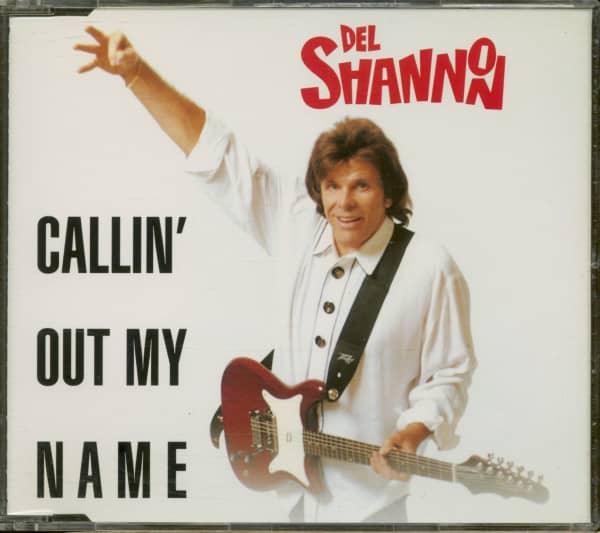
In May 1983 Demon Records released Shannon's 'Drop Down And Get Me' album in England, a slightly different package from that of its U.S. counterpart. As well as the cover change, one new song was added, 'Cheap Love', recorded after the Tom Petty sessions using Shannon's own American band. This song was issued as Shannon's first English single release since 1974, and as well as writing it, Shannon also produced it. Shannon's first U.K. tour since 1979 took place, performing to capacity audiences wherever he went. He has achieved a goal of re-establishing his career, and not only being remembered as the singer who sang 'Runaway' et al.; he won't have it called a 'comeback', as he says he's never been away.
Copyright © Bear Family Records
Copyright © Bear Family Records®. Copying, also of extracts, or any other form of reproduction, including the adaptation into electronic data bases and copying onto any data mediums, in English or in any other language is permissible only and exclusively with the written consent of Bear Family Records® GmbH.
Ready to ship today, delivery time** appr. 1-3 workdays

the very last 2 available
Ready to ship today, delivery time** appr. 1-3 workdays

Ready to ship today, delivery time** appr. 1-3 workdays

Ready to ship today, delivery time** appr. 1-3 workdays

Ready to ship today, delivery time** appr. 1-3 workdays

only 1x still available
Ready to ship today, delivery time** appr. 1-3 workdays

the very last 1 available
Ready to ship today, delivery time** appr. 1-3 workdays
the very last 1 available
Ready to ship today, delivery time** appr. 1-3 workdays

Item has to be restocked

Item has to be restocked