
Who was/is Hank Ballard & The Midnighters ? - CDs, Vinyl LPs, DVD and more
Hank Ballard & The Midnighters
Long before Motown officially put Detroit on the international musical map, and modest little recording studios sprang up all over town as Hitsville U.S.A. enjoyed unprecedented success, the Motor City could already claim more than its share of street-corner vocal groups – even if there weren't many local record labels committing their sweet harmonies to wax in the fifties. The modest imprints that did exist were mom-and-pop operations such as Fortune Records, which in the mid-fifties released a groundbreaking vocal group, The Diablos, above all their ethereal ballad The Wind.
Nolan Strong, lead tenor of The Diablos, was one of Smokey Robinson's main influences. Other local singers chose to revere the modern, jazzy harmonies of The Four Tops, who had been a presence in the city for almost a decade before Motown managed to tie them to a long-term contract. But for more than a few up-and-coming young aggregations, it didn't get any better than Hank Ballard and The Midnighters. They were the first Detroit R&B group to transcend their local standing and make it really big on a national level, and Ballard was also their main source of material, writing almost all of his group's hits as well as many more classics that didn't dent the charts.
“The Midnighters were The Temptations before The Temptations in Detroit,” says Joe Harris, a member of the Peps in the sixties who was eventually chosen by Motown producer Norman Whitfield as lead singer of The Undisputed Truth. “I really decided that this was what I wanted to do when I was around those guys, because they always seemed to be having a lot of fun.”
Their impact was not confined to the Motor City. The Midnighters were the first professional vocal group the young James Brown ever saw in person. He and Bobby Byrd were dazzled by the way they thrilled the audience at the Greenville Textile Hall in Greenville, South Carolina, and vowed that one day they would do the same.
Recording originally for King Records' Federal subsidiary in Cincinnati and later for the parent company itself, The Midnighters were hitmakers from 1954 on, when their racy Work With Me Annie topped the R&B charts and became one of the most important rhythm and blues records of the year. Its inherent raunchiness had companies wringing their hands from coast to coast, as uptight radio programmers banished the lusty anthem from their lily-white airwaves. But that didn't stop teenagers from buying the platter, even if they had to hide it from their disapproving parents.
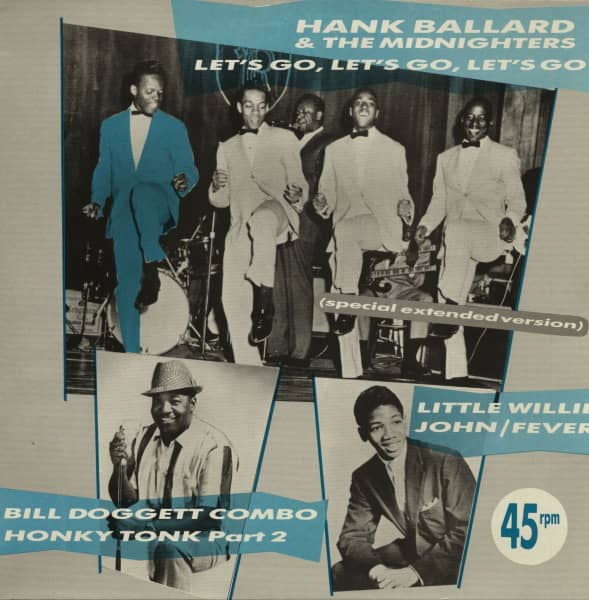
Ballard's piercing, slightly pinched lead tenor was highly invigorating and instantly recognizable. And not only did Hank and his Midnighters wreak havoc on wax, concentrating mainly on blistering rockers and only occasionally slowing down for a blues-drenched ballad – they were also relentless, high-energy showmen who indulged in rowdy stage routines that were just as influential on their acolytes as their records. When it came to their rough-and-tumble choreography, Hank willingly deferred to his high-stepping mid-fifties groupmates: tenor Henry Booth (a master of the splits who had started out with another Detroit group, the Serenaders), tenor/baritone Lawson Smith and bass singer Ardra ‘Sonny’ Woods.
“We created dances on stage for the songs. If it looked good and everybody liked it and the three of us liked it, we'd leave it in. Because Hank didn't dance,” says Norman Thrasher, who replaced Woods in 1957. “We all did the splits. We created the dances around how we felt, because each of us would play an individual role on stage, doing ‘The Twist’ or ‘Finger Poppin' Time’ or ‘Let's Go’. Then we had these funny outfits under our clothes. I'd have the big drawers on, the big bloomers. And I'd jump off the stage, dance up the aisles, pull them off and hit people over the head with them!” Although King Records invariably put a solo photo of Hank on their album covers, this was a full-fledged vocal group whose dizzying moves strongly influenced the next generation of Motor City vocal aggregations.
“We always patterned our group after the Midnighters,” says Joe Billingslea of The Contours, who in 1962 gave Motown one of its first R&B chart-toppers with their gutsy Do You Love Me. The Contours' astonishing acrobatics followed in the athletic footsteps of the Midnighters, and their first audition for Berry Gordy reflected their heroes' influence on their repertoire. “We did ‘Whole Lotta Woman’, ‘Come On And Be Mine’ and one other song, probably one of Hank Ballard and The Midnighters' songs, because we were definitely Midnighters fans,” says Billingslea. “We designed our routine after the Midnighters.”
“We were on a show with those guys,” says Billy Hoggs of The Contours. “They helped us out a few times when we did a show with them. We'd go backstage and talk to them...”
Copyright © Bear Family Records
Copyright © Bear Family Records®. Copying, also of extracts, or any other form of reproduction, including the adaptation into electronic data bases and copying onto any data mediums, in English or in any other language is permissible only and exclusively with the written consent of Bear Family Records® GmbH.
More information about Hank Ballard & The Midnighters on Wikipedia.org
the very last 2 available
Ready to ship today, delivery time** appr. 1-3 workdays