
Who was/is Die Javalins ? - CDs, Vinyl LPs, DVD and more
Die Javalins
Before the English beat bands, by way of the 'Star Club', began their triumphal march into the German dance halls in the '60s, there was a firmly established dominance of Indonesian show bands. Between 1959 and 1964 they were the stars of the scene, and their style shaped a whole generation of guitarists who later, as semi-pros or full-time professionals in various beat bands, took over from the Indos.
Led by the legendary Tielman Brothers, more than 100 Indo bands poured into the land of the 'economic miracle', which was just discovering rock and roll at the time.
The music of the respectable 'Biedermann' – with accordion and piano – was out of date; now it was the music of the 'firebugs' – with electric guitars and amplifiers. To replace the 'discontinued model', bands were needed that were seasoned enough to fill the hours with a repertoire of this kind of music, which was often disparaged in racist terms at the time. Such bands were still rare in Germany. So agencies and managers went to neighbouring Holland, where the changeover had happened earlier and there were already more bands 'of the new kind'. Above all young Indo lads – who had emigrated from Indonesia to Holland in the course of decolonisation – were only too willing to drop everything to become musicians in West Germany. As children they had learned to play guitar from their fathers, in a style shaped by 'Krontjong'. This traditional style made the guitar a melody instrument rather than a rhythm instrument.
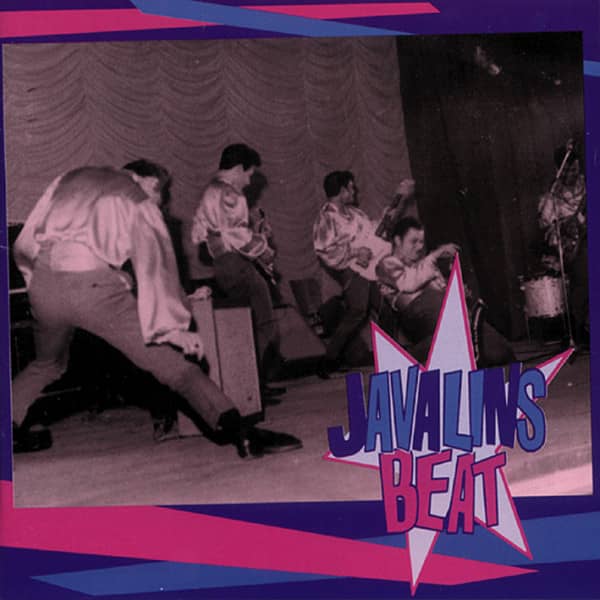
It all began, more or less, in the state of Hesse, where the American GIs were stationed. Around the barracks, even in the smallest backwaters, there were several dance halls offering 'live' music 'on stage' every day. The aforementioned Tielman Brothers were the first to show the English and German competition how it was done, with skilful finger and leg acrobatics. With no regard for expensive shawl-collar suits, they swept the stage floor during wild rock'n'roll shows, and many of the Indo bands that followed did the same. It came across as genuinely impulsive and had nothing in common with the smashing up of gear by the likes of the Pretty Things or the Who years later.
The gruelling sets of 45 minutes each, with breaks of only 15 minutes, called for a big repertoire – but also a talent for improvisation. The Indo bands had both, and over time their playing became ever more harmonious and compact. The other bands could hardly keep up, and so the Indonesian lads won the audience over.
One of these bands was the Javalins, whose members, like all the others, first had to go through the 'Hessian school' before the group was formed. That happened in a variety of line-ups, such as the Real Rockers or the Hurrican Rollers, before they first came together as the Crazy Strangers. Under that name they toured Israel for three months at the end of 1961.
They also made records there. Not polished productions – as they only found out later, because by the time the records reached the shops in Israel they were already back in Germany.
From today's perspective the Crazy Strangers period can safely be described as their years of apprenticeship and wandering, for they only earned their mastery as the Javalins in the winter of 1962 – immediately after the Israel tour. They changed drummers and invested in better equipment. Before long they had a style of their own, marked above all by a compact rhythm.
Their first appearance under the name Javalins was at the 'Top Ten' in Frankfurt. Their manager at the time, Carson Holmes (who had organised the Israel tour), brought them a composition from America – exclusively for them. The title was Twistin' Away, and it was to become the Javalins' first record. So the band rented a studio at Electrola in Cologne. Hans Bax (born in Borneo), Franky Franken (born in Bandung), Robby Latuperissa (born in Jakarta), Peter Theunissen (born in Bandung) and the non-Indo Gerad Buskop (born in Rotterdam) had no idea that things were about to change. While they were playing in the studio, some people pricked up their ears, and when they left the studio they had a recording contract in their pocket. Studio head Heinz Gietz signed them on the spot and entrusted Electrola's 'new acquisition' to Paul Kuhn, who from then on became their good friend.
And so in May 1962 the group recorded Mister Chang aus China-Town and Caroline for Electrola's Columbia label, their first session for the company. The typical Javalins style suited the American originals well. The Indo bands often improved on the songs they covered, in contrast to the many German performers whose copies of American hits frequently fell flat. So the start was made to measure, and the record caught on straight away. With Mister Chang aus China-Town they appeared on Chris Howland's 'Studio B' on 28 September 1962 (and later again with Javalins Beat).
A record certainly boosts a band's image, but it does not yet fill …
Copyright © Bear Family Records
Copyright © Bear Family Records®. Copying, also of extracts, or any other form of reproduction, including the adaptation into electronic data bases and copying onto any data mediums, in English or in any other language is permissible only and exclusively with the written consent of Bear Family Records® GmbH.
Ready to ship today, delivery time** appr. 1-3 workdays