
Who was/is Charlie Feathers ? - CDs, Vinyl LPs, DVD and more
Charlie Feathers
First released in 1990 on Zu-Zazz Records, Rock-a-Billy is the definitive collection of Charlie Feathers at his peak. Here are recordings from the legendary Sun Studios such as Corrine Corrina, Bottle To The Baby, Frankie & Johnny and Honky Tonk Kind, followed by tapes captured at rehearsals for the King label and rare singles issued on small labels such as Wal-May and Kay. Then come previously unreleased rockabilly recordings from the 1960s, cut at the Sun and Select-o-Hit studios. All in excellent sound quality! When Charlie Feathers died on August 29, 1998, American music lost a true original. There are plenty of Charlie Feathers CDs around, but this compilation is the benchmark. The liner notes were written by Peter Guralnick.
It is a typical Saturday night at any hilltop lounge on the not-too-respectable outskirts of any town. Battered men and women cling to each other; factory girls in tight white hip-huggers do the bump; skinny bald old men in overalls jitterbug decorously with hefty middle-aged women in sequined glasses; strangers huddle together against the cold. At this particular Hilltop Lounge on Lamar Avenue in Memphis – not far from the old Eagle's Nest, where Elvis Presley got his start – the featured performer takes it all in with a mixture of good humor and genial contempt.
Although he doesn't sing much, he is constantly involved in the show: jumping up, grabbing a microphone, fiddling with the dials of the Peavey PA system, throwing in a bass harmony from the rickety table where he sits beside the darkened bandstand, endlessly expounding his theories of music, his plans for the future, his never-ending quest for the breakthrough hit album. He wears an open-necked white shirt and a houndstooth jacket, and his white hair is slicked back in an immaculate DA. Every now and then he straps on his guitar and sings a song or two himself, and then it is as if the room is transformed by his energy, carried along by the singer's untamed hiccups, inspired asides and manic enthusiasm. Everybody is having a good time, and only the featured performer, with his restless commentary, abrupt mood swings and feverish recollections of the past, seems to be thinking of anything but a Saturday night in Tennessee. The featured performer is Charlie Feathers – at one time or another ambulance driver, stock car racer, semi-pro ballplayer, shuffleboard hustler and rockabilly legend.
Charlie Feathers never achieved fame or fortune, and his role at Sun remains somewhat unclear, but everyone agrees that he was there from the start and that he made some of the most influential, if not the most popular, early rockabilly records. According to Charlie, he also taught Elvis his style, gave Jerry Lee Lewis the idea for his 'pumping piano' and was generally Sam Phillips' right-hand man in developing the whole rockabilly sound. All of which sounds decidedly unlikely – except that throughout the conversation Charlie Feathers keeps backing up his points with musical illustrations, pointed stylistic references and concrete examples from a tape library which, he says, even includes a session he cut on Elvis at a West Helena radio station in 1955. “Some real hard stuff, baby,” he says matter-of-factly, with a certain sullenness that seems at odds with the audacity of his claims.
That's how it is with Charlie Feathers, a proud, suspicious, stubborn and single-minded man who only becomes impassioned when he talks about music. On that subject he is generous in his enthusiasm, passionate in his likes and dislikes, and fatalistic about his chances of ever setting the record straight.
It seems incongruous to discuss so casually a past lit up with the promise of greatness, a past peopled by figures who have attained legendary status. Coming from anyone else it might sound like idle boasting, but Charlie delivers it in a tone that is more accepting than bitter, and even natural skepticism is overcome to some degree by his command of names, dates, technical details and all the minute particulars of the tangled history of an era. Charlie Feathers was born on June 12, 1932, in Holly Springs, Mississippi – actually in the countryside outside Holly Springs, around Slayden and Hudsonville. He grew up on the land his parents farmed, but his sharpest memories are of music. He sang in church, listened to the Grand Ole Opry and sneaked off to the picnic held by Rossville's Black community in the woods across from his family's house. He learned guitar from a local Black farmer named Junior Kimbrough, “the greatest blues singer in the world.”
“Chuck Berry didn't have a thing on him. I had him teach my son to play, and the little I learned from him, I got too. To tell the truth, I never did much country. And Bill Monroe, he came through Hudsonville, put up tents and everything, man – I thought it was the greatest thing I'd ever heard. I've loved bluegrass all my life, but I never knew how to play it. There was nobody around who could play that kind of music, just Black players beating on their guitars. Oh man, there was nothing to beat it. They'd come out on the weekend and gather wherever there was a guitar, just tune it down, no matter whose it was. Sam always said I was a blues singer, but I was singing bluegrass and rapping on the guitar the way I heard those Black players do it. Bluegrass rock, that's what it really was. Bill Monroe's music and the Black players' music – that's what brought about rock 'n' roll.” At sixteen or seventeen he left home to work with his father on an oil pipeline.
Copyright © Bear Family Records
Copyright © Bear Family Records®. Copying, also of extracts, or any other form of reproduction, including the adaptation into electronic data bases and copying onto any data mediums, in English or in any other language is permissible only and exclusively with the written consent of Bear Family Records® GmbH.

Ready to ship today, delivery time** appr. 1-3 workdays

Ready to ship today, delivery time** appr. 1-3 workdays
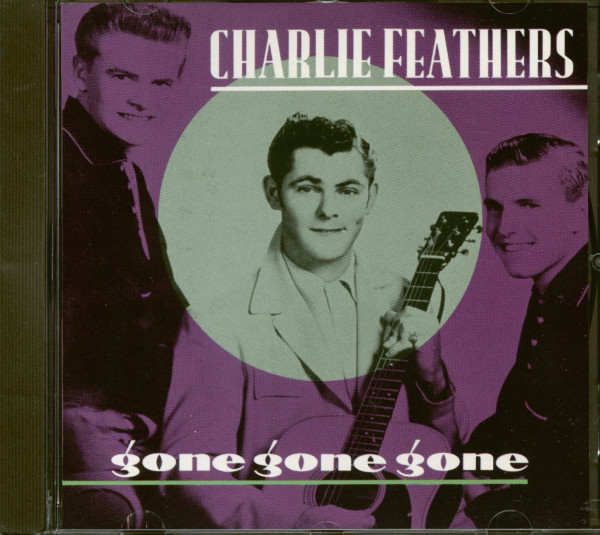
the very last 1 available
Ready to ship today, delivery time** appr. 1-3 workdays
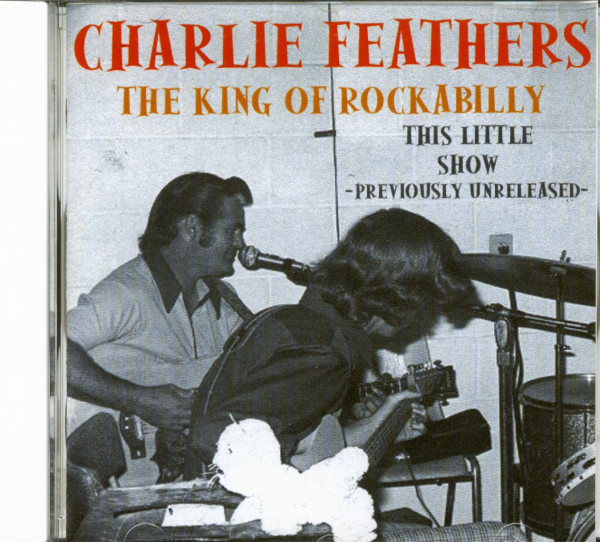
the very last 1 available
Ready to ship today, delivery time** appr. 1-3 workdays
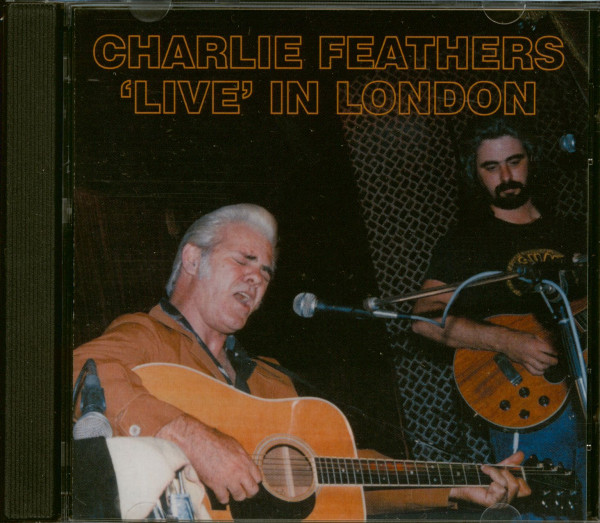
the very last 1 available
Ready to ship today, delivery time** appr. 1-3 workdays

Item has to be restocked
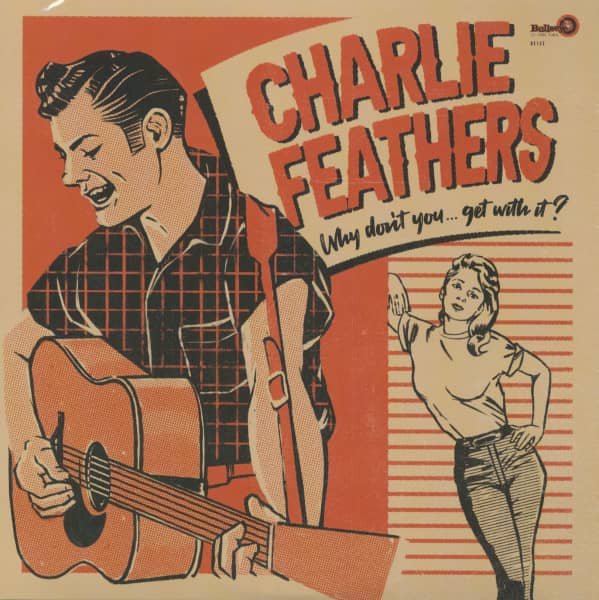
Item has to be restocked