
Who was/is Bill Deal & The Rhondels ? - CDs, Vinyl LPs, DVD and more
Bill Deal & The Rhondels
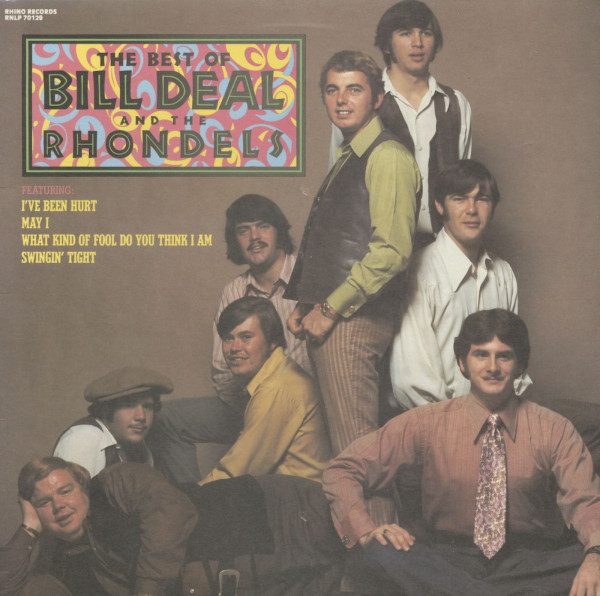
Rare is the band or solo artist who can defy the prevailing musical trends and still find commercial recognition. This axiom was especially true during the Age of Aquarius, when conformist allegiance to technique and wizardry was hyped to record buyers by the industry under the misnomer of innovation. One band fortunate enough to score several hit singles and critical acclaim under these conditions was Bill Deal And The Rhondels, who (somewhat unintentionally) enjoyed a healthy run on the singles charts between 1968 and 1970. It was not that the band consciously set out to buck the system. It was simply that their brand of horn-laden rhythm and blues owed more to the spirit of John Fred And His Playboy Band and Bob Kuban And The In-Men (who, like Deal's band, covered Bob And Earl's “Harlem Shuffle” on their debut album) than to the meanderings of such contemporaries as Ten Years After and The Soft Machine. It was that horn section (made up of trumpeters Ken Dawson, Mike Kerwin and Jeff Pollard and trombonist Ronny Rosenbaum) that gave the East Coast octet its distinctive musical personality.
They eventually caught the attention of MGM's subsidiary label Heritage, run by Jerry Ross, who later became a successful recording artist himself with the Jerry Ross Symposium on his own Colossus label. With Ross as producer and keyboard player Deal as arranger, Bill Deal And The Rhondels surfaced with their debut single in late November 1968. Composed by Maurice Williams (lead singer with the Gladiolas and writer of “Little Darlin'”, and of the classic “Stay” with the Zodiacs), “May I” features a blistering trumpet attack on a par with Bob Kuban And The In-Men's “The Cheater”, nicely set off by Bob Fisher's strong lead guitar, packed with breathtaking vocal harmonies (lead vocals were shared by Deal and drummer Ammon Tharp) and a solid, steady undercurrent from bassist Don Quisenberry. The song, its infectious rhythm and blues groove (with reggae touches) and the impassioned delivery were enough to crack the singles charts in February 1969, where it eventually climbed to No. 39.
Buoyed by the response to “May I”, the group returned to the studio to cut a like-minded follow-up, again with Ross producing and Deal arranging. “I've Been Hurt” had been released by the Sensational Epics on Cameo 450 back in late 1966 and adapted effortlessly to Bill Deal And The Rhondels' upbeat format. The gamble paid off with a second hit when “I've Been Hurt” peaked at No. 35 in May 1969.
“I've Been Hurt” was also partly responsible for giving the band a new dimension via its flip side. “I've Got My Needs” was co-written by Ritchie Adams, who had crossed paths with Jerry Ross on numerous occasions (Adams had been a solo recording artist with Heritage's parent label MGM in 1966, for which he re-recorded “You Were Mine”, a song with which he had scored a big hit in 1959 as lead singer of the Fireflies). “I've Got My Needs” sounds like an unlikely blend of Tommy James And The Shondells and others, and was delivered with enough swagger and grit to give the band credibility among garage music aficionados. Ross and Adams later worked on Bill Deal And The Rhondels' B-side, the bubblegum-flavoured and highly charismatic “Are You Ready For This”.
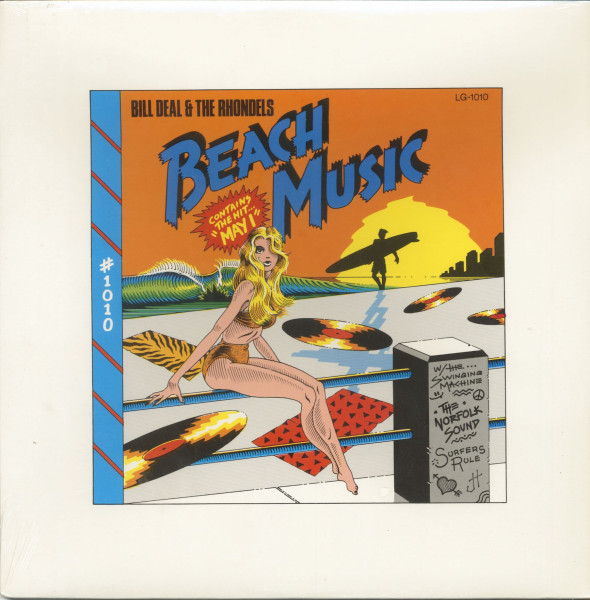
The band's distinctive horn arrangements and spirited delivery were sometimes associated with beach music, a variation on the rhythm and blues format popularised with similar intent by the O'Kaysions, Lenny O'Henry, the Swingin' Medallions and others. So it was inevitable that Bill Deal And The Rhondels would turn to the beach music catalogue for cover material. “What Kind Of Fool Do You Think I Am” had been released by the Tams on ABC Paramount 10502 in late 1963 and was ideally suited to Deal's style. The shrewd move gave the band its biggest hit ever, reaching No. 20 on the singles chart in September 1969. In the midst of this chart success the band managed to release its debut album “Vintage Rock” (Heritage HTS35003). Unfortunately, the closing months of 1969 were not a climate in which accessible popular music fared well. It was the era of Woodstock, Altamont and self-indulgent guitar solos, which meant that bands like Bill Deal And The Rhondels were confined to hit-single-oriented AM radio stations, which at that time were rapidly falling out of favour with the very conformist rock audience. So the true-to-form (though no less interesting) “Swingin' Tight” appeared in November 1969 to comparative indifference – and died a quick death in the charts, as did the ironically titled “Nothing Succeeds Like Success” in March 1970.
Bill Deal And The Rhondels made their last attempt at success with Heritage in mid-1970 by covering the Beatles' “Hey Bulldog”.
Copyright © Bear Family Records
Copyright © Bear Family Records®. Copying, also of extracts, or any other form of reproduction, including the adaptation into electronic data bases and copying onto any data mediums, in English or in any other language is permissible only and exclusively with the written consent of Bear Family Records® GmbH.
More information about Bill Deal & The Rhondels on Wikipedia.org
Ready to ship today, delivery time** appr. 1-3 workdays

Ready to ship today, delivery time** appr. 1-3 workdays
the very last 2 available
Ready to ship today, delivery time** appr. 1-3 workdays