
Who was/is Byzantium ? - CDs, Vinyl LPs, DVD and more
Byzantium
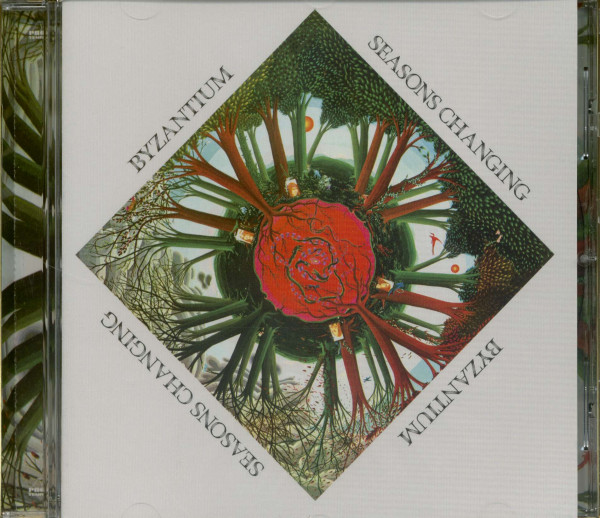
From the smouldering ashes of Ora, Robin Sylvester's thirst for further folk-inspired experimentation became apparent in the aftermath of Tangerine's hasty release of the band's demo material in 1969. Ora's brief existence, however, was to have considerable repercussions reaching far beyond the complex histories of many of their contemporaries – namely in the London hopefuls Byzantium. Guitarists Jamie Rubinstein (Ora's linchpin) and his school friend Mark Barakan eventually found themselves back together with Robin Sylvester at Trident Studios, recording Byzantium's second album, Seasons Changing, in 1973. Rubinstein had originally been involved in the band's early stages, composing four of the songs, but appeared on only one recording (Come Fair One) for the debut LP before quitting during the recording sessions.
That left Chaz Jankel, Nico Ramsden, Stephen Corduner and Robin Lamble to carry the torch. A&M manager Joe Smith encouraged Rubinstein to return from retirement, with Mark Barakan replacing Ramsden and signalling a broader creative dimension for the band. UK and European tours followed the release of Seasons Changing in 1973, but internal differences broke out once again and led to Jankel's eventual decision to leave. The energy of the American manager Joe Smith (and of Gaff Management) finally ran out in the face of disappointing sales, which forced label and band to part company in 1974. Naturally, an air of desperation set in immediately after A&M's decision, yet the band, spurred on by Rubinstein's enthusiasm alone, felt committed enough to book themselves into the studio in search of a new deal. On 16 April 1974 the band played three songs for their Radio One session with John Peel. With Tony Wilson producing, the band recorded an extended version of I'll Just Take My Time along with Halfway There and Small World – the only known recordings of these performances.
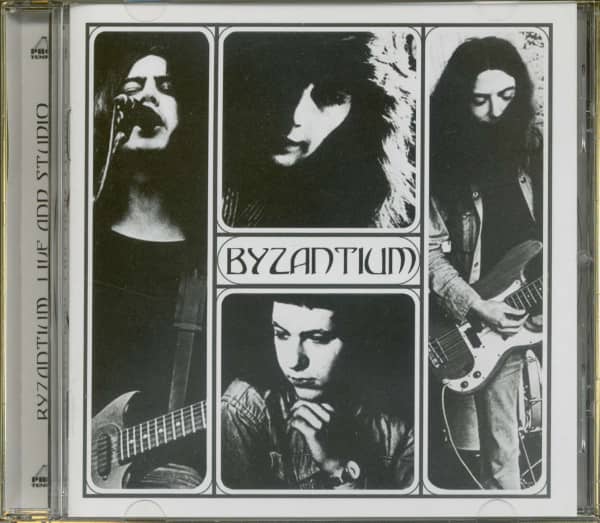
Live and Studio is a collection of demos recorded between 1971 and 1974 that offers a generous insight into their work. Flashing Silver Hope, Oh Darling and Move With The Time were originally performed during the embryonic stages of the band's recording sessions for their A&M debut LP. Another demo, entitled Susie Bumpkin's Griddled Fiddle and recorded in 1972, did not make it onto the privately pressed album, nor did a number of alternate takes of material from Seasons Changing – the demo versions of all three parts of the Something You Said trilogy being a case in point. The live versions of Flashing Silver Hope, Cowboy Song and Feel It come from performances at The Nightingale, Borehamwood and Harlow Community Centre.
Ramsden went on to team up with Brian Chatton (Flaming Youth/Eclection) in Boys Don't Cry before resurfacing with Mike Oldfield. Robin Lamble joined Al Stewart, while Steve Corduner enjoyed a brief stint in Nasty Pop before recording in 1979 with Steve Naïve, Elvis Costello and Jimmy Edwards in Twist. Mark Barakan became better known as Shane Fontayne after following Robin Sylvester (later of The Movies) across the Atlantic to back Dana Gillespie on her US tour. Barakan later stepped in for the E Street Band to back Bruce Springsteen. A UCS pupil and the original driving force behind Ora and Byzantium, Jamie Rubinstein seems to have vanished from the music scene after 1975 – although he contributed more than most to the rich tapestry of British rock.
The story of Byzantium would not be complete, however, without mentioning Robin Sylvester. Working from the very beginning with Ora as an apprentice engineer at Tangerine Studios, he witnessed the birth of progressive rock, which produced a rich variety of late-sixties acts such as Black Cat Bones, East of Eden, Caravan, Marsupilami, Aynsley Dunbar, Rory Gallagher and a host of other hopefuls from the Deram, Transatlantic, Dawn and Dandelion stables. Although Sylvester was never really a full member of the band, his contribution, both musically and as a producer, was essential, steering Byzantium through the murky waters of progressive rock.
Besides their two albums for A&M in 1972 and 1973, their BBC session for John Peel from April 1974 stands as official evidence of their work. But their legacy also lives on in the band's self-financed Live and Studio LP, a collection of demos and live recordings spanning their entire existence from 1971 to 1974 and giving the listener a generous perspective on their work. Prog Temple's retrospective presents the complete story of Byzantium and their connections.
Copyright © Bear Family Records
Copyright © Bear Family Records®. Copying, also of extracts, or any other form of reproduction, including the adaptation into electronic data bases and copying onto any data mediums, in English or in any other language is permissible only and exclusively with the written consent of Bear Family Records® GmbH.
Ready to ship today, delivery time** appr. 1-3 workdays
Item has to be restocked